
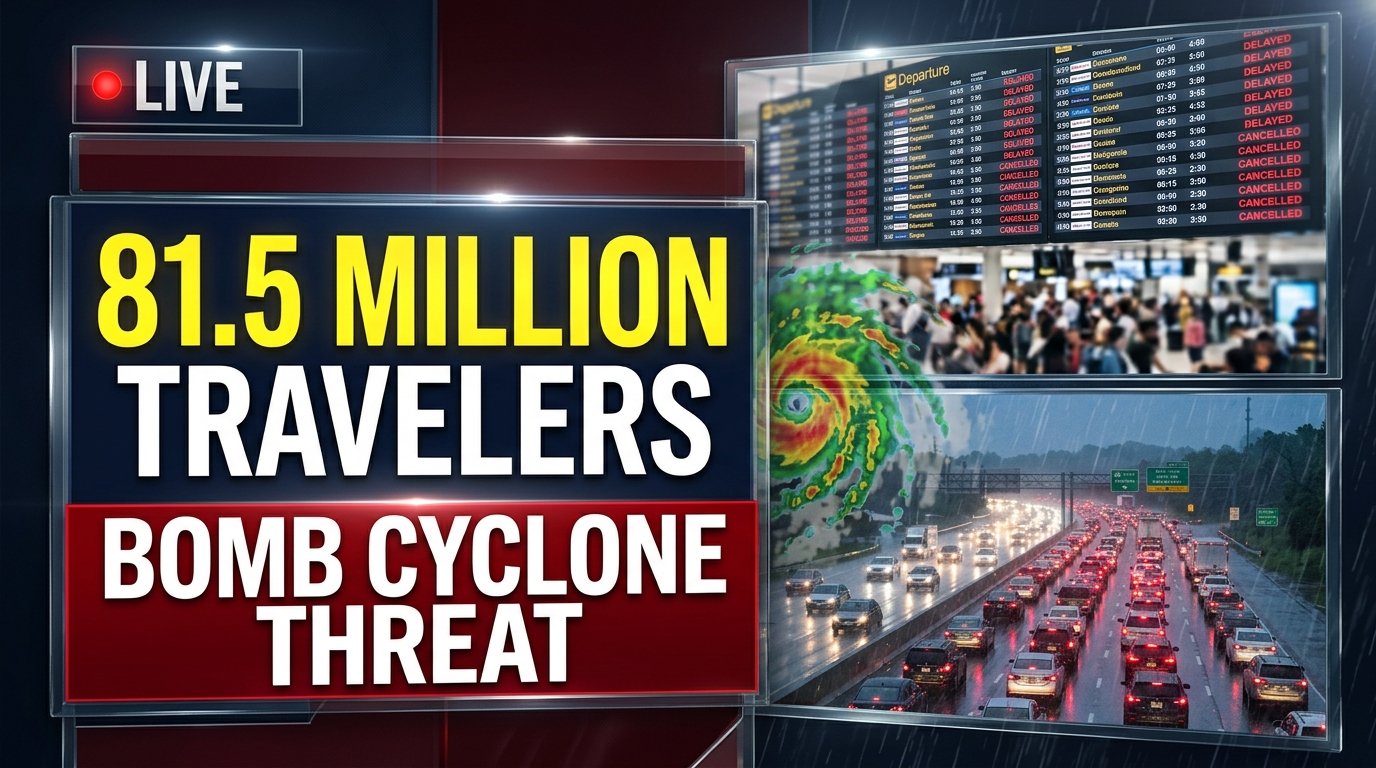
81.5 Million Americans to Travel for Thanksgiving as Bomb Cyclone Threatens Busiest Corridor
Millions of holiday commuters across the United States are heading onto highways, airports, and transit lines as 81.5 million Americans to travel for Thanksgiving as bomb cyclone threatens busiest corridor along the East Coast and Mid-Atlantic. According to projections from AAA, 81.5 million people are expected to travel at least 50 miles from home during the 2026 Thanksgiving holiday period, even as severe coastal storms, elevated fuel costs, and pricier flights complicate holiday plans.
Forecasts point to a rapidly intensifying East Coast storm system and nor’easter capable of bringing heavy rain, strong winds, and coastal flooding from the Southeast into the mid-Atlantic and Northeast right around Thanksgiving. Simultaneously, Pacific storm activity and high king tides threaten California and the Pacific Northwest, while travelers contend with steep gasoline prices and higher airfares.
Also Read:
Jensen Huang Apologises to Nvidia Staff and Says He Is in Therapy After Dramatic Return as CEO
                 [ THANKSGIVING 2026 TRAVEL & STORM MATRIX ]
                                      │
             ┌────────────────────────┴────────────────────────┐
             ▼                                                 ▼
  [ HOLIDAY VOLUME & COSTS ]                        [ SEVERE WEATHER CORRIDORS ]
   • 81.5M Travelers Expected (AAA)                  • East Coast Nor'easter / Bomb Cyclone Threat
   • 72M+ Driving; ~6M Flying                      • Heavy Rain & Gusts From Mid-Atlantic to NE
   • Gas Prices Above Prior Record                   • King Tides & Coastal Flooding in CA / NW
   • Airfares Up ~17% vs. Last Year                  • Midwest & Mountain Snow Risks
             │                                                 │
             └────────────────────────┬────────────────────────┘
                                      ▼
                     [ DELAYS, PARADE RISKS & RETURN-TRIP STRAIN ]
1. Weather Threats Across America’s Busiest Corridors
Meteorologists and public safety officials are warning travelers that active storm patterns could disrupt both outbound and return holiday journeys across multiple regions.
  Coastal & Mid-Atlantic Storm    Northeast & Holiday Events      Western & Midwest Hazards
+----------------------------+  +----------------------------+  +----------------------------+
| Heavy Rain & Strong Winds  |->| Gusts Could Threaten NYC   |->| King Tides & Storm Rain Hit|
| Move North Into Mid-Atlantic|  | Balloon Rules & Northeast  |  | California; Snow & Airport |
| & Northeast Around Holiday |  | Highways & Airports        |  | Delays Loom in Midwest/West|
+----------------------------+  +----------------------------+  +----------------------------+
|            **Status: Active Advisories; Elevated Delay & Flooding Risk**                     |
+--------------------------------------------------------------------------------------------+
Key Weather and Travel Developments
East Coast Storm and Busiest Corridor Strain: A developing nor’easter and potent storm system is projected to push heavy rain, strong winds, and coastal flooding northward through the Southeast and mid-Atlantic into the Northeast over the holiday stretch, creating potential bottlenecks across major eastern highways and hub airports.
Parade and Return-Trip Disruptions: In New York, strong wind gusts could test municipal safety thresholds for large parade balloons—which must stay grounded when sustained winds exceed 23 mph or gusts pass 34 mph—while lingering rain, wind, or snow could carry travel headaches into Friday and the weekend across the Northeast and Ohio Valley.
West Coast High Tides and Midwest/Mountain Weather: Seasonal high king tides paired with Pacific storm moisture raise coastal flooding and erosion concerns along California and the Pacific Northwest, while mountain snow and airport complications are possible in parts of the West and Midwest.
2. Quantitative Snapshot: Thanksgiving 2026 Travel & Cost Benchmarks
While overall travel volume remains massive across the country, AAA data highlights slight shifts in travel modes alongside noticeably higher trip expenses compared with a year earlier.
| Travel Metric / Category | 2026 Outlook / Data Point | Year-Over-Year & Market Context |
| Total Holiday Travelers | 81.5 million (50+ miles from home) | Slightly below prior three-year highs amid higher costs |
| Highway / Auto Travelers | 72+ million driving | Majority mode; facing elevated pump prices |
| Air Travelers | Nearly 6 million flying | About 12,000 fewer than last year; round-trip avg. ~$800 (+17%) |
| Bus, Train & Cruise | +4% combined passenger growth | Rising alternative demand alongside road and air trips |
| Gasoline Prices | Above prior Thanksgiving Day record | Driven by broader energy market pressures |
3. Practical Preparation for Drivers and Flyers
With millions on the move under shifting weather and cost pressures, planning buffers and real-time monitoring are essential to keeping holiday trips on track.
                              [ HOLIDAY TRAVEL READINESS ]
                                            │
             ┌──────────────────────────────┴──────────────────────────────┐
             ▼                                                             ▼
  [ ROAD TRIP PRECAUTIONS ]                                      [ FLIGHT & TRANSIT PLANNING ]
   • Watch for Ponding, Wind & Coastal Floods                    • Monitor Carrier Alerts & Hub Delays
   • Budget More for Fuel & Avoid Peak Rush                      • Build Extra Connection Buffers
   • Respect Local Advisories & Detours                          • Keep Essentials in Carry-On Bags
             │                                                             │
             └──────────────────────────────┴──────────────────────────────┘
                                            ▼
                        [ SAFER, MORE FLEXIBLE HOLIDAY TRANSIT ]
Strategic Takeaways
Build Schedule Buffers Around Storm Windows: Because heavy rain, gusty winds, and post-holiday lingering precipitation can slow ground and air traffic sequentially, travelers with flexibility should check forecasts frequently and allow extra transit time.
Account for Higher Travel Costs: With round-trip domestic airfares running higher and gasoline prices elevated above prior Thanksgiving records, locking in budgets early and planning fuel stops ahead of time helps reduce last-minute friction.
Prioritize Safety in Flood and Wind Zones: Motorists should avoid driving through flooded roadways or coastal inundation zones, while travelers in high-wind corridors should prepare for sudden crosswinds and potential power or transit disruptions.
Technical Conclusion
The holiday rush in which 81.5 million Americans to travel for Thanksgiving as bomb cyclone threatens busiest corridor underscores how severe weather and elevated travel costs can test even well-planned seasonal journeys. Staying ahead of storm advisories, carrier updates, and local road conditions remains the best way to navigate heavy holiday traffic safely.
Frequently Asked Questions (FAQs)
How many Americans are expected to travel for Thanksgiving in 2026?
AAA forecasts that 81.5 million Americans will travel at least 50 miles from home during the 2026 Thanksgiving holiday period.
How could storms affect Thanksgiving travel along the East Coast?
Forecasts point to a developing nor’easter and storm system bringing heavy rain, strong winds, and potential coastal flooding from the Southeast into the mid-Atlantic and Northeast, creating risks for flight delays, highway slowdowns, and event disruptions.
Are airfares and gas prices higher this Thanksgiving?
Yes. AAA reported that domestic round-trip flights booked through the organization averaged about $800—up 17% from last year—while gasoline prices have tracked above prior Thanksgiving Day records.
Which regions outside the East Coast could see weather impacts?
California and the Pacific Northwest face coastal flood and storm concerns tied to high king tides and incoming rain, while parts of the Midwest and western mountains could experience snow and travel complications.
Disclaimer
This article is provided strictly for educational, informational, and travel news reporting purposes. Travel projections, weather forecasts, and pricing figures reflect public reports at the time of publication and are subject to change as conditions evolve.