
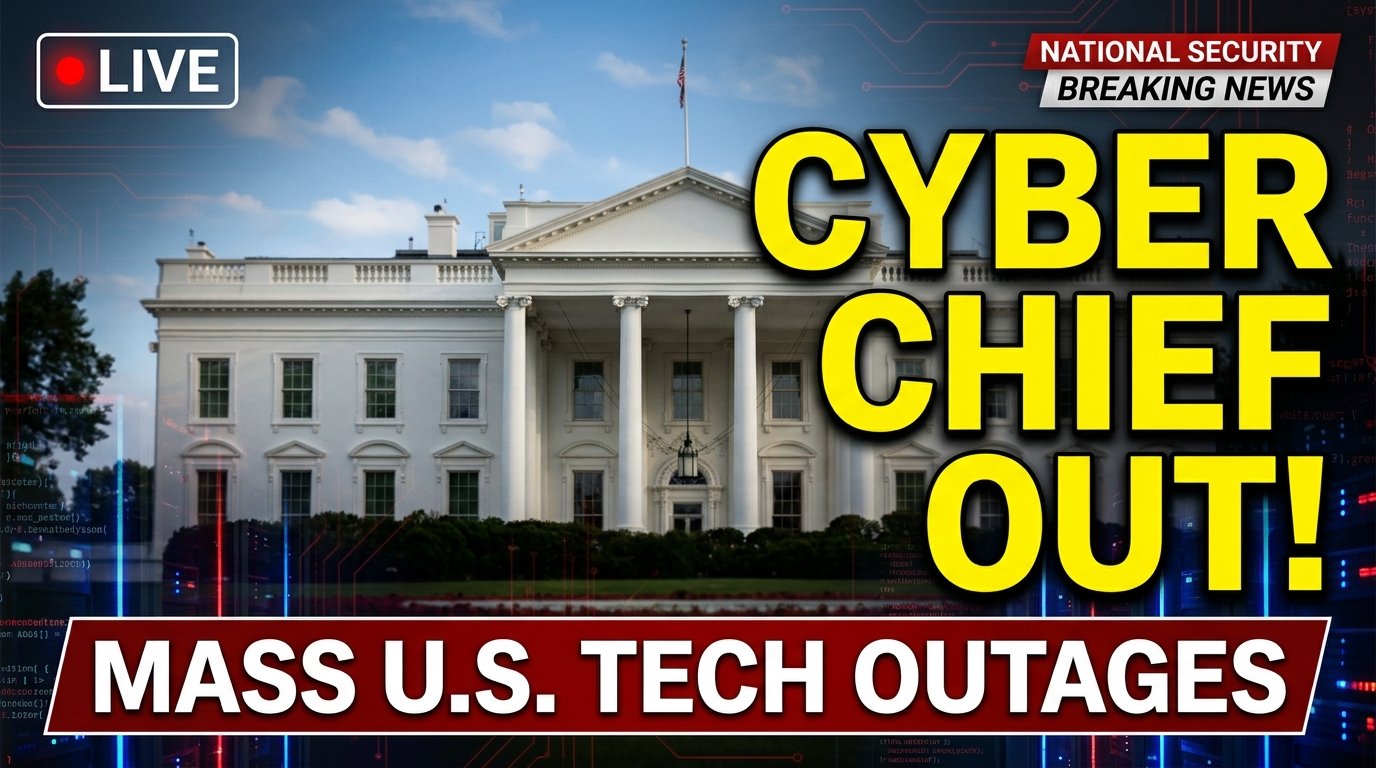
Head of White House Cyber Office Stepping Down as Mass Tech Outages Roil US
In a major shakeup at the highest levels of federal cybersecurity governance, the Head of White House cyber office stepping down as mass tech outages roil US infrastructure has triggered widespread political and technical scrutiny across Washington. National Cyber Director Sean Cairncross—who has led the Office of the National Cyber Director (ONCD) since August 2025—is departing the Trump administration following a turbulent week of cascading digital failures across American aviation, major commercial banks, Microsoft cloud services, and a classified National Security Agency (NSA) network.
While some White House sources initially characterized Cairncross’s departure on Thursday, November 19, 2026, as an amicable exit, multiple administration insiders confirmed that newly appointed White House Chief of Staff Stephen Miller pushed for his removal—a move President Donald Trump fully supported. Pentagon Chief Information Officer Kirsten A. Davies has been tapped to take over the critical cyber post in an acting capacity while awaiting Senate confirmation.
Also Read:
Hackers Leak Visa, Mastercard, JPMorgan Data
                 [ WHITE HOUSE CYBER LEADERSHIP SHAKEUP ]
                                      │
             ┌────────────────────────┴────────────────────────┐
             ▼                                                 ▼
  [ SEAN CAIRNCROSS DEPARTURE ]                     [ KIRSTEN A. DAVIES APPOINTED ]
   • Stepping Down / Ousted Nov 19, 2026             • Pentagon Chief Information Officer
   • Pushed by Chief of Staff Stephen Miller         • Assumes Acting Cyber Director Role
   • Cited Lack of Deep Technical Credentials        • Requires Incoming Senate Confirmation
             │                                                 │
             └────────────────────────┬────────────────────────┘
                                      ▼
                     [ RESPONSE TO NATIONWIDE TECH OUTAGES ]
1. Internal White House Shakeup: Why Sean Cairncross Is Stepping Down
Cairncross’s departure comes less than two weeks after Stephen Miller replaced Susie Wiles as White House Chief of Staff following the 2026 midterm elections. A former Republican National Committee Chief Operating Officer and Millennium Challenge Corporation CEO during Trump’s first term, Cairncross had drawn praise for spearheading the March 2026 National Cyber Strategy—which emphasized offensive cyber capabilities—and leading artificial intelligence regulatory discussions. However, the rapid succession of domestic infrastructure blackouts exposed deep concern inside the West Wing over his lack of a technical cybersecurity background.
  Cascading U.S. Outages         West Wing Leadership Audit       Acting Cyber Transition
+----------------------------+  +------------------------------+  +------------------------------+
| FAA, Chase, Microsoft &    |->| Chief of Staff Stephen       |->| Cairncross Steps Down;       |
| NSA Networks Suffer        |  | Miller Pushes for Technical  |  | DoD CIO Kirsten Davies Named |
| Sequential Disruptions     |  | Credentials at Cyber Helm    |  | Acting National Cyber Head   |
+----------------------------+  +------------------------------+  +------------------------------+
|            **Status: Leadership Transition Amid Ongoing Infrastructure Audits**               |
+----------------------------------------------------------------------------------------------+
Key Drivers Behind the Leadership Change
Scrutiny Over Technical Credentials: Two White House officials told Axios that Stephen Miller orchestrated the personnel change because he believed Cairncross “lacked the strong cyber credentials to perform the job” during a moment of acute national vulnerability.
Frustration Over Crisis Messaging: Prior to his exit, Cairncross stated he had “98% confidence” that the wave of outages was caused by routine upgrades to aging legacy systems rather than malicious foreign hackers, while acknowledging he had rarely seen so many major disruptions cluster together. The administration’s messaging drew bipartisan criticism from lawmakers and commentators demanding greater transparency.
Appointment of Pentagon CIO Kirsten A. Davies: By selecting Defense Department Chief Information Officer Kirsten A. Davies to step in as acting National Cyber Director, the White House signaled an immediate pivot toward seasoned enterprise IT and defense-sector cybersecurity leadership.
2. Quantitative & Operational Scope of the Mass U.S. Tech Outages
The leadership transition unfolded against a backdrop of severe operational failures that disrupted daily life, commerce, and national security communications across the United States:
| Affected System / Sector | Date & Duration | Operational Impact | Official Root-Cause Assessment |
| Federal Aviation Administration (FAA) | Nov 13, 2026 (~5 hours) | Nationwide ground stop disrupting 18,000+ flights | Telecom router failure during legacy equipment modernization |
| Microsoft 365 Cloud Services | Mid-November 2026 | Global email, Outlook & Teams disruptions for hundreds of millions | Internal cloud configuration and technical service issue |
| Major U.S. Commercial Banks | Mid-November 2026 | Online account and payment blackouts for thousands of customers | Isolated internal software bugs; ruled non-cyberattack |
| National Security Agency (NSA) | Mid-November 2026 | Temporary outage of highly classified internal network | Scheduled maintenance and urgent vulnerability patching |
3. Intelligence Consensus and Senate Confirmation Hurdles
Even as the White House overhauls its cyber leadership, top U.S. national security officials remain united in rejecting theories of a coordinated foreign cyberattack:
                              [ GOVERNANCE & SECURITY IMPLICATIONS ]
                                               │
             ┌─────────────────────────────────┴─────────────────────────────────┐
             ▼                                                                   ▼
  [ INTELLIGENCE COMMUNITY ASSESSMENT ]                               [ CAPITOL HILL CONFIRMATION ]
   • DNI & Rubio: Zero Malign Actor Evidence                           • Democrats Take Senate in Jan 2027
   • Outages Linked to Patching & Legacy Tech                          • Davies Faces Tough Confirmation Path
   • Focus Shifts to Infrastructure Resilience                         • Bipartisan Push for Grid/IT Modernization
             │                                                                   │
             └─────────────────────────────────┬─────────────────────────────────┘
                                               ▼
                     [ HEIGHTENED FOCUS ON U.S. CRITICAL INFRASTRUCTURE ]
Strategic Takeaways
No Foreign Cyberattack Indicia: Both Secretary of State Marco Rubio and top U.S. intelligence officials affirmed this week that forensic reviews uncovered zero evidence linking the aviation, banking, Microsoft, or NSA outages to state-sponsored adversaries or criminal syndicates—attributing them instead to separate technical glitches and system maintenance.
Senate Confirmation Battle Looming: Because the role of National Cyber Director requires Senate confirmation, Kirsten A. Davies faces a complex confirmation landscape. With Democrats set to assume control of the Senate in January 2027 following their midterm victory, any permanent nominee put forward by the Trump administration will face rigorous scrutiny from incoming committee chairs.
Urgency of Legacy Infrastructure Modernization: Regardless of the absence of foreign hackers, the near-simultaneous collapse of critical aviation routers and enterprise cloud platforms has exposed the fragility of aging U.S. digital infrastructure, placing systemic resilience at the top of Davies’s immediate agenda.
Technical Conclusion
The development in which the Head of White House cyber office stepping down as mass tech outages roil US networks marks a decisive turning point for federal technology policy. As Sean Cairncross exits following pressure from Chief of Staff Stephen Miller, incoming acting director Kirsten A. Davies inherits the urgent mandate of restoring public confidence, modernizing fragile legacy systems, and fortifying America’s digital backbone against both technical failures and future cyber threats.
Frequently Asked Questions (FAQs)
Who is the head of the White House cyber office stepping down?
National Cyber Director Sean Cairncross, who has led the White House Office of the National Cyber Director since August 2025, is stepping down from his post on November 19, 2026.
Why is Sean Cairncross leaving the White House cyber office?
According to White House officials, newly appointed Chief of Staff Stephen Miller pushed for Cairncross’s removal—with President Donald Trump’s full support—citing concerns that Cairncross lacked deep technical cybersecurity credentials amid widespread U.S. tech outages.
Who will replace Sean Cairncross as National Cyber Director?
Pentagon Chief Information Officer Kirsten A. Davies has been selected to serve as the acting National Cyber Director. Permanent appointment to the position requires Senate confirmation.
Were the mass U.S. tech outages caused by a foreign cyberattack?
No. Top U.S. intelligence officials and Secretary of State Marco Rubio stated that forensic assessments found zero evidence of a coordinated or state-sponsored cyberattack, attributing the disruptions to isolated technical glitches, software updates, and legacy infrastructure maintenance.
Disclaimer
This article is provided strictly for educational, informational, and news analytical purposes. Personnel announcements, infrastructure outage assessments, and official statements reflect verified public disclosures at the time of publication.