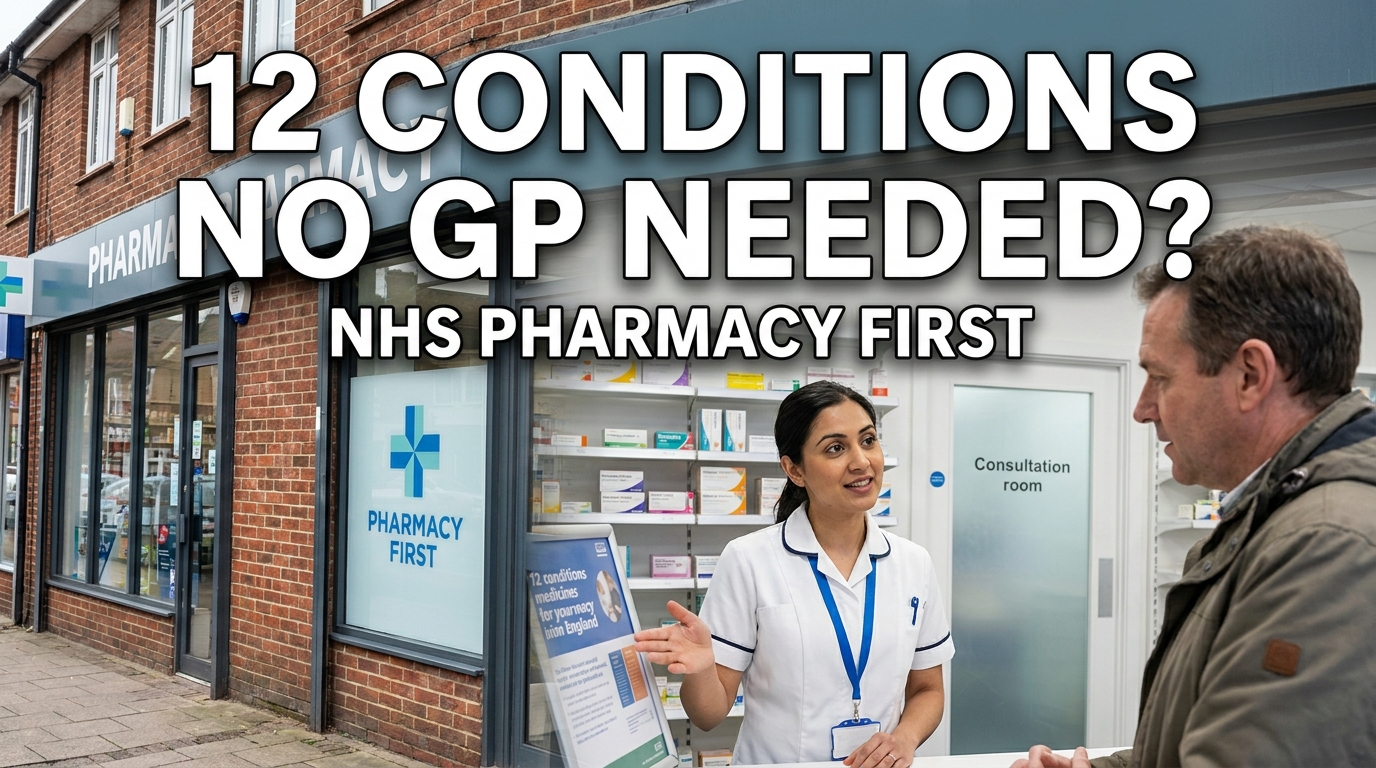
NHS Pharmacy First England: Get Treatment for 12 Common Conditions Without a GP
Healthcare access across England is undergoing a major transformation. Starting this autumn, the NHS is significantly expanding its flagship Pharmacy First scheme, enabling millions of patients to walk straight into their local high street chemist and receive on-the-spot treatment for 12 common health conditions without needing to book an appointment with a General Practitioner (GP).
Designed to ease mounting winter pressures on primary care and hospital A&E departments, this landmark healthcare shift empowers qualified independent prescribing pharmacists to conduct thorough clinical assessments and directly supply prescription-only medicines.
Also read:
Federal Accountant and Budget Analyst Jobs: USAJOBS Guide to Treasury & IRS Careers
The Evolution of Pharmacy First: What’s Changing?
First introduced in February 2024, the Pharmacy First initiative initially allowed participating community pharmacies to treat seven common ailments. Building on its immense popularity—which has already logged over 14 million consultations—the scheme is adding five new clinical prescribing pathways.
Under the updated framework, pharmacies that employ independent prescribing pharmacists can assess patients and dispense targeted medications immediately. This cuts out administrative delays, reduces unnecessary GP booking queues, and brings trusted medical support directly to local neighborhoods.
The Full List of 12 Conditions Covered Under Pharmacy First
With the new additions, local chemists can now provide diagnostic advice, safety-netting, and direct treatment for a total of 12 everyday health conditions:
The 5 New Conditions (Starting Autumn):
Low-Frequency Migraines (Adults): Rapid access to clinical evaluation and acute treatment pathways for adults suffering from episodic migraines.
Mild to Moderate Acne (Young People and Adults): Direct treatment solutions to help manage skin flare-ups and improve quality of life without long wait times.
Seasonal Allergic Rhinitis / Hay Fever (Children): Tailored pediatric assessments and interventions for severe seasonal allergies.
Acute Outer Ear Infections / Otitis Externa (Adults): Professional evaluation and treatment for painful outer ear canal inflammations.
Mild Skin and Soft Tissue Infections & Scabies: Immediate identification and targeted management for minor skin irritations and parasitic infestations.
The 7 Original Conditions:
Sore Throat (Ages 5 and over)
Sinusitis (Ages 12 and over)
Acute Middle-Ear Infection / Earache (Ages 1 to 17)
Shingles (Ages 18 and over)
Impetigo (Ages 1 and over)
Infected Insect Bites (Ages 1 and over)
Uncomplicated Urinary Tract Infections (UTIs) (Eligible women aged 16 to 64)
How the Service Works for Patients
Accessing care through the expanded Pharmacy First program is straightforward, flexible, and centered around patient convenience:
Walk-In Access or Referrals: Patients can walk directly into a participating high-street pharmacy, contact them by phone, or receive an electronic referral from their GP surgery or NHS 111.
Private Consultations: Consultations take place within a confidential, private consultation room inside the pharmacy.
Clinical Assessment & Prescribing: A pharmacist will evaluate symptoms, check for red-flag warning signs, and—if criteria are met—issue a prescription medicine on the spot. Standard NHS prescription charges apply if you normally pay for medications.
Seamless Record Updating: To maintain continuity of care, the pharmacist securely updates your central GP health record with details of the consultation.
Frequently Asked Questions (FAQs)
Do I need to book an appointment to see a pharmacist?
Not necessarily. While some pharmacies may offer booking systems or online video consultations, you can typically walk straight in to inquire about a Pharmacy First consultation. However, it is always wise to check if your local chemist has an independent prescriber on duty for the newly added conditions.
Will I have to pay for the medicines prescribed?
The consultation itself is completely free under the NHS. If the pharmacist prescribes medication, standard NHS prescription charges apply unless you are legally exempt (such as children, over-60s, or holders of valid exemption certificates).
Are all high street pharmacies offering all 12 conditions immediately?
Not immediately. While thousands of pharmacies participate in the core scheme, the newly expanded prescribing pathways rely on pharmacies that employ qualified independent prescribers. Coverage will scale up progressively across regions.
Does this mean I can never see a GP again?
No. Pharmacy First is designed to handle common, straightforward ailments. If a pharmacist detects complex symptoms, severe red flags, or conditions outside the 12 clinical pathways, they will promptly refer you back to your GP surgery or an urgent care center.
Conclusion
The expansion of the Pharmacy First scheme represents a monumental step forward for community healthcare in England. By leveraging the clinical expertise of high-street pharmacists, patients can bypass long wait times and receive prompt, localized treatment for everyday ailments. This initiative not only restores convenience to personal healthcare schedules but also builds a more resilient NHS capable of addressing patient needs closer to home.