
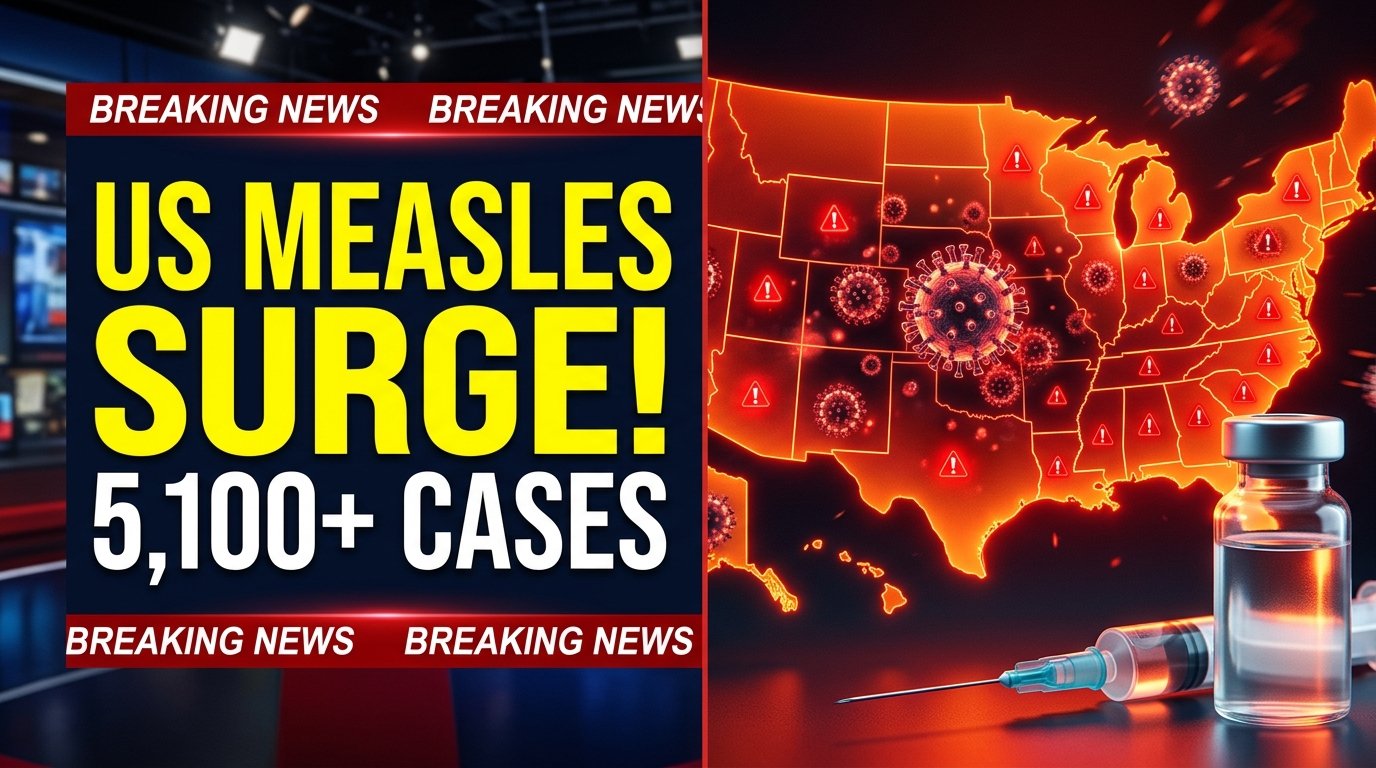
US Measles Cases Pass 5,100, Highest Since 1991, as Virus Turns Endemic Again
Public health officials across the United States are sounding the alarm after US measles cases pass 5,100 in 2026, marking the largest domestic surge of the highly contagious virus since 1991 and signaling that measles has officially returned to endemic status across the country.
According to updated epidemiological surveillance data released by the Centers for Disease Control and Prevention (CDC) in November 2026, confirmed infections have spread across more than three dozen states, driven by sustained, year-long chains of community transmission. The milestone effectively ends a quarter-century of public health achievement following the United States’ official elimination of endemic measles in the year 2000.
Also Read:
FDA Orders Vision-Loss Warnings on All GLP-1 Weight-Loss Drugs
Why US Measles Cases Passed 5,100 in 2026
The alarming milestone where US measles cases pass 5,100 represents a dramatic escalation from recent years and rivals the devastating national epidemic of 1989–1991, when tens of thousands of Americans contracted the virus and dozens died.
Public health experts and infectious disease specialists attribute the resurgence primarily to a steady, multi-year decline in routine childhood immunization rates—specifically the measles, mumps, and rubella (MMR) vaccine. Because measles is one of the most contagious human pathogens known, epidemiologists emphasize that communities must maintain at least a 95% vaccination coverage rate to preserve herd immunity and prevent sustained outbreaks.
Over the past several school years, national kindergarten MMR vaccination rates slipped below that critical 95% threshold, with certain counties and school districts dropping below 80% due to vaccine hesitancy, non-medical exemptions, and disrupted routine pediatric care. Once introduced into under-vaccinated communities—often via international travel—the virus spreads rapidly through schools, daycares, religious gatherings, and healthcare waiting rooms.
Understanding What “Endemic” Means for Public Health
For 26 years, the United States maintained its measles elimination status, which the World Health Organization (WHO) and the Pan American Health Organization (PAHO) define as the absence of continuous, endemic disease transmission within a specific geographic area for 12 months or longer. During the elimination era, occasional U.S. outbreaks were traced to imported cases from abroad and were successfully contained within weeks or a few months.
However, as US measles cases pass 5,100, uninterrupted chains of domestic transmission originating from major outbreaks in 2025 have now persisted continuously for more than a full year. When a virus circulates continuously within a population without relying on repeated foreign introductions, it reclaims endemic classification—meaning measles is once again an established, year-round infectious threat within the United States rather than a rare, imported anomaly.
Health Risks, Hospitalizations, and Complications
Health authorities warn against viewing measles as a mild childhood rash. Among the more than 5,100 confirmed cases recorded in 2026, hundreds of patients—predominantly unvaccinated children and infants too young to receive their first vaccine dose—have required hospitalization for severe dehydration, high fever, and respiratory distress.
Measles carries a substantial risk of serious and potentially fatal complications, including:
Pneumonia: The most common cause of measles-related death in young children, occurring in roughly 1 out of every 20 infected children.
Acute Encephalitis: Swelling of the brain that affects approximately 1 in every 1,000 measles patients, which can leave survivors with permanent hearing loss, seizures, or intellectual disabilities.
Immune Amnesia: Research demonstrates that the measles virus wipes out a significant portion of the body’s pre-existing immune memory antibodies, leaving survivors vulnerable to other bacterial and viral infections for months or years afterward.
Subacute Sclerosing Panencephalitis (SSPE): A rare, progressive, and universally fatal neurological disorder that can emerge seven to ten years after a person appears to have fully recovered from measles.
How the Virus Spreads and Early Symptoms to Watch For
Measles spreads through the air when an infected person coughs, sneezes, or breathes. The virus is so resilient that infectious droplets can remain suspended in the air or linger on surfaces for up to two hours after an infected individual leaves a room. Up to 90% of non-immune people exposed to an infected individual will contract the disease.
Symptoms typically appear 7 to 14 days after exposure and progress in two distinct stages:
Early Prodromal Phase: High fever (which may spike above 104°F), persistent dry cough, runny nose (coryza), and red, watery eyes (conjunctivitis). Two to three days after symptoms begin, tiny white spots known as Koplik spots may appear inside the mouth.
Maculopapular Rash Phase: Three to five days after initial symptoms start, a flat red rash breaks out—typically beginning at the hairline on the face and spreading downward across the neck, trunk, arms, legs, and feet.
Prevention and Public Health Recommendations
In response to the news that US measles cases pass 5,100, federal and state health departments have intensified vaccination campaigns, issued exposure alerts at major airports and transit hubs, and urged parents and adults to verify their immunization records.
The CDC recommends two doses of the MMR vaccine for optimal protection:
First Dose: Administered at 12 through 15 months of age.
Second Dose: Administered at 4 through 6 years of age (or earlier, at least 28 days after the first dose, during active local outbreaks or prior to international travel).
A single dose of the MMR vaccine is approximately 93% effective at preventing measles, while two doses provide 97% lifelong protection. Public health officials also advise adults born after 1957 who are unsure of their vaccination status—or who work in healthcare, education, or travel frequently—to consult their healthcare provider about receiving a booster dose.
Frequently Asked Questions (FAQs)
Why did US measles cases pass 5,100 in 2026? US measles cases surpassed 5,100 primarily due to declining childhood MMR vaccination rates falling below the 95% herd immunity threshold, allowing imported cases to spark prolonged, widespread community transmission across dozens of states.
What does it mean that measles is endemic again in the United States? Endemic status means that continuous, uninterrupted chains of domestic measles transmission have persisted within the United States for 12 months or longer, reversing the official elimination status the country achieved in 2000.
How effective is the MMR vaccine against measles? Two doses of the measles, mumps, and rubella (MMR) vaccine are 97% effective at preventing measles infection, while a single dose provides roughly 93% protection.
What are the first signs of a measles infection? Early symptoms usually appear 7 to 14 days after exposure and include a high fever, cough, runny nose, and red, watery eyes, followed a few days later by a characteristic red blotchy rash that starts on the face and spreads downward.
Can vaccinated people still get measles? While breakthrough infections are rare, about 3 out of every 100 people who receive two doses of the MMR vaccine may still contract measles if exposed to high levels of the virus; however, vaccinated individuals typically experience much milder symptoms and are far less likely to spread the illness.
Disclaimer
This article is for informational and public health awareness purposes only and does not constitute professional medical advice, diagnosis, or treatment. Always consult a licensed physician, pediatrician, or local public health authority regarding vaccination schedules, exposure protocols, or suspected infectious symptoms.