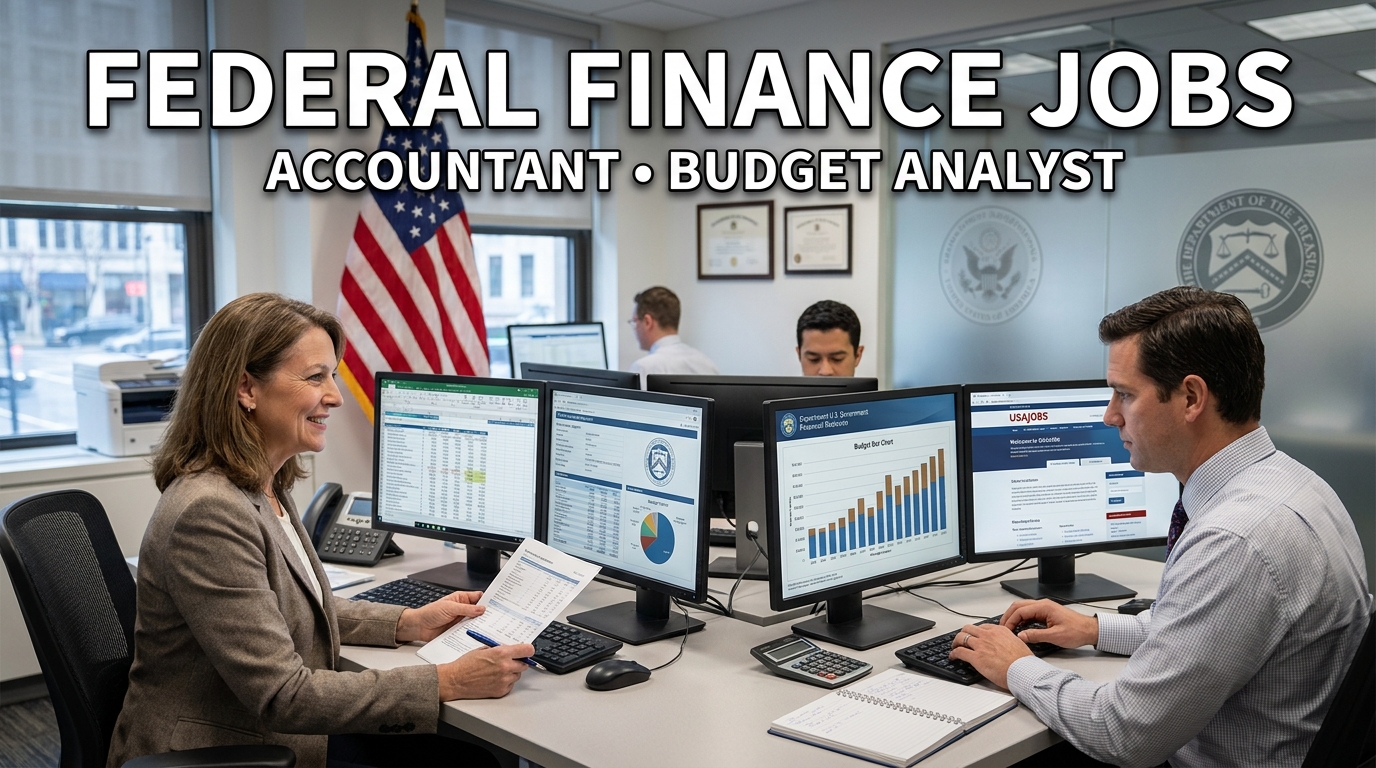
Federal Accountant and Budget Analyst Jobs: Navigating Finance Careers Across the Treasury, IRS, and Beyond
Federal accountant and budget analyst jobs form the financial backbone of the United States government, keeping agencies operational, accountable, and aligned with national priorities. Behind every national budget, public infrastructure project, and tax policy execution lies an army of financial professionals. Among the most critical of these positions are Accountants and Budget Analysts.
Managed primarily through platforms like USAJOBS, government finance roles span powerful agencies such as the Department of the Treasury, the Internal Revenue Service (IRS), the Office of Management and Budget (OMB), and countless other federal departments. For finance professionals seeking stability, competitive compensation, meaningful work, and clear paths for advancement, exploring federal accounting and budgeting roles opens doors to exceptional long-term careers.
Also read:
ENG vs PAK 3rd Test Day 1: England Take Command as Josh Tongue & Seamers Humble Pakistan
Understanding the Landscape of Federal Finance Roles
The federal government is the largest employer of financial and accounting professionals in the United States. Within the federal classification structure, these careers largely fall under the GS-0500 (Accounting and Budget Group), which encompasses diverse responsibilities ranging from basic financial auditing to macro-level national economic resource allocation.
1. The Federal Accountant (GS-0510)
Accountants in the federal sector do much more than crunch numbers or balance corporate ledgers. They design, develop, operate, and evaluate complex accounting systems that track trillions of dollars in government assets.
Core Responsibilities: Prescribing accounting standards and policies, examining and interpreting financial records, ensuring compliance with the Treasury Financial Manual (TFM), and preparing comprehensive financial reports.
Impact: Federal accountants safeguard public funds, prevent waste, fraud, and abuse, and ensure that agency spending aligns with the strict parameters established by Congress.
2. The Federal Budget Analyst (GS-0560)
Budget analysts play a pivotal role in resource planning, formulation, and execution. They work closely with executive leadership, program managers, and legislative liaisons to map out how financial resources are distributed and spent.
Core Responsibilities: Reviewing division budget requests, conducting trend analyses on historical spending, monitoring fund execution, and ensuring agencies stay within legally mandated thresholds (such as the Antideficiency Act).
Impact: Budget analysts bridge the gap between high-level policy goals and daily operations, ensuring that agencies have the monetary fuel required to execute their critical public missions.
Where These Roles Live: Spotlight on Key Departments
While nearly every federal agency employs accountants and budget analysts, certain departments are famous hubs for financial careers.
The Department of the Treasury
As the financial steward of the U.S. government, the Department of the Treasury deals with national and international financial policy, economic management, and government-wide accounting standards. Accountants and analysts here handle public debt management, currency production, and treasury operations, providing a macro-level view of national finance that is rarely matched in the private sector.
The Internal Revenue Service (IRS)
As a major bureau under the Treasury, the IRS hires thousands of finance professionals. Beyond traditional tax examiners, the IRS relies heavily on corporate accountants, financial analysts, and budget specialists to manage operational budgets, analyze business tax compliance, and modernize massive financial data systems. Recent federal investments in IRS modernization have transformed the agency into one of the most dynamic hiring grounds for tech-forward financial analysts.
Other Cabinet-Level and Independent Agencies
Departments like Defense (DoD), Veterans Affairs (VA), Health and Human Services (HHS), and Homeland Security (DHS) manage multi-billion-dollar budgets. Accountants and budget analysts embedded within these agencies directly support healthcare initiatives, national defense operations, and emergency management services.
Benefits of Pursuing a Federal Finance Career
Choosing a public sector career over corporate accounting or private financial consulting offers distinct advantages:
Job Security and Stability: Government agencies operate continuously regardless of market fluctuations, providing a remarkably stable career environment.
Work-Life Balance: Federal roles typically feature standard 40-hour workweeks, generous paid leave, and robust telework or remote work flexibilities.
Comprehensive Benefits: Federal health insurance plans (FEHB), the Federal Employees Retirement System (FERS) pension plan, and the Thrift Savings Plan (TSP)—which features matching contributions similar to a 401(k)—offer unmatched long-term financial security.
Clear Progression (GS Scale): Career advancement in government is structured predictably around the General Schedule (GS) grade scale (e.g., GS-7 up to GS-15), where performance and time-in-grade lead to systematic pay increases.
Qualifications and How to Apply via USAJOBS
Breaking into federal service requires careful navigation of the official hiring portal, USAJOBS.
Educational and Experience Requirements
For Entry-Level Positions (GS-05 / GS-7): A bachelor’s degree in accounting, finance, economics, or a related field with a specific number of semester hours in accounting coursework is usually required. Alternatively, equivalent professional experience can sometimes qualify applicants.
For Mid-to-Senior Levels (GS-11 through GS-15): Candidates typically need specialized experience demonstrating progressive responsibility in budget formulation, financial system execution, or auditing. Holding professional certifications like a Certified Public Accountant (CPA), Certified Government Financial Manager (CGFM), or a master’s degree can significantly strengthen an application.
Tips for Crafting a Winning USAJOBS Resume
Unlike a standard one-page corporate resume, a federal resume must be detailed, comprehensive, and tailored specifically to the job announcement.
Address the Qualifications: Explicitly mirror the specialized experience requirements listed in the job posting using concrete examples from your past work.
Include Metrics and Scope: Mention dollar amounts managed, team sizes led, or specific financial regulations (e.g., OMB Circular A-11) you have worked with.
Strict Formatting: Adhere strictly to page limits and requested documentation details (such as transcripts and performance evaluations) to avoid automated disqualification.
Frequently Asked Questions (FAQs)
1. Do I need a CPA license to become a federal accountant?
A CPA license is not universally required for all federal accounting positions, though it is highly beneficial and often required for senior-level or specialized forensic accounting roles. Most positions require a degree with a minimum number of accounting credit hours.
2. Can I work remotely as a budget analyst or accountant for the government?
Yes. Many federal agencies offer hybrid or fully remote work arrangements depending on the specific position description and agency policies listed on USAJOBS.
3. What is the difference between an accountant (GS-0510) and a budget analyst (GS-0560)?
Accountants focus primarily on recording, classifying, and reporting historical financial transactions and maintaining internal accounting controls. Budget analysts focus on the future—planning, forecasting, formulating, and monitoring how funds will be allocated and spent.
4. How long does the federal hiring process take?
The federal hiring process can take anywhere from a few weeks to several months due to comprehensive application reviews, qualifications vetting, and required security clearances. Patience and persistence are key.
Careers as an Accountant or Budget Analyst across the federal government offer an exceptional blend of professional challenge, stability, and public service. Whether you are managing national tax compliance at the IRS, steering fiscal policy at the Department of the Treasury, or optimizing operational execution within a defense or civilian agency, your skills directly impact the economic health of the nation. By leveraging the resources on USAJOBS and tailoring your professional profile to meet federal standards, you can embark on a deeply rewarding financial career path.