
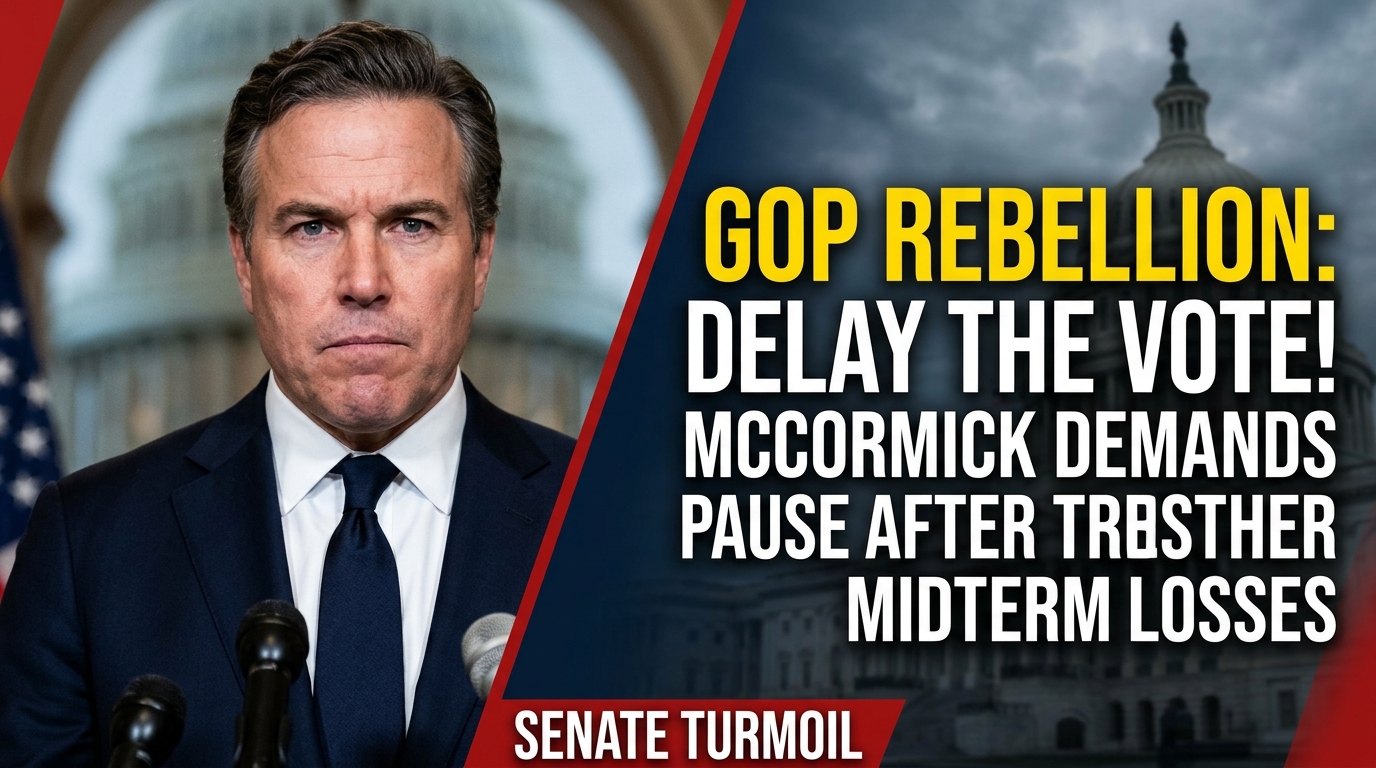
The fight for the future of the Senate Republican Party burst into the open on Tuesday, as a growing group of senators moved to freeze the Thune leadership vote. Six GOP senators are now publicly blocking the vote to re-elect John Thune as Senate majority leader, arguing that the contest should wait until after the party has reckoned with its midterm losses. The vote is set for Wednesday, and the rebels say that is far too soon.
Sen. Ron Johnson of Wisconsin is leading the push, and he has been joined by Sens. Mike Lee of Utah, Rick Scott of Florida, Jim Banks of Indiana and John Kennedy of Louisiana. Sen. Dave McCormick of Pennsylvania has also urged the conference to pause, arguing that the party needs time to absorb the election results before choosing its leaders. Together, they have turned what was meant to be a routine re-election into a test of whether the Senate GOP will change course after a bruising election. Our earlier report on McCormick’s call for a pause is here: Senate GOP Leadership Vote Delay: Sen. McCormick Urges Pause After Midterm Losses.
Who is blocking the vote, and why
Johnson has been the loudest voice. He argues that holding the Thune leadership vote the week after the midterms, before newly elected senators have taken their seats, would lock in the old leadership before the conference has had a chance to reflect on what voters said. “Tomorrow is too soon,” he has said of the Wednesday vote, a line that has become the rallying cry for the delay campaign.
Banks was the latest to join. The Indiana senator announced on Tuesday that he will block Thune’s re-election as GOP leader, a move that pushed the count to at least six. Lee and Scott, both long-standing critics of the party’s leadership, have backed the delay as well, while Kennedy has added his name to the push. McCormick, a freshman who won his seat in the last cycle, has framed the argument in gentler terms, urging a pause rather than a revolt, but the effect is the same: the Thune leadership vote cannot go ahead as planned without a fight.
Their case rests on the midterms. Republicans lost ground in last week’s elections, and the critics say the party cannot simply carry on as if nothing happened. Choosing leaders before the new senators arrive, they argue, would ignore the message voters sent. It would also hand Thune a fresh term without a real debate about strategy, spending and the party’s direction under President Donald Trump.
The Thune leadership vote and the midterm reckoning
Thune, a South Dakota Republican, has led the Senate GOP since the start of the year, after succeeding Mitch McConnell. He has worked closely with the White House on the president’s agenda, and his allies say he has kept a fractious conference together through a difficult year. They also point out that leadership elections are normally a formality, held quickly after an election so the party can get on with governing.
That is exactly what the rebels dispute. They say a formality is the last thing the party needs after losing seats, and that the Thune leadership vote should wait until the conference can hold a proper debate. Johnson, who has pushed for leadership changes for years, has long argued that the Senate GOP picks its leaders too quickly and with too little input from rank-and-file members. This week, for the first time, he has the numbers to make that argument stick.
The split mirrors the wider fight inside the Republican Party. In the House, Rep. Thomas Massie has forced a vote on impeaching Defence Secretary Pete Hegseth, and in the Senate, a handful of conservatives are now challenging Thune. The party won the White House and Congress, but it is still arguing about who should run it and how. The Thune leadership vote has become the latest front in that argument.
What happens on Wednesday
The vote is scheduled for Wednesday, and Thune’s allies still expect him to win it. Six senators can slow a leadership contest, but they cannot stop it on their own, and most of the conference is expected to back the current leader. The rebels know this. Their aim is not necessarily to defeat Thune, but to force a delay, and to make the case that the party needs to change before it picks its leaders for the next two years.
If the vote goes ahead and Thune wins, the rebels will have made their point and lost the vote. If it is delayed, even by a few weeks, they will have won a real concession, and the debate about the party’s direction will run on into the new year. Either way, the Thune leadership vote has already done something unusual: it has made a Senate leadership election, normally a quiet affair, into national news.
For Thune, the episode is a warning. He may keep his job this week, but he will do so knowing that a vocal part of his conference wants a different kind of leadership. For Johnson and his allies, it is a test of whether the midterm losses have changed anything at all. The answer will come on Wednesday, when the Senate GOP gathers to vote.
Sources and Resources
Read the full Daily Caller rundown here: The Daily Caller — Editor Daily Rundown: Senate Republicans Rally To Freeze GOP Leadership Vote. It covers the six senators now blocking the vote, Johnson’s push for a delay and the leadership election set for Wednesday.
Frequently Asked Questions
Who are the six GOP senators blocking the Thune vote?
The six are Sens. Ron Johnson of Wisconsin, Mike Lee of Utah, Rick Scott of Florida, Jim Banks of Indiana and John Kennedy of Louisiana, with Sen. Dave McCormick of Pennsylvania also urging a pause. Johnson is leading the push, and Banks was the latest to join on Tuesday.
Why do they want to delay the Thune leadership vote?
They argue the vote, set for Wednesday, comes too soon after the midterm losses and before newly elected senators take their seats. They want the conference to debate its direction first, rather than rubber-stamping the current leadership.
When is the Thune leadership vote?
The Thune leadership vote is scheduled for Wednesday, November 11. The six senators are pressing for a delay, but Thune’s allies still expect the vote to go ahead and for Thune to win re-election as Senate majority leader.
What did Ron Johnson say about the timing?
Johnson has said the Wednesday vote is too soon, arguing that the conference should wait until it has absorbed the midterm results. His call for a delay has become the rallying cry for the group of six.
Could Thune actually lose the leadership?
That looks unlikely. Six senators can force a debate and a delay, but most of the conference is expected to back Thune. The rebels’ real aim is a pause and a reckoning over the party’s direction, not necessarily a new leader.
Conclusion
The Thune leadership vote was meant to be a formality. Instead, six Republican senators have turned it into a reckoning over the midterms, the party’s direction and who should lead it. Thune will probably survive Wednesday’s vote, but the fact that the vote is being contested at all tells you how much has changed inside the Senate GOP.