
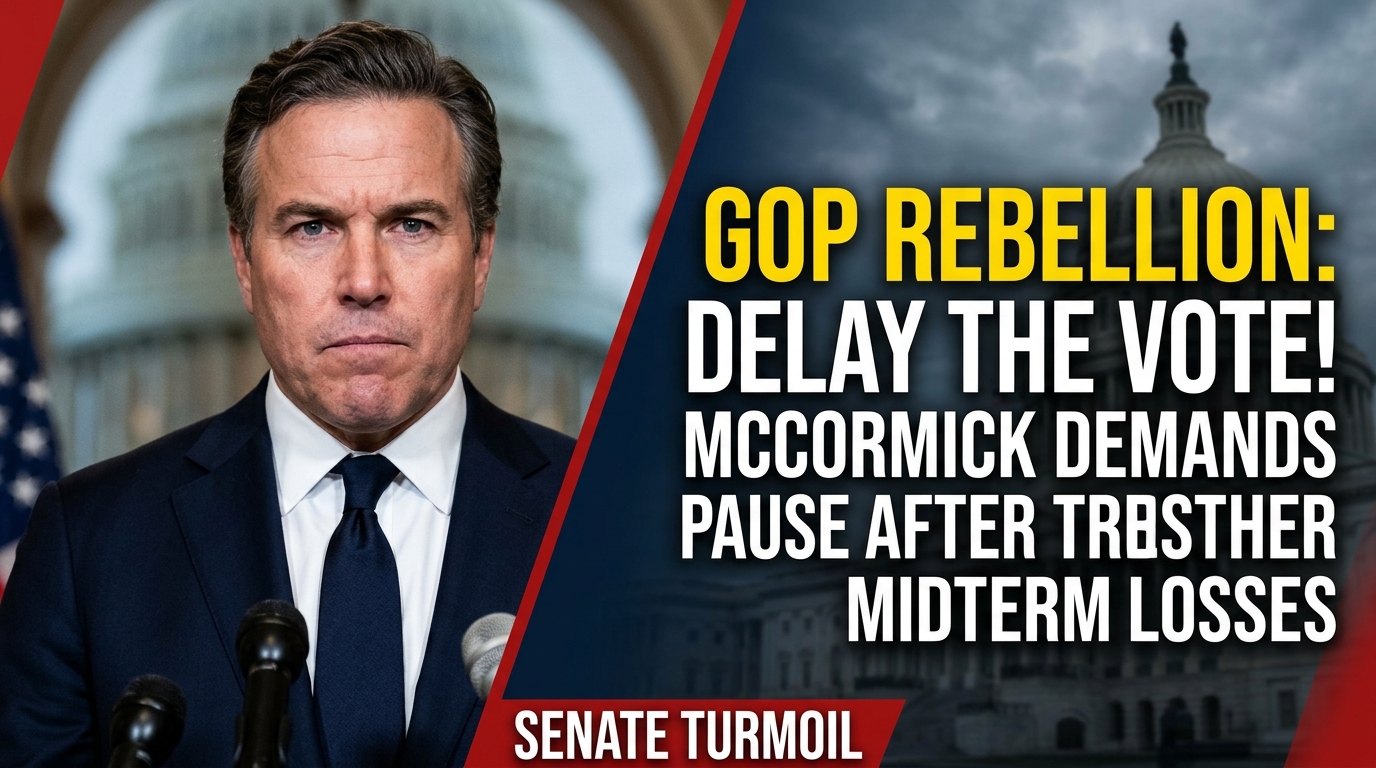
Senate GOP Leadership Vote Delay Urged by Sen. Dave McCormick After Midterm Losses
Following significant setbacks in the recent midterm elections, internal friction within the Republican Party has reached a critical flashpoint on Capitol Hill. Senator Dave McCormick (R-PA) has publicly aligned himself with a growing cohort of Senate Republicans demanding an immediate Senate GOP leadership vote delay. The decision comes as lawmakers grapple with party strategy, legislative gridlock, and the political fallout of losing key Senate contests across the nation.
McCormick and his colleagues argue that voting on party leadership immediately after severe electoral losses prevents the conference from conducting a thorough post-mortem. Rather than rushing into internal elections to pick minority leadership, dissenting lawmakers contend that Senate Republicans must pause, evaluate what went wrong with voters, and chart a clear path forward for upcoming legislative and presidential cycles.
Also Read:
Packers Crush Patriots 45-27 as Jordan Love Throws for 372 Yards and Three Touchdowns
The Push for a Senate GOP Leadership Vote Delay
The debate over the timing of the internal election centers on Senate Republican Conference Chairman Tom Cotton, who was formally requested by multiple GOP senators to postpone the proceedings. The push for a Senate GOP leadership vote delay—initially spearheaded by Senator Ron Johnson (R-WI) alongside Senators Mike Lee (R-UT), Ted Budd (R-NC), Rick Scott (R-FL), John Kennedy (R-LA), and Jim Banks (R-IN)—gained major momentum as McCormick added his voice to the movement.
McCormick voiced clear frustration over the rushed timeline, emphasizing that the party must first address the root causes of its electoral defeat before deciding who will lead its efforts in Congress. Speaking on the recent election outcome, McCormick noted that the conference needs space to assess strategy rather than rubber-stamping leadership structures during a period of vulnerability.
The primary concern among members urging a delay is that proceeding with the election under standard procedures risks signaling business-as-usual to a voter base that just delivered a clear rebuke at the polls. Lawmakers supporting the pause insist that an open, conference-wide discussion must take place before any secret-ballot vote is conducted.
Midterm Reversal and the Shift in Power
The insistence on a Senate GOP leadership vote delay stems directly from the midterm results, which saw Democrats flip key Senate seats and secure control of the upper chamber. Major Democratic victories across multiple states shifted the balance of power, placing Senate Republicans in the minority.
This shift in seat distribution has raised sharp questions about campaign execution, message framing, and legislative priorities in Washington. Critics within the GOP conference point out that key agenda items stalled due to internal division, leaving candidates with a challenging record to defend back home.
| Key Midterm Highlights & Factors | Impact on GOP Leadership Race |
| Senate Seat Shifts | Democrats flipped multiple states, gaining effective control of the Senate majority. |
| Factional Friction | Conservative senators demand policy commitments before backing current leadership candidates. |
| Stalled Legislation | Frustration over unpassed priority bills during the prior session damaged candidate messaging. |
| Strategic Planning | Lawmakers insist on defining a broad legislative framework prior to electing floor leaders. |
Leadership Dynamics and Internal Fractures
The effort to enforce a Senate GOP leadership vote delay directly affects candidate dynamics, including Senate Minority Leader candidate John Thune (R-SD). Thune, seeking to lead Republicans into the new Congress, faces pressure from conservative factions within the caucus who are seeking structural changes in how the Republican conference operates.
While some members back an immediate vote to ensure operational stability heading into the lame-duck session, others argue that taking time to rebuild consensus is far more important than meeting an artificial deadline. Party leaders and observers have kept a close eye on the proceedings as the choice of leadership remains entirely up to the Republican senators themselves.
Senator Rick Scott and other conservative members have suggested holding daily floor sessions and forcing floor votes on key conservative policy measures, such as voter identification laws, to re-establish party contrast. However, establishing agreement on legislative tactics remains difficult without a broader conference agreement on strategy.
Next Steps for Senate Republicans
As the Senate resumes work, Conference Chairman Tom Cotton faces continuing requests to alter the election timetable. Whether leadership officially grants the Senate GOP leadership vote delay or proceeds as scheduled, the internal debate highlights deep-seated divisions over how Republicans will navigate their role in the minority.
For Sen. Dave McCormick and his allies, postponing the vote represents an opportunity to reset priorities, rebuild donor and voter trust, and craft a unified strategy capable of winning back Congressional majorities.
Frequently Asked Questions (FAQs)
Why is Sen. Dave McCormick calling for a Senate GOP leadership vote delay? Sen. Dave McCormick urges a Senate GOP leadership vote delay so that Senate Republicans can thoroughly review their recent midterm losses, assess campaign strategy, and outline clear legislative goals before selecting party leaders.
Which other senators support a Senate GOP leadership vote delay? Senators Ron Johnson, Mike Lee, Ted Budd, Rick Scott, John Kennedy, and Jim Banks have also called for a Senate GOP leadership vote delay to allow ample time for internal caucus discussions.
Who oversees the scheduling of the Senate Republican leadership election? Senate Republican Conference Chairman Tom Cotton oversees the scheduling and organization of internal GOP conference leadership elections.
Disclaimer: This article is provided for informational and news reporting purposes only. Political analysis and statements reflect reporting based on current legislative developments and statements made by elected officials.