
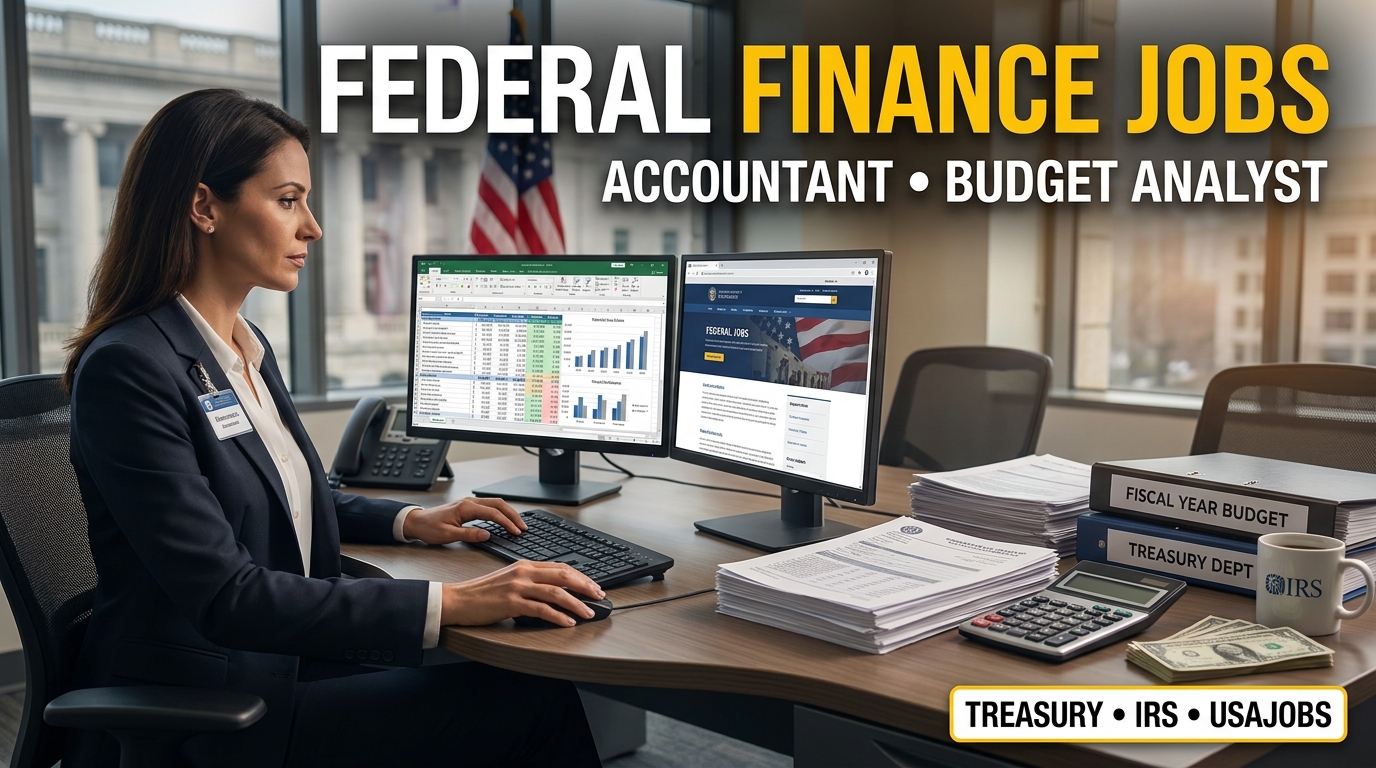
Navigating Federal Finance Careers: Accountant and Budget Analyst Roles Across the Treasury, IRS, and Beyond
Introduction
A career in public sector finance brings a rare combo: stability, competitive pay, real national impact, and strong growth potential. Among the most sought-after federal paths are the financial administration roles — Accountants and Budget Analysts. Inside major financial powerhouses like the Department of the Treasury and the Internal Revenue Service (IRS), these professionals form the backbone of government fiscal operations.
Whether you’re an entry-level graduate trying to break into federal service or an experienced CPA looking for a career switch, you need to know how finance roles work on platforms like USAJOBS. This guide walks through what these roles actually involve, the qualification requirements, salary structures, and strategies for landing your next government job.
Also read:
UEFA Champions League 2026/27 League Phase: Expanded Format, New Rules, Debutants & Complete Guide
The Landscape of Federal Finance: Treasury and IRS Roles
The federal government manages trillions of dollars every year. That takes serious financial oversight, meticulous accounting standards, and strict budget compliance. Two agencies drive these high-stakes operations:
1. The Department of the Treasury
As the executive agency behind promoting economic prosperity and keeping the United States financially secure, the Treasury handles federal revenue, debt management, and currency production. Accountants and budget analysts here work on macro-level economic strategy, national ledger management, and inter-agency fund allocations.
2. The Internal Revenue Service (IRS)
As the nation’s tax collection agency — and a bureau of the Treasury — the IRS employs thousands of finance professionals. Accountants and budget analysts in the IRS examine financial records, maintain accounting standards, manage multi-million dollar division budgets, and make sure operational spending lines up with congressional mandates.
Core Responsibilities: Accountant vs. Budget Analyst
Both roles sit under the broader umbrella of financial management (often classified under the GS-0500 occupational group), but their day-to-day work looks quite different.
Accountant (GS-0510 Series)
Federal accountants design, develop, operate, and evaluate accounting systems. Their core responsibilities include:
- Financial Reporting: Preparing financial statements, balance sheets, and cash flow reports in line with federal guidelines.
- System Oversight: Setting accounting standards, policies, and internal controls to prevent fraud, waste, and abuse.
- Auditing and Compliance: Reviewing accounting data, records, and reports to confirm transactions meet legal requirements.
Budget Analyst (GS-0560 Series)
Budget analysts live in the lifecycle of government funding. Their roles involve:
- Budget Formulation: Working with program managers to draft annual and multi-year budget requests.
- Budget Presentation and Enactment: Defending funding requests before agency leadership, the Office of Management and Budget (OMB), and congressional committees.
- Budget Execution: Monitoring how funds get distributed, tracking spending trends, and analyzing variances so divisions stay within their appropriations.
Qualifications and Requirements on USAJOBS
Applying through portals like USAJOBS means meeting specific education and experience thresholds set by the Office of Personnel Management (OPM).
- Educational Requirements: For Accountant roles (GS-0510), a degree in accounting or a related field with at least 24 semester hours in accounting is typically mandatory. Budget Analyst positions (GS-0560) may accept broader business, finance, or public administration degrees, paired with the right analytical experience.
- The General Schedule (GS) Grade Scale: Federal jobs run from GS-5 (entry-level) to GS-15 (senior management). Mid-level positions (GS-11 to GS-14) generally require specialized experience equivalent to the next lower grade — in the public or private sector.
- Specialized Experience: Your resume has to explicitly show competencies like interpreting budgetary laws, using financial management systems, or running complex financial data analysis.
Tips for Crafting a Winning Federal Resume
Federal hiring is a different beast from corporate recruiting. To clear automated screening (USA Staffing) and HR reviews:
- Ditch the 1-Page Rule: Federal resumes run 2 to 5 pages. They must spell out your work history in detail — exact start and end dates (MM/YYYY), hours per week, and salary.
- Quantify Achievements: Use hard numbers, e.g. “Managed a $12M divisional budget, reducing variance errors by 14%”.
- Mirror the Job Announcement: Read the “Qualifications” and “Duties” sections of the USAJOBS posting carefully, and weave relevant keywords naturally into your experience descriptions — without copying text word for word.
Frequently Asked Questions (FAQs)
1. Do I need a CPA license to become a federal accountant?
Not strictly — a CPA license isn’t required for all federal accounting positions. But it strengthens your application considerably, can qualify you for higher pay grades, and is strongly preferred for forensic or auditing roles.
2. Can private sector experience qualify me for a government budget analyst role?
Yes. Corporate budgeting, financial forecasting, cost estimation, or financial auditing in the private sector can count as specialized experience — as long as it maps closely to federal competencies.
3. Are remote work options available for IRS and Treasury finance roles?
Many federal agencies offer hybrid setups, telework flexibility, or fully remote positions. It depends on the office, department policy, and security clearance requirements.
4. How long does the USAJOBS hiring process take?
Federal hiring is notoriously thorough. From application to official offer can take 2 to 6 months — background checks, structured interviews, and credential verifications all take time.
Conclusion
An Accountant or Budget Analyst career within the Treasury, the IRS, or other federal divisions offers unmatched professional depth. Beyond steady pay scales and strong benefits, these roles let you contribute directly to the economic stability and fiscal health of the nation. Tailor your resume to federal standards, keep a close eye on platforms like USAJOBS, and you’ll take a decisive step toward a rewarding public service career.
1 thought on “Federal Finance Careers: Guide to Accountant & Budget Analyst Jobs on USAJOBS”