
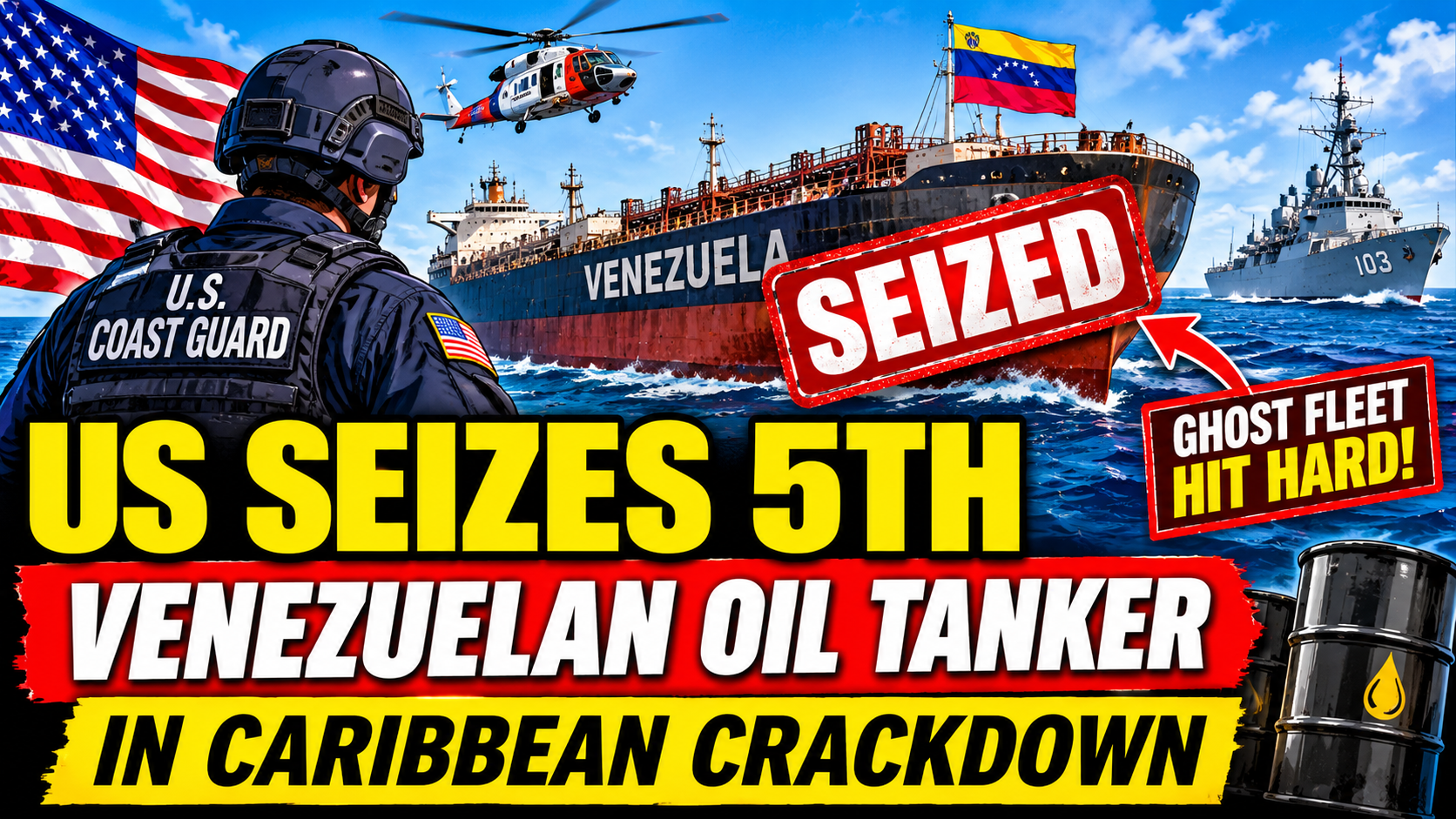
US Seizes Fifth Sanctioned Venezuelan Oil Tanker in Caribbean Crackdown on Ghost Fleet
The announcement that the US seizes fifth sanctioned Venezuelan oil tanker in Caribbean crackdown on ghost fleet operations signals a major escalation in Washington’s maritime enforcement strategy. Coordinated by the U.S. Department of Justice, the Department of Homeland Security, and the U.S. Coast Guard, federal authorities intercepted the illicit vessel in international waters, dealing another direct blow to state-backed illicit petroleum networks.
The interception targets the evasive network of aging, unflagged, and shell-company-owned vessels known as the global “ghost fleet” or “shadow fleet”. By severing key transport vectors carrying crude oil out of South America, federal law enforcement continues to choke off illegal revenue pipelines used to bypass international sanctions regimes.
Also Read:
Secret Service Arrests Armed Man Near White House in Second Recent Security Threat
                 [ CARIBBEAN MARITIME INTERCEPTION OUTLINE ]
                                     │
             ┌───────────────────────┴───────────────────────┐
             ▼                                               ▼
  [ MARITIME SURVEILLANCE ]                       [ JUDICIAL FORFEITURE ]
   • AIS Transponder Dislocation Tracked           • Federal Seizure Warrant Issued
   • Coast Guard Tactical Asset Boarding           • Arrest of Vessel & Cargo
   • High-Seas Interception Executed               • Legal Ownership Action Filed
             │                                               │
             └───────────────────────┬───────────────────────┘
                                     ▼
                     [ CRACKDOWN ON GHOST FLEET NETWORKS ]
1. Tactical Execution: How Law Enforcement Seized the Vessel
The operational sequence leading to the maritime raid involved months of multi-agency intelligence gathering tracking the vessel’s movements across maritime corridors.
  Deceptive Shipping Tactics       Satellite AIS Tracking         High-Seas Interception
+----------------------------+    +-----------------------+    +---------------------------+
| AIS Transponder Dark Mode  | -> | Maritime Intel Tracks | -> | US Coast Guard Assets     |
| Fraudulent Flag Usage      |    | Vessel Location       |    | Board & Secure Tanker     |
+----------------------------+    +-----------------------+    +---------------------------+
|               **Status: Remanded to Federal Judicial Custody**                           |
+------------------------------------------------------------------------------------------+
Key Elements of the Interception
Dark Fleet Evasion: The crude oil tanker frequently engaged in “going dark,” turning off its Automated Identification System (AIS) transponder to obscure illicit ship-to-ship transfers.
High-Seas Interception: U.S. Coast Guard law enforcement teams executed a tactical boarding maneuver in international waters without physical resistance.
Judicial Forfeiture Proceedings: Following the boarding, federal prosecutors unsealed warrants to seize both the physical vessel and its crude oil cargo under U.S. asset forfeiture laws.
2. Comparative Enforcement Metrics: Caribbean Ghost Fleet Interceptions
The action where the US seizes fifth sanctioned Venezuelan oil tanker in Caribbean crackdown on ghost fleet networks demonstrates an accelerating tempo of maritime sanctions enforcement:
| Operation Component | Typical Ghost Fleet Profile | Federal Interception Reality | Impact on Illicit Network |
| Vessel Registration | Fake / Suspended Flags of Convenience | Unflagged / Invalid Flag Status | Strips legal protections under maritime law |
| Cargo Valuation | Millions of Barrels of Unrefined Crude | Forfeited to US Federal Custody | Direct financial loss to illegal operators |
| Tracking Compliance | Disabled AIS Transponder | Tracked via Advanced Radar & Satellite | Proves evasion tactics ineffective |
| Operational Impact | Continuous Shadow Trade | Vessel Removed Permanently from Fleet | Severe logistical bottleneck created |
3. Broader Strategic Impact on International Sanctions Enforcement
Federal officials note that shadow fleet vessels represent serious risks beyond sanction evasion, including environmental threats due to poor maintenance standards and a lack of valid insurance.
                              [ ENFORCEMENT IMPACT MATRIX ]
                                             │
             ┌───────────────────────────────┴───────────────────────────────┐
             ▼                                                               ▼
  [ MARITIME RISK REDUCTION ]                                    [ FINANCIAL REVENUE CHOKE ]
   • Removal of Uninsured Aging Vessels                           • Elimination of Illicit Energy Profits
   • Interdiction of Fraudulent Registries                       • Deterrence of Rogue Shipping Operators
             │                                                               │
             └───────────────────────────────┬───────────────────────────────┘
                                             ▼
                             [ RESTORATION OF LEGAL MARITIME COMMERCE ]
Strategic Takeaways
Deterrence to Maritime Operators: By seizing physical assets and cargo, the United States raises the financial risk for third-party shipping brokers participating in illicit oil transfers.
Environmental & Safety Oversight: Removing unflagged, poorly maintained tankers reduces the threat of catastrophic oil spills along sensitive Caribbean trade routes.
Technical Conclusion
The milestone where the US seizes fifth sanctioned Venezuelan oil tanker in Caribbean crackdown on ghost fleet entities demonstrates the effectiveness of coordinated federal law enforcement on the high seas. By leveraging advanced tracking capabilities and decisive maritime interdiction, federal authorities continue to shut down illegal maritime trade routes, reinforcing international sanctions and upholding maritime security.
Frequently Asked Questions (FAQs)
What happened when the US seizes fifth sanctioned Venezuelan oil tanker in Caribbean crackdown on ghost fleet?
U.S. federal authorities, including the Coast Guard and Justice Department, boarded and seized a sanctioned crude oil tanker operating in international waters as part of an ongoing crackdown on the illegal shadow fleet.
What is a “ghost fleet” or “shadow fleet”?
A ghost fleet consists of older, uninspected vessels operating under fake flags with disabled transponders to illegally transport sanctioned commodities like oil across global waters.
What happens to the seized oil and tanker?
The vessel and its cargo are placed into federal custody, where the U.S. Department of Justice initiates legal forfeiture proceedings to take legal ownership.
Why are these maritime seizures significant?
They disrupt financial revenue pipelines for sanctioned entities while removing hazardous, uninsured ships from international shipping lanes.
Disclaimer
This article is provided strictly for educational, news analysis, and reporting purposes. Maritime enforcement actions, legal filings, and government disclosures reflect public reporting at the time of publication.