
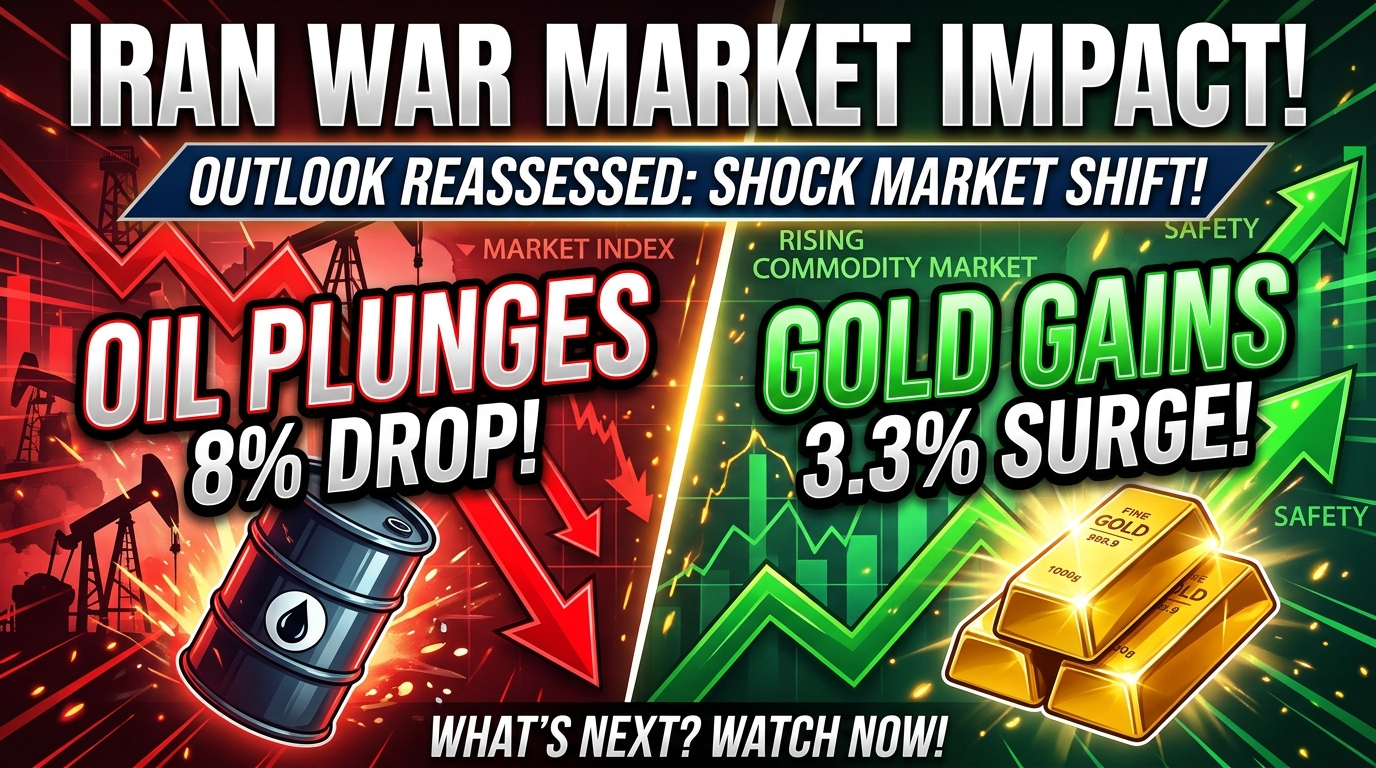
Iran War Market Impact: Oil Plunges 8% and Gold Gains 3.3% as Markets Reassess Outlook
The Iran war market impact sent dramatic shockwaves across global financial sectors today as investors rapidly reassessed geopolitical risks and global supply expectations. Energy prices experienced a sharp contraction, with crude oil benchmarks plummeting by roughly 8%, while precious metals rallied sharply as gold gained 3.3% in a classic market repricing dynamic.
This pronounced divergence between energy markets and safe-haven assets highlights how the broader Iran war market impact is reshaping investor strategies worldwide. While easing supply disruption concerns pulled energy futures down, broader macroeconomic recalibrations, monetary expectations, and defensive positioning pushed bullion prices higher.
Also Read:
Easing Tensions Alter Energy Dynamics
Crude oil had previously priced in substantial risk premiums amid fears of escalation, potential supply disruptions in the Middle East, and threats to key maritime choke points like the Strait of Hormuz. However, fresh political shifts and diplomatic signals have altered trader sentiment.
Key factors driving the oil market slide include:
Fading Risk Premiums: Expectations of immediate regional supply shocks receded as diplomatic channels showed signs of renewed momentum, stripping out the war premium embedded in crude prices.
Increased Supply Outlets: Production adjustments from non-conflicting Gulf producers and stable output elsewhere assured market participants of near-term inventory availability.
Macroeconomic Demand Signals: Broader fears of sustained high energy costs slowing global economic activity led traders to focus on underlying demand vulnerabilities rather than acute supply cuts.
As Brent crude and West Texas Intermediate (WTI) benchmarks registered losses near 8%, refiners, transportation firms, and energy-dependent sectors experienced immediate relief.
Why Gold Rallied Despite Easing Oil Tensions
Typically, when geopolitical fears subside and oil prices drop, gold prices experience downward pressure. However, the 3.3% surge in gold illustrates another dimension of the Iran war market impact on the macroeconomic climate.
Several core drivers explain gold’s strong performance:
Easing Inflation Expectations: A steep fall in energy costs rapidly reduces headline inflation forecasts. Lower expected inflation increases market confidence that central banks can accelerate interest rate cuts, reducing the real yield on holding non-yielding gold and boosting its appeal.
Portfolio Rebalancing & Safe-Haven Demand: Despite short-term diplomatic movement, global investors remain cautious about overall Middle Eastern stability. Gold continues to serve as an indispensable hedge against potential structural volatility.
Currency Volatility: Fluctuations in foreign exchange markets, particularly movement in the US Dollar Index, provided favorable tailwinds for international gold buyers.
Timeline of Key Market Events
The following timeline details how geopolitical sentiment transformed into rapid market movement across energy and precious metals sectors:
Strategic Asset Class Comparison
| Financial Asset | Price Action | Key Primary Drivers | Market Outlook |
| Crude Oil (Brent/WTI) | Down ~8% | Easing war premium, stable supply flows, demand concerns | Volatile; sensitive to regional diplomatic updates |
| Gold (Bullion) | Up ~3.3% | Rate cut expectations, lower bond yields, strategic hedging | Strong baseline support on monetary policy shifts |
| Energy Equities | Mixed to Bearish | Squeezed profit margins following lower realized crude prices | Dependent on long-term oil stabilization levels |
| Airlines & Logistics | Bullish | Reduced operational fuel input costs driving improved guidance | Positive short-term outlook if oil remains subdued |
Global Takeaways & Investor Strategy
Understanding the full Iran war market impact provides vital insight into how fast-moving global capital flows react during conflict re-evaluations.
For institutional and retail investors alike, key operational takeaways include:
Energy Cost Normalization: Falling oil prices lower fuel surcharges and transportation overhead, providing relief for logistics and aviation industries.
Monetary Policy Path: Dropping energy prices remove significant headline inflation pressure, giving central banks more room to lower interest rates in upcoming decisions.
Diversification Imperative: The simultaneous slide in oil and surge in gold shows that broad portfolio diversification across uncorrelated assets remains vital during high-uncertainty periods.
Frequently Asked Questions (FAQs)
Q1: What is the primary Iran war market impact on commodity prices?
The most immediate impact has been a sharp 8% drop in crude oil prices due to easing supply panic, coupled with a 3.3% gain in gold as markets price in expected central bank interest rate cuts.
Q2: Why did oil prices fall by 8% so suddenly?
Oil prices fell sharply as reports of diplomatic progress and political developments reduced fears of major supply disruptions in the Middle East, leading traders to quickly unwind war-risk premiums embedded in futures contracts.
Q3: Why is gold rising if geopolitical tensions are easing?
Gold surged primarily because falling oil prices reduce inflation expectations, increasing market confidence in future interest rate cuts by central banks. Lower interest rate environments typically enhance gold’s attractiveness relative to yield-bearing assets.
Q4: How does this market shift affect consumers?
When crude oil drops on global exchanges, wholesale fuel prices generally follow over subsequent weeks, leading to lower pump prices for consumers and reduced shipping costs for businesses.
Disclaimer: This article is for informational and educational purposes only and does not constitute financial, investment, or trading advice. Commodity markets are highly volatile and subject to rapid geopolitical shifts. Always consult with a qualified financial advisor before making investment decisions.