
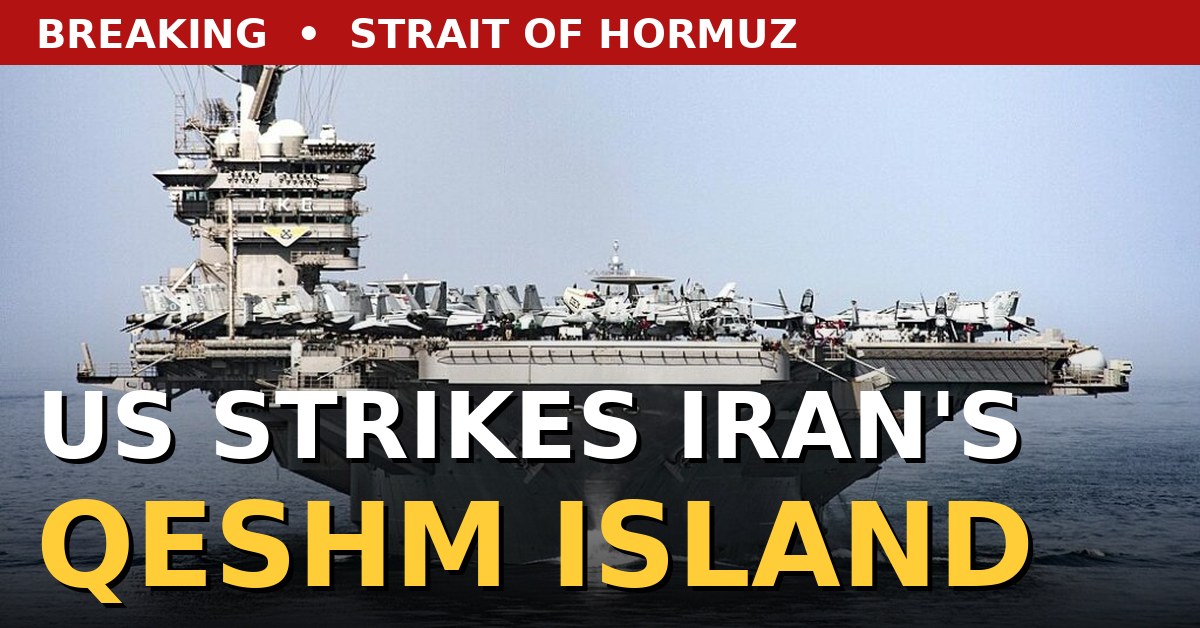
Iran claims four tankers destroyed by naval mines in the Strait of Hormuz, a claim that, if true, would mark a sharp escalation in one of the world’s most sensitive waterways, but one that has not been independently verified. The claim, reported by Iran’s Revolutionary Guard Corps and carried by Zot News, says four tankers, linked to the United States, Saudi Arabia, the United Arab Emirates and Russia, were targeted by naval mines in the strait. No independent confirmation, no names of the vessels and no verified images had been published at the time of writing, and that absence of proof is itself part of the story.
The Strait of Hormuz is narrow, crowded and vital. It connects the Persian Gulf to the open ocean, and about a fifth of the world’s traded oil passes through it, along with a large share of liquefied natural gas. Any incident there, real or rumoured, moves oil prices, insurance rates and shipping schedules within hours, because traders do not wait for certainty before pricing risk. That is why a claim of four tankers destroyed, even unverified, cannot be ignored, and why it must also be treated with care.
What Iran claims about four tankers destroyed
According to the IRGC account, the four tankers destroyed were hit by naval mines, not by missiles or boarding parties, and the incident was presented as a response to what Iran calls hostile activity in the region. The report says Iranian vessels were not damaged, and it frames the incident as a warning to shipping that, in Tehran’s view, violates sanctions or security rules. Those details come from Iranian state-linked reporting, not from the shipowners, insurers or naval forces that would normally confirm such an incident.
That gap matters. In past Hormuz incidents, independent evidence, satellite images, ship-tracking data, photos of damage and statements from owners, has usually followed within hours. Here, the claim stands largely on its own, and other governments have not, so far, confirmed that four tankers were destroyed. Readers should therefore read the claim as a claim, not as an established fact, until that evidence appears. It is possible that an incident occurred and details are still emerging. It is also possible that the claim is overstated, or that it refers to a smaller incident than the word destroyed suggests.
Why the Strait of Hormuz matters so much
The strait is only about 33 kilometres wide at its narrowest point, with shipping lanes just a few kilometres across in each direction. Tankers, container ships and naval vessels share those lanes every day, and a mine, a collision or a seizure can close or slow traffic for days. For countries that depend on Gulf oil, from China and India to Japan and South Korea, a closure would be an economic shock, not just a regional dispute. For the United States and its allies, keeping the strait open has long been a core naval mission, which is why warships patrol nearby waters.
Oil markets reacted to the claim as they usually do to Hormuz news: with a jump, then a pause as traders waited for confirmation. That pattern, a spike on rumour and a correction on evidence, or lack of it, has repeated in previous crises, and it is a reminder that markets price fear as well as fact. If four tankers were indeed destroyed, the effect on prices, insurance and shipping would be larger and longer lasting. If the claim is not confirmed, prices are likely to ease back, though the underlying tension will remain.
The timing also matters. The claim comes at a moment of high tension in the Gulf, with sanctions, naval deployments and regional rivalries all in play. In that setting, a claim about mines can be a message as much as a military act, a way to signal capability and resolve without, necessarily, starting a wider war. That does not make it harmless. Messages in a crowded strait can be misread, and misread messages can lead to real incidents, even when no one intended one.
What four tankers destroyed means for shipping is clear: four tankers destroyed would raise insurance, slow traffic and push oil prices up. If four tankers destroyed is confirmed, navies will respond, and if four tankers destroyed is not confirmed, the claim will still shape how shippers view the strait.
Frequently asked questions
Has the tanker claim been verified?
No. Iran claims four tankers destroyed by naval mines, but the claim has not been independently verified by shipowners, insurers or other governments at the time of writing.
Which countries were the tankers linked to?
The IRGC account links the four tankers to the United States, Saudi Arabia, the United Arab Emirates and Russia, according to the Zot News report.
Why is the Strait of Hormuz so important?
About a fifth of the world’s traded oil passes through the strait, along with large volumes of liquefied natural gas, making it one of the world’s most important shipping chokepoints.
What would happen if the strait closed?
Oil prices would likely rise sharply, shipping would be rerouted or delayed, and economies that depend on Gulf oil would face higher energy costs within days.
What should readers watch for next?
Watch for statements from shipowners and insurers, satellite images, ship-tracking data and comments from the US Navy and other naval forces in the region. Those will confirm or cast doubt on the claim.
Conclusion
Iran claims four tankers destroyed in the Strait of Hormuz, and the world is right to take that claim seriously, because of where it happened and what it would mean if true. It is also right to wait for proof, because the claim has not been independently verified, and because Hormuz has a history of claims that outran the evidence. Until owners, insurers or naval forces confirm what happened, the safest reading is this: a serious claim, in a serious place, still awaiting serious proof. For related coverage, see our report: Dow surges 3 percent in biggest post-midterm rally.
Sources and Resources
Source: Zot News: Iran’s IRGC says four tankers destroyed by naval mines in Strait of Hormuz. The Zot report cites BBC-linked reporting on the IRGC claim. Further reading: official statements from naval forces in the Gulf and ship-tracking data as they become available.