
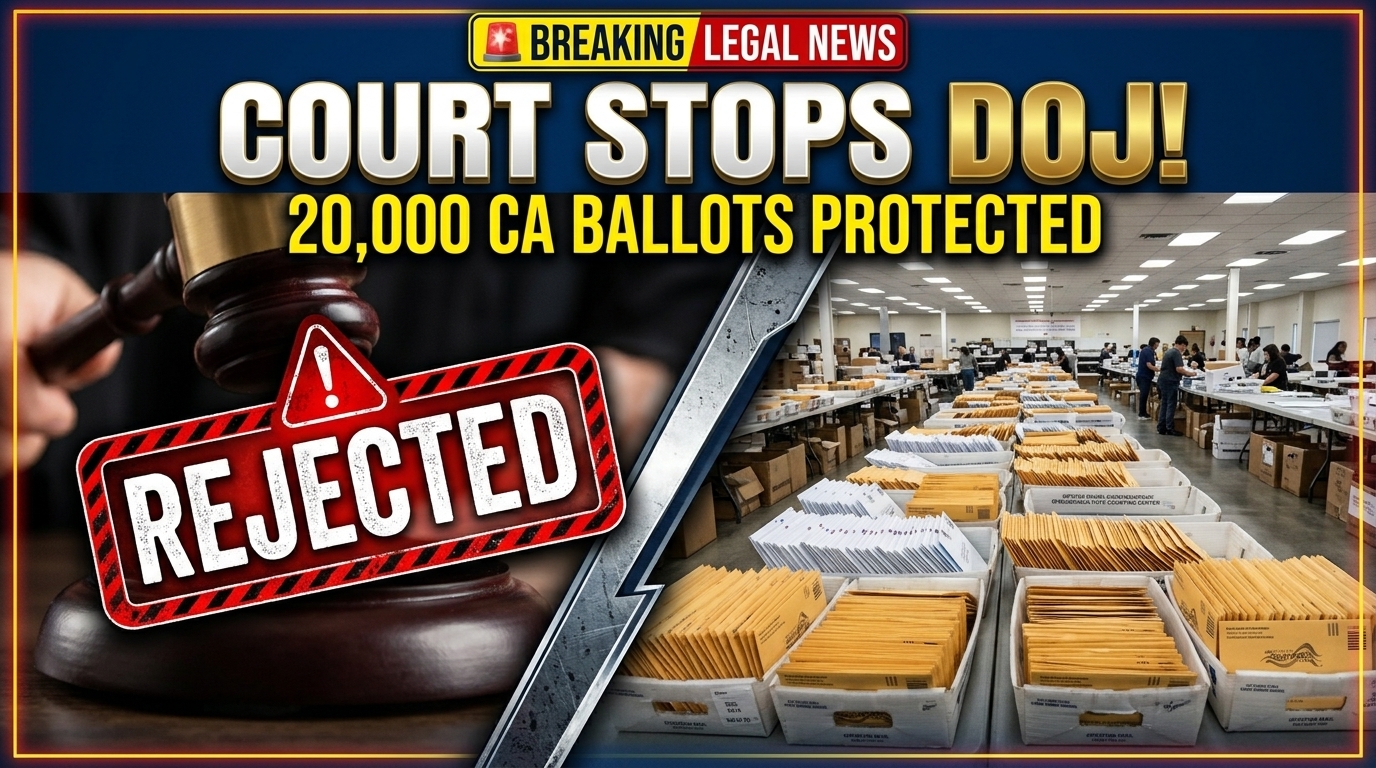
Appeals Court Denies DOJ Bid to Set Aside 20,000 California Ballots
Introduction: High-Stakes Pre-Election Legal Showdown
In a major legal ruling with nationwide implications just days before the 2026 U.S. midterm elections, a federal appellate panel handed the U.S. Department of Justice (DOJ) a decisive defeat. An appeals court denies DOJ bid to set aside 20,000 California ballots, ruling that federal intervention to block or isolate early mail-in ballots threatens voter disenfranchisement and violates constitutional principles governing state-administered elections.
The ruling by the U.S. Court of Appeals for the Ninth Circuit affirms a lower court decision by U.S. District Judge David O. Carter. The federal government had sought an emergency order compelling California election officials to segregate and halt the processing of more than 20,000 mail ballots from individuals the administration alleged could be noncitizens. The court’s decision represents a critical setback for federal attempts to reshape election administration procedures on the eve of nationwide voting.
Also Read:
Bitcoin Nears $77,000 as Crypto Market Falls Amid Binance Hack Fallout
The Legal Battle: Federal Mandates vs. State Election Authority
The dispute began when the Justice Department filed a lawsuit targeting California state and county election officials. Federal prosecutors argued under the Supremacy Clause that state processing of contested ballots conflicted with federal laws prohibiting noncitizen voting.
The DOJ’s Claims: Federal prosecutors compiled a list of approximately 20,000 registered voters whose citizenship status they questioned. The Department demanded an emergency injunction requiring local election registries to segregate those specific vote-by-mail envelopes until individual citizenship verification could be completed.
California’s Defense: Legal representatives for California Secretary of State Shirley Weber and county registrars pushed back forcefully, demonstrating that the federal list was unreliable, outdated, and contained numerous naturalized U.S. citizens. State officials emphasized that once mail ballots are processed and removed from secrecy envelopes, established privacy protocols prevent matching individual ballots back to specific voters.
District Court Rejection: District Judge David O. Carter forcefully denied the DOJ’s application for a temporary restraining order, warning that forcing local officials to disrupt ongoing tabulation risked disenfranchising eligible voters and destabilizing election infrastructure.
[DOJ Files Emergency Motion] ---> [District Court Denies TRO] ---> [Emergency Appeal to Ninth Circuit] ---> [Ninth Circuit Affirms Ruling & Denies DOJ Motion]
The Ninth Circuit Ruling: Constitutional Framework and System Integrity
The Ninth Circuit Court of Appeals panel rejected the federal government’s emergency application. The majority opinion emphasized strict adherence to the Elections Clause of the U.S. Constitution, which assigns state legislatures primary authority over the time, place, and manner of holding congressional elections.
Protection Against Disenfranchisement: The appellate panel noted major concerns that granting the federal government’s emergency request would harm the public interest by risking the disenfranchisement of eligible voters.
Operational Impossibility: The judges observed that election administrators had no feasible mechanism to segregate processed ballots without causing catastrophic disruptions to the entire vote counting system.
Judicial Alignment: The majority decision was authored by Circuit Judges appointed across different presidential administrations, underscoring broad judicial consensus regarding state administrative authority.
| Legal Phase / Forum | Official Ruling / Outcome | Key Judicial Finding |
| U.S. District Court | Temporary Restraining Order Denied | Cited lack of evidence, risk of voter disenfranchisement, and state administrative rights. |
| Ninth Circuit Appeals Panel | Emergency Motion for Injunction Denied | Found no feasible way to segregate ballots without destabilizing overall election operations. |
| Federal Policy Impact | Status Quo Maintained Nationwide | California election officials continue routine ballot processing without federal disruption. |
Political Reactions and Broader National Context
The Ninth Circuit’s ruling arrives amid heightened national focus on voting procedures, early mail-in ballot processing, and federal oversight ahead of the midterm elections.
1. California State Officials & Civil Rights Coalitions
California state leaders and civil rights advocacy organizations welcomed the ruling as a victory for voter rights and state sovereignty. Pro-voter coalitions emphasized that attempt to alter balloting rules days before an election creates unnecessary confusion and undermines public confidence in verified election outcomes.
2. Justice Department Response
While the Department of Justice expressed disappointment over the ruling, administration officials reiterated their commitment to enforcing federal voting qualification statutes. Federal prosecutors indicated they would evaluate further appellate avenues, including potential emergency filings to the U.S. Supreme Court.
3. Impact on Local Election Workers
The ruling coincides with separate judicial orders prohibiting federal law enforcement from threatening or coercing local election staff during routine ballot processing. Local registrars across major California counties confirmed that vote counting operations remain on schedule under standard state guidelines.
Frequently Asked Questions (FAQs)
Q1: Why did the appeals court deny the DOJ bid to set aside 20,000 California ballots?
A: The Ninth Circuit panel ruled that granting the federal request would risk disenfranchising eligible voters, violate state administrative authority under the Elections Clause, and destabilize the ongoing ballot tabulation process.
Q2: What was the main argument used by the Department of Justice in this lawsuit?
A: The DOJ claimed that sending and processing mail ballots from a list of 20,000 individuals identified as potential noncitizens violated federal voter eligibility standards and federal supremacy.
Q3: Can processed mail ballots be segregated after being removed from envelopes?
A: No. Both election officials and the court noted that once mail-in ballots are removed from signature envelopes during standard processing, voter privacy protections make it impossible to track or pull back specific individual ballots.
Q4: Will this ruling be appealed to the U.S. Supreme Court?
A: Legal observers expect the Justice Department to seek emergency relief from the U.S. Supreme Court, though California election officials continue processing ballots under current legal standings.
Disclaimer
Disclaimer: This article summarizes judicial rulings, government legal filings, and public statements regarding federal litigation over California voting procedures as of late October 2026. Judicial proceedings and prospective Supreme Court applications remain subject to ongoing legal updates.