
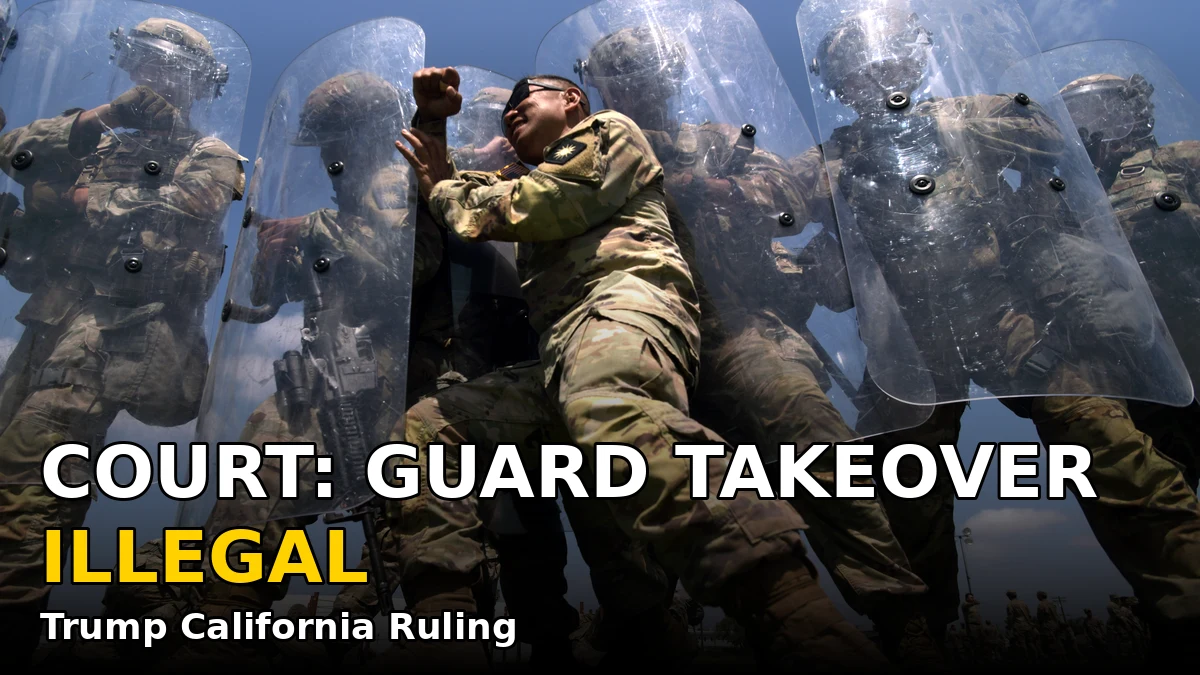
The Trump California ballots ruling arrived on October 28 with unmistakable force. A federal judge in California rejected the Trump administration’s request to temporarily block the state from counting mail ballots from more than 20,000 registered voters whom the Justice Department alleged were likely noncitizens, according to Reuters. The decision keeps California’s count moving in the final days before the midterm elections.
It was, by any measure, a rebuke. U.S. District Judge David Carter found that the government had not offered credible support for its claims — and warned that granting the request would wreak havoc on an election already underway. The Justice Department, undeterred, immediately appealed.
Trump California Ballots Ruling: What the Judge Decided
At the center of the case sat an extraordinary ask. The Justice Department wanted a federal court to order California, mid-count, to stop tallying mail ballots belonging to more than 20,000 registered voters it alleged were likely noncitizens — and to set those ballots aside while the broader legal fight played out.
Carter said no. Yanking thousands of ballots out of the count midstream, he concluded, would wreak havoc on an election already underway, with ballots already cast, gathered, and being counted statewide. Restoring order afterward would be far harder than letting the count continue.
Equally important was what the government failed to show. The allegation that tens of thousands of registered voters were likely noncitizens lacked credible support. Without evidence strong enough to justify sweeping relief, the court declined to intervene — the central holding of the Trump California ballots ruling.
Why the Judge Said No
The Trump California ballots ruling turned on a familiar judicial balance — the strength of the moving party’s case, the harm each side would suffer, and the public interest. The administration stumbled on the first and lost badly on the second.
Start with timing. With voting underway and counting in progress, halting the tally of more than 20,000 ballots would have thrown election administration into confusion. The judge’s warning about havoc captured the practical fallout of freezing a statewide count with days to go.
Underlying it all was the evidence gap. A claim that more than 20,000 registered voters were likely noncitizens is a serious one, and serious claims demand serious proof. Carter found the department had not supplied it.
The Lawsuit Behind the Request
To understand the Trump California ballots ruling, start two weeks earlier. The Justice Department sued California and Los Angeles County on October 15, opening a broader legal fight over the state’s election administration. The bid to set aside the 20,000 ballots was an interim maneuver inside that larger case — an attempt to freeze part of the count while the lawsuit moved forward.
Note what the ruling did not decide. Carter’s order addressed only the request to temporarily block the counting — not the underlying October 15 lawsuit, which remains live. The broader dispute between the federal government and the state is far from over.
Nor is this the first time federal judges have greeted the administration’s ballot efforts with skepticism. Earlier this month, judges hearing a related push to force California to set aside mail ballots signaled serious doubts — a prelude to Carter’s ruling, covered here earlier.
Six Days Before the Midterms
The timing of the Trump California ballots ruling gave it extra weight: it landed just six days before the November 3 midterm elections. Courts have long been wary of altering election procedures in a campaign’s final stretch, precisely because late changes risk confusing voters and the officials who serve them.
With the election already underway, the count continues as planned rather than being upended by court order — and the six-day window compresses whatever comes next.
The Justice Department Appeals
The Trump California ballots ruling did not end the fight. The Justice Department immediately appealed, signaling it will keep pressing the case at a higher level. The dispute over the 20,000 ballots continues even as the counting proceeds.
For now, the lower court’s message stands: the administration has not shown enough to stop California from counting. But the appeal makes the Trump California ballots ruling a chapter in the fight rather than its end — a rebuke of the administration’s legal effort, not a final resolution.
What Happens Next
For the moment, the picture is clear. California keeps counting the more than 20,000 mail ballots at the heart of the dispute, the October 15 lawsuit moves forward, and the immediate appeal means the battle has simply moved to the next court.
The essentials of the Trump California ballots ruling are these: a federal judge rejected the bid to set the ballots aside, finding the government lacked credible support and warning of havoc to an election already underway; the decision arrived six days before the November 3 midterms; and the appeal guarantees the battle continues. What comes next rests with the appellate courts — and the clock.