
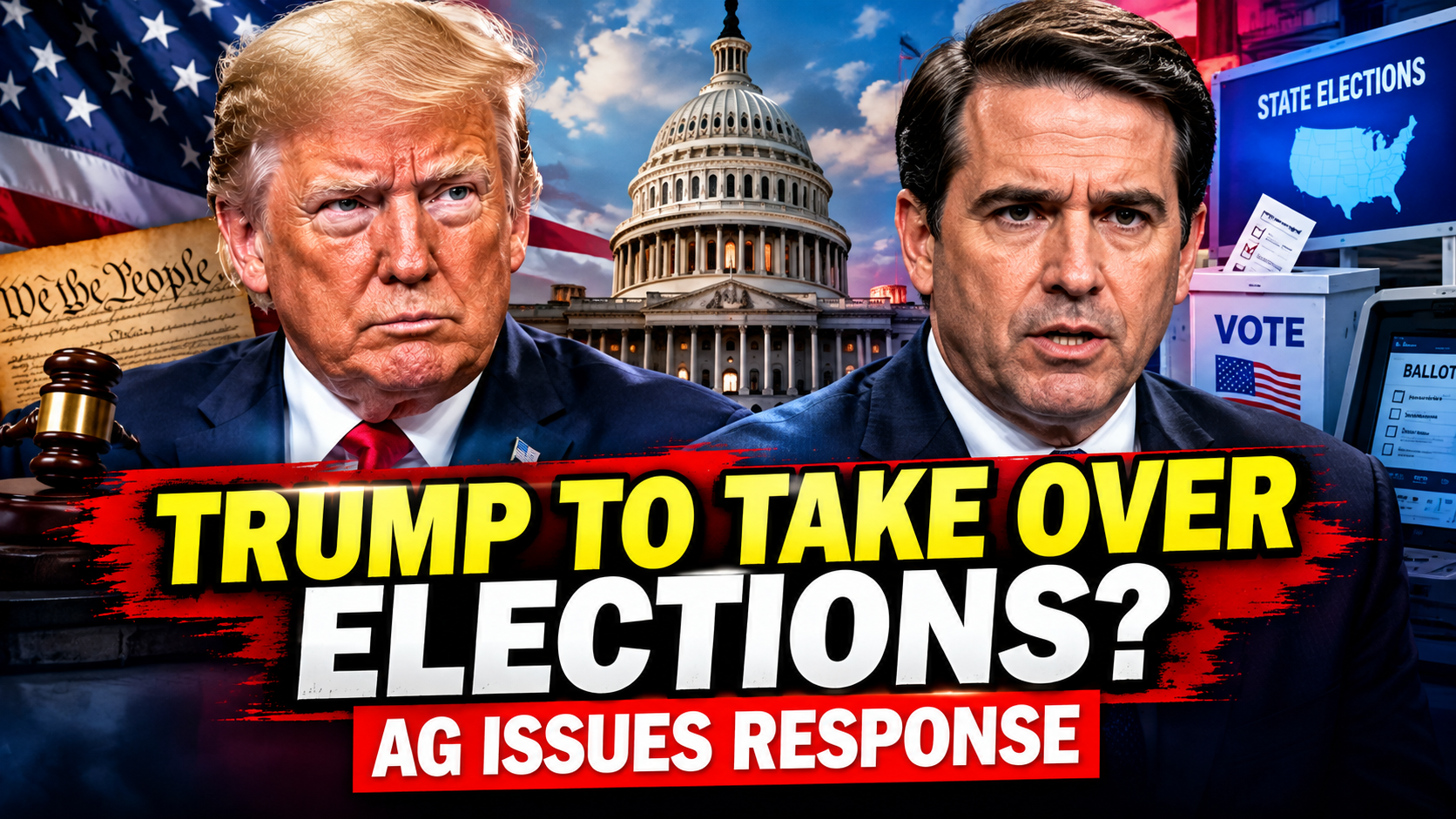
State Election Control: US Attorney General Clarifies Administration Plans
Introduction
State election control has once again become a central topic of national debate in the high-stakes lead-up to the upcoming legislative elections, highlighting the delicate balance of power between state election officials and the federal government. Responding to growing concerns, political pushback, and public scrutiny over recent legal interventions by the Department of Justice (DOJ), U.S. Attorney General Todd Blanche publicly declared that President Donald Trump has no intention of federalizing or overriding local election management.
Addressing national media outlets, the Attorney General emphasized that federal legal inquiries and lawsuits filed by the Department of Justice are intended strictly to ensure statutory compliance and election integrity, rather than establishing federal control over local voting mechanisms. These statements arrive at a critical junction when state election boards, voting advocacy organizations, and lawmakers are closely monitoring federal involvement in state-level election administration.
Also Read:
Crypto Daily Market Report October 26 2026: Bitcoin Dips Below $80K Amid Macro Pressures
Federal Overview and the State Election Framework
Under the United States Constitution, the authority to regulate the times, places, and manner of holding congressional elections is primarily vested in individual state legislatures, subject to oversight or alteration by Congress. This decentralized system means that each state maintains its own laws regarding voter registration, ballot verification, tallying methods, and post-election certification procedures.
Concerns regarding state election control emerged after federal prosecutors filed preemptive legal challenges in select states—most notably surrounding certification guidelines and procedures in high-profile races, such as Alaska’s Senate contest. Critics and state officials argued that these proactive filings could signal an attempt to interfere with or bypass state certification authority if outcomes did not align with federal administration expectations.
However, Attorney General Blanche forcefully rejected these characterizations during an interview on television news, asserting: “President Trump is not trying to take over a state election in any way, shape, or form. We’re not laying any groundwork for the president to do that.”
Department of Justice Position and Legal Interventions
The Department of Justice maintains that its actions fall strictly within its statutory mandate to enforce federal voting laws and protect constitutional integrity. According to officials, DOJ lawsuits targeting specific state procedures are aimed at addressing perceived procedural flaws or inconsistent application of election standards before votes are certified.
Among the central points of contention in the ongoing debate over state election control are:
Preemptive Certification Challenges: Legal experts and local election authorities expressed alarm over lawsuits seeking to block state certification before all legal remedies at the state level were exhausted.
Federal vs. State Jurisdiction: Administration officials contend that federal oversight is warranted when state actions potentially infringe upon federal statutes or constitutional protections. Opponents argue that such preemptive legal actions risk infringing upon state sovereignty.
Emergency Scenarios and Certification Delays: When questioned about extreme hypotheticals where state election results remain disputed or unresolved, DOJ officials reiterated that standard legal channels and judicial review remain the sole authorized mechanisms for resolution.
Reactions from State Officials and Lawmakers
The Attorney General’s comments were met with mixed responses across the political spectrum. State election administrators across multiple jurisdictions expressed relief at the explicit denial of federal takeover intentions, yet many voiced ongoing concern over how federal litigation might disrupt local election processes.
State Election Directors: Local administrators emphasized that existing state laws already provide clear frameworks for recounts, audits, and legal contests. They noted that unexpected federal lawsuits close to election dates create logistical confusion and undermine public trust in local poll workers.
Congressional Leaders: Opposition lawmakers criticized the administration’s legal maneuvers as aggressive, arguing that even verbal assurances cannot offset the chilling effect of DOJ litigation against state boards. Conversely, allies of the administration defended the Justice Department’s right to challenge procedures that could compromise election accuracy.
Constitutional Bounds of Federal Oversight
The debate highlights an enduring constitutional conflict in American governance: balancing federal civil rights enforcement with constitutional state sovereignty.
While federal agencies such as the DOJ are charged with protecting voting rights under federal statutes, federal law does not grant the Executive Branch unilateral authority to seize control of state election operations, alter state vote counts, or halt state-mandated certification without federal court intervention.
| Aspect | State Authority | Federal Role & Limits |
| Administration | Manages voting machines, polling places, voter rolls, and local poll workers. | No direct operational authority; limited to statutory oversight. |
| Legal Mandate | Established by state constitutions and legislative statutes. | Governed by federal civil rights laws and constitutional provisions. |
| Certification | State boards of canvassers and Secretaries of State certify results. | Must challenge via federal court; cannot unilaterally block state acts. |
Looking Ahead to Election Day
As voters prepare to head to the polls, election officials nationwide continue preparations to ensure smooth operations and secure counting procedures. Legal analysts anticipate that while the DOJ may continue to monitor local practices, any intervention will ultimately have to be litigated through the judicial system rather than enforced by executive mandate.
The Attorney General’s public reaffirmation serves as an attempt to calm anxieties regarding federal overreach. Nevertheless, state election directors, non-partisan observers, and legal experts remain focused on maintaining state-level autonomy and ensuring that election outcomes are determined in strict accordance with established law.
Frequently Asked Questions (FAQs)
Q1: Did the U.S. Attorney General state that President Trump will take over state elections?A: No. U.S. Attorney General Todd Blanche explicitly stated that President Donald Trump has no plans, designs, or intentions regarding state election control.
Q2: Why did concerns arise regarding federal involvement in state elections?A: Concerns arose following recent legal actions and preemptive lawsuits filed by the Department of Justice aimed at state certification procedures and voting rules in specific states.
Q3: Does the federal government have the legal authority to run state elections?A: No. Under the U.S. Constitution, state governments hold primary authority over conducting and certifying elections, while federal intervention is restricted to enforcing federal civil rights and voting laws through federal court proceedings.
Q4: What is the main objective of the Justice Department’s election-related lawsuits?A: The Justice Department maintains that its legal filings aim to enforce federal voting statutes, uphold constitutional standards, and resolve procedural discrepancies before state election results are finalized.
Disclaimer
Disclaimer: The information provided in this article is intended for educational and general informational purposes only and does not constitute formal legal advice. News events and legal positions regarding election law are subject to ongoing developments and official judicial rulings.