
The Trigger of the Nepal-Tibet Flash Floods: Glacial Collapse and Ice-Rock Avalanche
The sheer destructive force of the Nepal-Tibet flash floods traces back to the complex, fragile geology of the high Himalayas. Scientists analyzing satellite imagery say the bedrock beneath a high-altitude glacier near the Nepal-China border suddenly collapsed, tearing away a massive section of the glacier along with it. That structural failure triggered an enormous ice-rock avalanche — a lethal mix of crushed rock, glacial ice, and rapidly melting water that crashed into the valleys and immediately swelled the Bhotekoshi and Trishuli river systems.
Also read:
Nepal Flash Flood: Over 150 Killed and Hundreds of Tourists Missing
What followed wasn’t a standard rise in water levels. It was an explosive torrent of liquid earth and debris, at times several stories high. Moving at terrifying speeds, the floodwaters swept away everything in their path, reshaping the region’s natural topography and leaving deep scars across the landscape.
Devastating Impact and a Rapidly Rising Death Toll
The human cost of the Nepal-Tibet flash floods is staggering, and it keeps climbing as first responders reach areas that were cut off. As of Friday, August 28, 2026, Nepal Police confirmed the death toll within the country had reached 469. Chinese state media reported an additional three fatalities in neighboring Tibet, bringing the combined regional death toll to at least 472.
The casualties are spread across multiple districts in central Nepal. Police have recovered 178 bodies from Chitwan, 110 from Nawalparasi East, 44 from Gorkha, 37 from Nuwakot, and 33 from Dhading. Dozens more were found in Tanahu, Nawalparasi West, and Rasuwa.
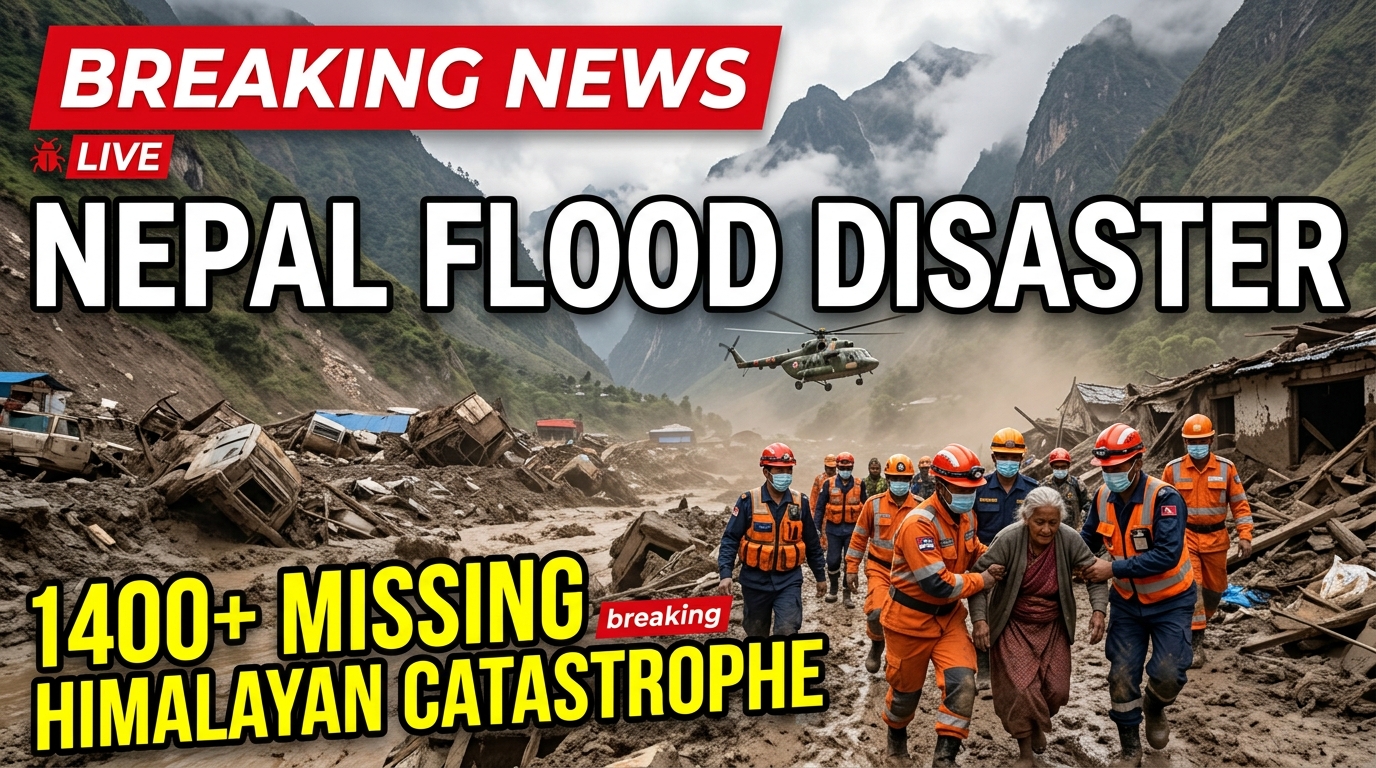
The physical destruction from the Nepal-Tibet flash floods is equally catastrophic. The surging waters and mudslides wiped out homes, submerged vehicles, and severely damaged vital hydropower projects. Dozens of bridges and over 40 kilometers of mountain roads were obliterated. Images from hard-hit Nuwakot district show heart-wrenching scenes — streets and buildings caked in thick mud, massive debris tangled in trees, stunned survivors wandering through the ruins of their former lives. In Tibet’s Shigatse prefecture, crucial two-lane riverside highways were completely buried under earth and water.
Ongoing Rescue Operations and Unprecedented Challenges
Despite treacherous conditions, search and rescue operations after the Nepal-Tibet flash floods have scaled up significantly. Nepal has mobilized 7,451 security personnel, including 2,391 troops from the Nepal Army, for rescue missions and body recovery. So far, teams have evacuated 1,545 injured and stranded people from affected regions. Many of the critically injured have been airlifted to hospitals in Kathmandu for emergency treatment.
Across the border in Tibet, Chinese authorities and rescue teams are also working tirelessly. State broadcaster CCTV confirmed 555 stranded tourists and 499 local residents had been safely evacuated from the disaster zone as of Friday morning.
But the logistics are brutal. With bridges and major roadways destroyed, many isolated villages can only be reached by helicopter or on foot through dangerous, mud-slicked terrain. First responders are working in an active disaster zone where the landscape has been entirely rewritten.
Hundreds Still Missing: A Global Crisis
Horrific as the death toll is, the missing-persons count from the Nepal-Tibet flash floods casts an even darker shadow. Disaster management authorities report over 1,400 people remain missing across the border region. Because the area is hugely popular with trekkers, mountaineers, and religious pilgrims, the missing include a substantial number of foreign nationals — a local tragedy turned global crisis.
Diplomatic missions are scrambling to locate their citizens. At least 290 Indian nationals are untraceable, including pilgrims on the Mansarovar Yatra and workers from the Trishuli-I hydropower project. Another 65 Americans, 53 Ukrainians, 35 Australians, 33 Britons, and 25 Canadians remain unaccounted for. Foreign ministries have set up 24/7 emergency control rooms in Kathmandu, while families from New York to New Delhi wait in agonizing suspense for news of their loved ones.
Looming Threat: Lake Breach Risk and Fresh Flood Warnings
Even as rescue teams dig through the mud left by the Nepal-Tibet flash floods, a terrifying secondary threat is taking shape. Aerial surveillance and satellite data confirm the massive mudslide on the China-Nepal border has blocked a river, forming a huge, unstable artificial lake. Chinese authorities have issued urgent warnings: the newly formed dam is at high risk of breaching.
If the dam gives way under the accumulated water’s pressure, a fresh catastrophic wave will cascade downstream. The forecast makes it worse — continued heavy rainfall is expected in the region, with the artificial lake’s water levels rising over the next three days and peaking around September 1. Downstream areas, including the vital Gyirong Port, are on high alert, and preemptive evacuations are underway to prevent further loss of life.
International Response and Humanitarian Aid
The international community reacted to the Nepal-Tibet flash floods with shock — and an immediate desire to help. Nepal has warmly welcomed international financial and humanitarian aid, but has declined the deployment of foreign physical rescue teams, preferring to manage logistical coordination internally and rely on its massive deployment of local security forces.
The United States has pledged $500,000 in immediate disaster relief, and the World Health Organization (WHO) has dispatched emergency medical supplies to overwhelmed hospitals in Kathmandu. Foreign embassies are working closely with the Nepalese government on consular assistance and airlifts for stranded citizens once they’re located.
Climate Change and Vulnerability in the Himalayas
The Nepal-Tibet flash floods are a grim, devastating reminder of how exposed the Himalayan region has become in an era of rapid climate change. The world’s highest peaks are warming at an alarming rate, accelerating glacial retreat and permafrost thawing — shifts that drastically increase the frequency and severity of glacial lake outburst floods (GLOFs) and massive ice-rock avalanches.
For the communities living in the shadow of these mountains, the threat is existential. Experts have long warned that without serious investment in early warning systems, sustainable infrastructure design, and global efforts to curb carbon emissions, tragedies like the Nepal-Tibet flash floods will only become more common.
Conclusion
The Nepal-Tibet flash floods rank among the deadliest Himalayan disasters in recent memory. With at least 469 lives lost and over 1,400 people still missing, the immediate priority remains the desperate search for survivors and the stabilization of the dangerous artificial lake threatening downstream communities. As rescue workers battle treacherous conditions and families worldwide wait for answers, the resilience of the Nepalese and Tibetan people is being tested like never before. The road to recovery will be exceptionally long — not just rebuilding shattered infrastructure, but confronting the severe climatic shifts threatening the world’s most vulnerable mountain ecosystems.
Frequently Asked Questions (FAQs)
1. What caused the deadly flash floods on the Nepal-Tibet border? A massive ice-rock avalanche, triggered when bedrock collapsed underneath a high-altitude glacier. The towering mix of crushed rock, glacial ice, and water tore downstream, flooding the Bhotekoshi and Trishuli river valleys.
2. What is the current death toll from the floods? The Nepal-Tibet flash floods have killed at least 472 people as of August 28, 2026: Nepal Police confirmed 469 fatalities within Nepal; Chinese state media reported 3 deaths in Tibet.
3. Are there foreign tourists among the missing? Yes — hundreds of the 1,400 people missing in the Nepal-Tibet flash floods are foreign nationals. The region is a hugely popular trekking and pilgrimage destination, and foreign nationals from India, the United States, Australia, the UK, Canada, and Ukraine are among the 1,400 missing.
4. Why are authorities issuing fresh flood warnings? The landslides blocked a major border river, creating a large, unstable artificial lake. If that natural dam breaches, a fresh devastating wave of floodwater from the Nepal-Tibet flash floods will hit downstream areas like Gyirong Port.
5. Has Nepal accepted international help? Nepal has accepted financial and humanitarian assistance — including $500,000 from the US and medical supplies from the WHO — but declined foreign physical rescue teams to keep logistical control local.
6. Which districts in Nepal have been most affected? Central Nepal took the worst of the Nepal-Tibet flash floods. The most bodies have been recovered in Chitwan, Nawalparasi East, Gorkha, Nuwakot, and Dhading districts.
Official News Links and Trusted Sources
For real-time updates and further official information on the ongoing Nepal-Tibet flash floods crisis, please refer to the following trusted news outlets:
The Associated Press (AP News): Death toll from flash floods rises with rescuers in Nepal and China working to find hundreds missing. Read here: apnews.com
The Guardian: Nepal-Tibet flash flood live updates: debris-clogged river at risk of flooding again. Read here: theguardian.com
The New Indian Express: Nepal floods LIVE | Death toll rises to 469; 1,400 missing as fresh flood warning issued. Read here: newindianexpress.com
Hindustan Times: Nepal floods LIVE: Death count jumps to 472 as rescue ops continue; 290 Indians untraceable. Read here: hindustantimes.com
1 thought on “Nepal-Tibet Flash Floods: Death Toll Reaches 469 as Hundreds Remain Missing in Devastating Himalayan Disaster”