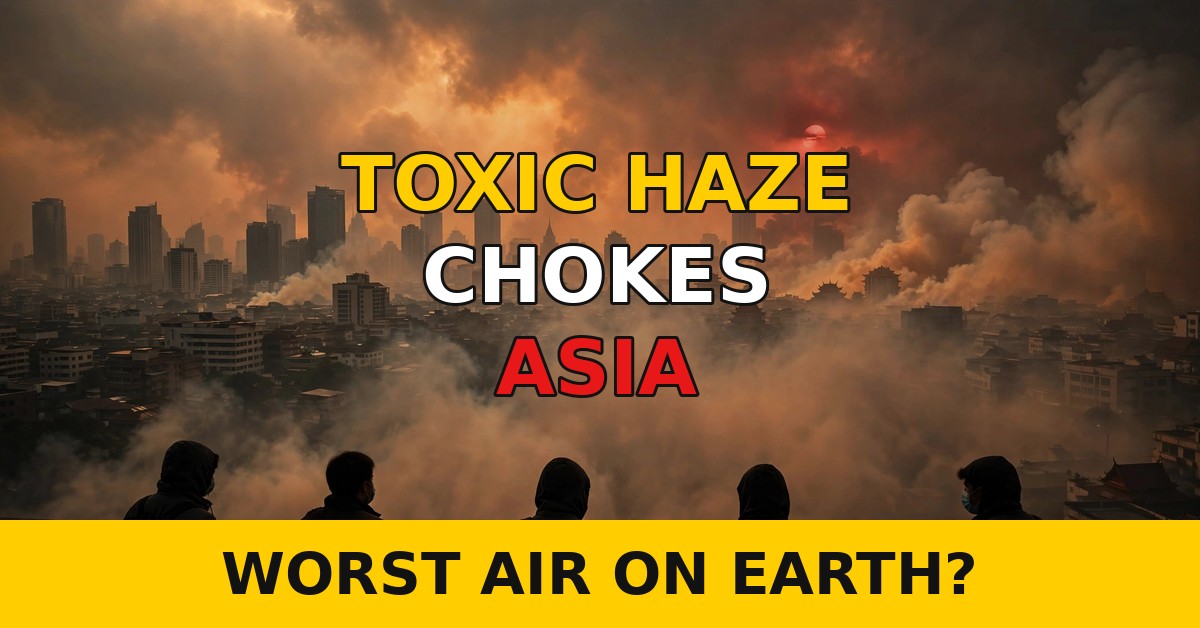
The smoke has gotten so bad that the region’s own weather watchdog has run out of room to escalate. On Friday, October 16, the ASEAN Specialised Meteorological Centre in Singapore activated Alert Level 3 for the Southern ASEAN region — the highest of its four-tier system — citing a “high risk of severe transboundary haze.” It’s only the third Level 3 alert this year, after August 26 and March 27. But officials are already warning the worst may still be ahead.
Behind the bureaucratic language of alert levels lies a grinding, months-long crisis: Indonesian fires that have shuttered schools, packed clinics with respiratory cases, killed four firefighters, and turned the skies over Singapore and Kuala Lumpur an eerie, choking gray. The Southeast Asia haze problem, it turns out, is getting worse faster than the region’s answers for it.
What Alert Level 3 Actually Means
The ASEAN Specialised Meteorological Centre runs a simple 0-to-3 scale. Level 3 is the ceiling — the point where the regional experts say the risk of severe transboundary haze is no longer a forecast but an active emergency. Friday’s activation means the smoke pouring out of Indonesia’s burning forests and peatlands is officially judged severe enough to cross borders and endanger millions.
This year’s tally tells you how routine the abnormal has become: three Level 3 alerts in seven months. The fires aren’t a freak event anymore. They’re a season — one that keeps getting longer, hotter, and harder to contain. For a Southeast Asia haze season that already saw Level 3 alerts in March and August, Friday’s activation felt less like a shock than a grim confirmation. Each alert resets the clock on schools, businesses, and hospitals across the region, and each one lands on the same question nobody has fully answered: why, after decades of promises, does Indonesia keep burning?
Cities Choking on the Live Charts
By Saturday, the crisis had become globally visible in the most embarrassing way possible. On IQAir’s live ranking of the world’s most polluted major cities, Singapore sat at number 2 and Kuala Lumpur at number 3 — behind only Baghdad. Readings were classified “very hazardous,” a level at which health agencies tell even healthy adults to stay indoors.
This is not some distant industrial city struggling with smog. Singapore is one of the richest, most meticulously governed places on earth. Kuala Lumpur is a capital of 2 million people. When both land on a global pollution ranking above every other major city on the planet, it’s not a local air-quality blip — it’s a Southeast Asia haze disaster unfolding in real time.
The toll on daily life is already heavy. Schools have been closed. Clinics in Indonesia, Malaysia, Singapore, and East Timor have seen a surge in respiratory complaints — asthma attacks, bronchitis, eye and throat irritation, the familiar harvest of every haze season. Children, the elderly, and anyone with lung conditions are bearing the worst of it.
And then there’s the plain human frustration of it all. Zul Hafiz, a 39-year-old teacher cycling from Shah Alam to Kuala Lumpur through the smog, summed up the public mood in four words: “This thing needs to stop.”
Four Firefighters Killed in East Java
The human cost sharpened on Thursday, when four people died fighting the blazes in East Java’s Bromo Tengger Semeru National Park. Two others suffered serious burns.
Fighting fires in a national park — steep terrain, dry vegetation, unpredictable winds — is among the most dangerous work imaginable, and this season the conditions have been unforgiving. The deaths have focused attention on the frontline crews, many of them volunteers or local responders, who stand between the flames and everything the fires threaten: villages, farmland, and the national parks that are supposed to be sanctuaries.
Every haze season produces casualty numbers that get folded into the broader statistics. This time the names are attached to a place millions of tourists know — Bromo Tengger Semeru, with its volcanic landscapes and sunrise viewpoints. The park that draws the cameras is now producing funerals.
Fighting Smoke With Dry Ice
Indonesia’s response has mixed the desperate with the dramatic. Among the more striking measures: authorities dispersed 2.4 tonnes of dry ice from a plane at an airport in South Sumatra, attempting to seed clouds and clear the haze.
Cloud seeding is a real technique, not theater — but in conditions like these it’s closer to a gesture. The scale of the burning dwarfs anything a single plane can accomplish. Still, the image captures something essential about this Southeast Asia haze crisis: a country throwing everything it has at smoke it cannot seem to stop producing.
The practical damage keeps compounding. More than 2,020 flights have been affected since August 11 — delays, cancellations, and diversions as airports periodically disappear into the murk. For a region that runs on air connectivity, that’s an economic wound on top of the health crisis.
Singapore Points the Finger
On Friday, Singapore took the unusual step of saying it would issue formal warnings to seven Indonesian companies it identified as responsible for fires. Naming names across a border is rare in ASEAN diplomacy, which usually runs on studied politeness. The move signals just how strained patience has become in a Southeast Asia haze season that has frayed tempers across the region.
Singapore’s warning carries a second message, and it’s the darker one: officials cautioned that the worst may yet come. The fire season isn’t over, the dry conditions are persisting, and the haze that has already closed schools and choked two capitals could deepen before it lifts.
That warning lands on a long history. Transboundary haze has been a recurring Southeast Asian crisis since the 1990s, driven largely by the clearing of land for palm oil and pulp plantations — fires set deliberately to clear cheaply, on peatland that burns deep and long. Every few years the smoke gets bad enough to trigger diplomatic incidents, corporate finger-pointing, and promises of reform. Then the season passes, attention fades, and the cycle resets.
Why the Southeast Asia Haze Keeps Happening
The economics are brutally simple. Burning is the cheapest way to clear land. Enforcement is patchy across Indonesia’s vast, remote concessions. And the companies behind the fires — some of them linked to major regional conglomerates — have historically faced consequences that fall far short of the damage they cause.
Climate change is stacking the deck further. Hotter, drier seasons mean fires start easier, spread faster, and burn longer. What used to be a bad year every so often is becoming a bad year most years. The three Level 3 alerts in 2026 aren’t an anomaly; they may be the new baseline.
ASEAN has frameworks, agreements, and monitoring centers — the very system that issued Friday’s alert. What it lacks, critics say, is teeth. The meteorological centre can warn; it can’t fine a plantation company or stop a fire from being lit.
Sources and Resources
Haze Triggers Highest Level Alert in Parts of Southeast Asia — Free Malaysia Today
Fires Claim Firefighters’ Lives as Toxic Haze Cloaks Region — Tribune.net.ph
Frequently Asked Questions
What is Alert Level 3 in the ASEAN haze system?
It’s the highest level of the ASEAN Specialised Meteorological Centre’s 4-tier scale (0 to 3). Level 3 means experts judge there is a high risk of severe transboundary haze — smoke crossing national borders at dangerous levels. It was activated for the Southern ASEAN region on Friday, October 16.
How polluted are Singapore and Kuala Lumpur right now?
Extremely. On Saturday, IQAir’s live ranking placed Singapore 2nd and Kuala Lumpur 3rd among the world’s most polluted major cities, behind only Baghdad, with readings in the “very hazardous” range. Schools have closed and respiratory complaints are surging across the region.
How many firefighters died in the Indonesia fires?
Four people were killed on Thursday fighting blazes in East Java’s Bromo Tengger Semeru National Park, and two others suffered serious burns.
What’s causing the Southeast Asia haze?
Months of fires in Indonesia, largely tied to land-clearing for agriculture and plantations on flammable peatland. Hotter, drier seasons — worsened by climate change — have made the fires harder to control. More than 2,020 flights have been disrupted since August 11, and Indonesia even dispersed 2.4 tonnes of dry ice by plane in South Sumatra to try to clear the air.
What is Singapore doing about the companies behind the fires?
On Friday, Singapore said it would issue formal warnings to seven Indonesian companies it identified as responsible for fires — a rare public naming across ASEAN borders. Officials also warned the worst of the haze may still be ahead.
Conclusion
Three Level 3 alerts in one year. Two capital cities among the most polluted on the planet. Four firefighters dead in a national park. A teacher cycling through toxic air, asking for it to stop. The Southeast Asia haze of 2026 isn’t a weather story anymore — it’s a governance story, an economic story, and a climate story rolled into one. Until the fires stop being the cheapest way to clear land, the alert levels will keep climbing and the smoke will keep coming. The region’s weather centre can warn. What’s missing is the will — and the enforcement — to make the burning stop.
For ongoing coverage of the Southeast Asia haze, visit World Reach Daily.