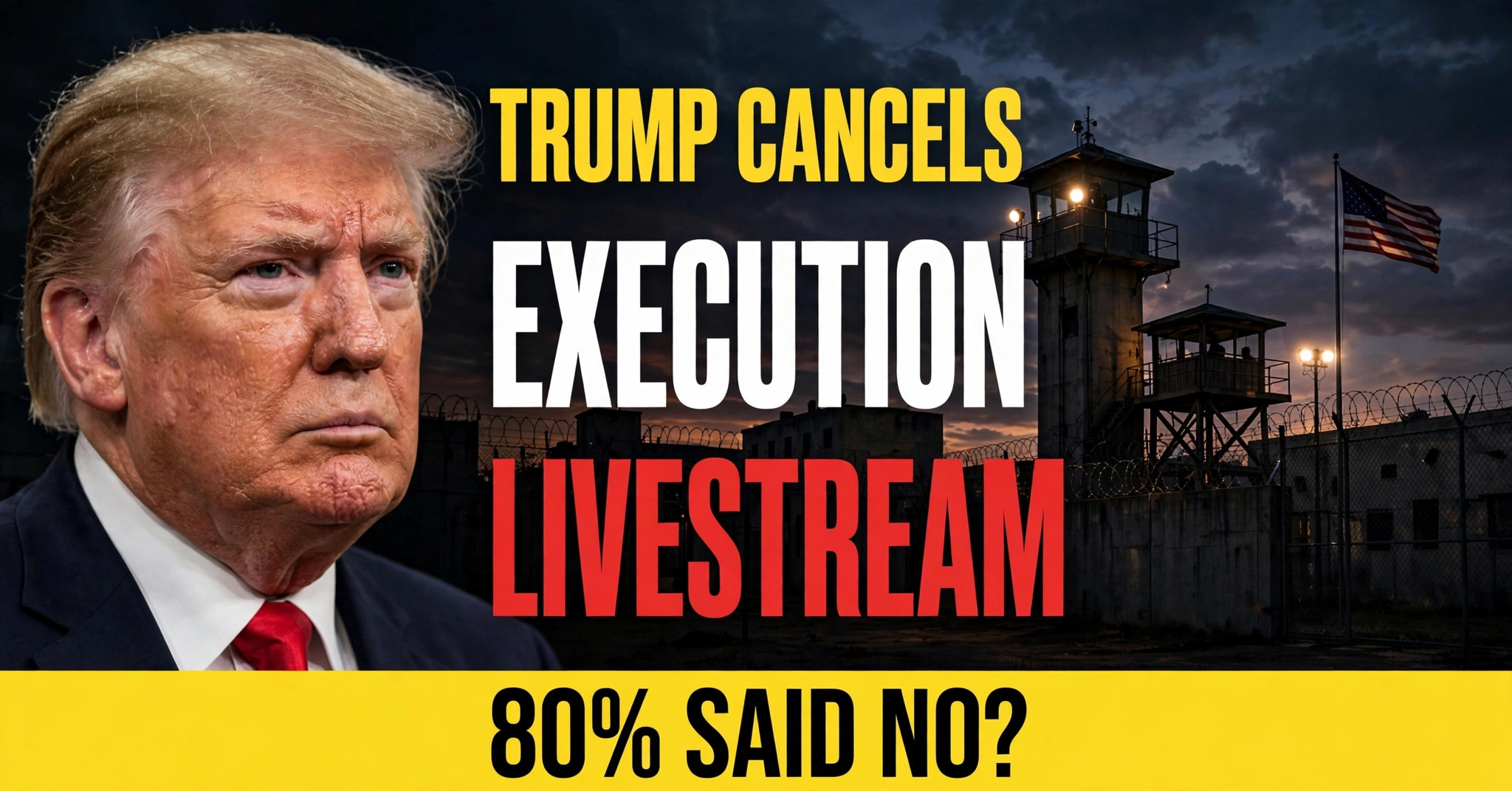
The cameras are off. President Donald Trump announced Thursday that Nidal Hasan — the Army psychiatrist who murdered 13 people at Fort Hood in 2009 — will not have his execution broadcast to the public. The Fort Hood execution livestream is dead. The firing squad is not. Hasan is still scheduled to die on December 3, but the nation’s first military execution in 65 years will happen behind closed doors, with only the victims’ immediate families allowed to watch in person.
How the Fort Hood Execution Livestream Plan Emerged
The idea of televising the execution didn’t come from the White House. It came from the Pentagon — and it caught even the president by surprise.
Earlier this month, Defense Secretary Pete Hegseth floated the livestream plan in an interview aboard the USS Abraham Lincoln with conservative commentator Jack Posobiec. The notion landed like a thunderclap: an execution by firing squad, streamed live, in the year 2026. Critics called it grotesque. Supporters called it transparency. Most Americans, as it turned out, just wanted nothing to do with it.
Here’s the remarkable part: Trump wasn’t aware of the plan beforehand. According to reporting on the decision, the president learned about the livestream proposal after Hegseth went public with it — and then spent days deliberating with advisers over whether to let it happen. The Pentagon had gotten ahead of its commander in chief on one of the most sensitive decisions a government can make.
That deliberation ended Thursday, October 15, with a post on Truth Social. The Fort Hood execution livestream was called off. The execution itself would proceed exactly as ordered.
The Public Revolted — and the Numbers Were Brutal
If the administration needed convincing, the polling did it for them. An ABC News/Washington Post/Ipsos poll found that 80% of American adults said the execution should not be livestreamed. Let that sink in: four out of five Americans, in an era when the country agrees on almost nothing, agreed on this.
Even more striking — 64% of Republicans opposed the livestream. This wasn’t a partisan flashpoint. Whatever support existed for a Fort Hood execution livestream, it was a fringe.
The pushback came from the top of the Republican Party too. Vice President JD Vance said he wouldn’t watch. House Speaker Mike Johnson went further, warning that the footage could become a “recruiting tool for future terrorists” — a line that reportedly carried real weight inside the administration. The logic was hard to argue with: an execution video, stripped of context and optimized by algorithms, would travel the internet forever. Who would it serve? Not the victims’ families. Not the Army. Not the country.
When your own vice president says he’ll change the channel and your House speaker says the footage helps terrorists, the plan is finished. It was only a question of how Trump would end it.
Why Trump Changed Course
Trump’s reversal was characteristically blunt. The president took to Truth Social on Thursday and simply said the execution would not be livestreamed. No lengthy explanation. No press conference. Just the decision, delivered the way so many of his decisions are delivered.
But the mechanics behind it matter. Trump deliberated with advisers after learning about the Fort Hood execution livestream proposal — meaning the president who loves spectacle drew a line at this one. That’s telling. Trump has never been shy about dramatic displays of force, and his administration has leaned hard into military messaging. If even he concluded that a livestreamed execution crossed a line, the political math must have been overwhelming.
The victims’ families, meanwhile, got what many of them wanted all along: dignity. Trump’s order allows the immediate families of the victims to attend in person. For families who have waited 17 years for this sentence to be carried out, being present matters. Being turned into an audience for a national broadcast did not.
Keely Cahill Vanacker, whose father Michael Cahill was killed in the shooting, spoke for many of them: “I hope this is true and I hope he follows through with it. If this execution is no longer livestreamed, it gives us families a chance for peace.”
A chance for peace. After nearly two decades, that’s all they asked for.
The Crime That Started It All
It’s worth remembering — really remembering — why we’re here. On November 5, 2009, Major Nidal Hasan, an Army psychiatrist stationed at Fort Hood in Texas, opened fire on his fellow soldiers. He killed 13 people and wounded 32 others in what remains the largest mass murder at a US military installation in history.
The victims were soldiers preparing to deploy, civilians working on base, people going about an ordinary Thursday. Michael Cahill, a civilian physician assistant, tried to stop Hasan and was killed for it. The youngest victim was 19. The wounded carried physical and psychological scars that never fully healed.
Hasan was shot by responding police and survived — paralyzed from the waist down. He was court-martialed, convicted on 13 counts of premeditated murder and 32 counts of attempted murder, and sentenced to death in 2013. He has sat on military death row ever since, through years of appeals and delays, while the families waited.
The Fort Hood shooting changed how the military handles insider threats. It prompted congressional hearings, security overhauls, and a long reckoning with how a man who had openly expressed extremist views kept his commission and his access. The execution, when it happens on December 3, closes a chapter the Army has been trying to close for 17 years.
A Rare Event in Army History
To understand how unusual this moment is, consider the calendar: if carried out, Hasan’s execution will be the first by the US Army in 65 years. The military death penalty exists on paper, but it is almost never used. Presidents and generals have spent decades avoiding the political and moral weight of ordering a soldier’s death.
That rarity is part of why the Fort Hood execution livestream idea felt so jarring. The Army hadn’t executed anyone since the early 1960s — an era of black-and-white newsreels, not smartphones. Dragging that solemn, antique power into the streaming age felt, to most Americans, like a category error. Executions are among the gravest acts a state can perform. Turning one into content cheapens everyone involved.
The firing squad itself is a deliberate choice. Hasan requested it, and the military agreed. It’s a method with deep roots in military tradition — and it’s about to be used for the first time in generations. The gravity of that deserves quiet. The families deserve quiet. Trump, in the end, gave them quiet.
Sources and Resources
Fort Hood Shooter Execution Livestream Called Off — CNN
Trump, Pentagon End Fort Hood Livestream Execution Plan — USA Today
Frequently Asked Questions
Wait, is Nidal Hasan still being executed?
Yes. Only the livestream was cancelled. Trump confirmed the execution itself goes ahead as scheduled on December 3 at Fort Hood, by firing squad. The victims’ immediate families will be allowed to watch in person — just no cameras, no broadcast, no streaming.
Why did the Pentagon propose a Fort Hood execution livestream in the first place?
Defense Secretary Pete Hegseth announced the plan earlier this month in an interview aboard the USS Abraham Lincoln. The stated rationale was never fully spelled out, but supporters framed it as transparency and deterrence. The public response — 80% opposed — suggests most Americans saw it very differently.
Did Trump know about the plan before it was announced?
Apparently not. Reporting indicates Trump was not aware of the livestream proposal before Hegseth went public with it, and that the president then deliberated with advisers before overruling it on October 15. The Pentagon got ahead of the White House on this one.
When was the last US Army execution before this?
Sixty-five years ago. If Hasan’s execution proceeds on December 3, it will be the Army’s first in 65 years — a measure of how rarely the military actually carries out the death penalty, even though it remains on the books.
What did the victims’ families say about the cancellation?
They welcomed it. Keely Cahill Vanacker, whose father Michael Cahill was killed trying to stop the shooter, said she hopes Trump follows through, adding that ending the Fort Hood execution livestream “gives us families a chance for peace.” After 17 years of waiting, most families wanted a solemn end — not a spectacle.
Conclusion
The Fort Hood execution livestream is cancelled, and the country is better for it. Eighty percent of Americans — including most Republicans — said no to broadcasting a man’s death. The vice president said he wouldn’t watch. The House speaker warned the footage would arm terrorists. And in the end, the president who built his brand on spectacle agreed: some things aren’t content.
On December 3, Nidal Hasan will face a firing squad at Fort Hood — the Army’s first execution in 65 years, for the largest mass murder on a US military base in history. The victims’ families will be there. The cameras won’t. After 17 years of grief, delay, and one very strange week of debate, the families get what they asked for all along: a chance for peace.
The Fort Hood execution livestream debate has ended, but the broader questions about public executions in the digital age remain. For now, the Fort Hood execution livestream is history — a proposal that united a divided nation in opposition.
For ongoing coverage of the Fort Hood execution livestream, visit World Reach Daily.