
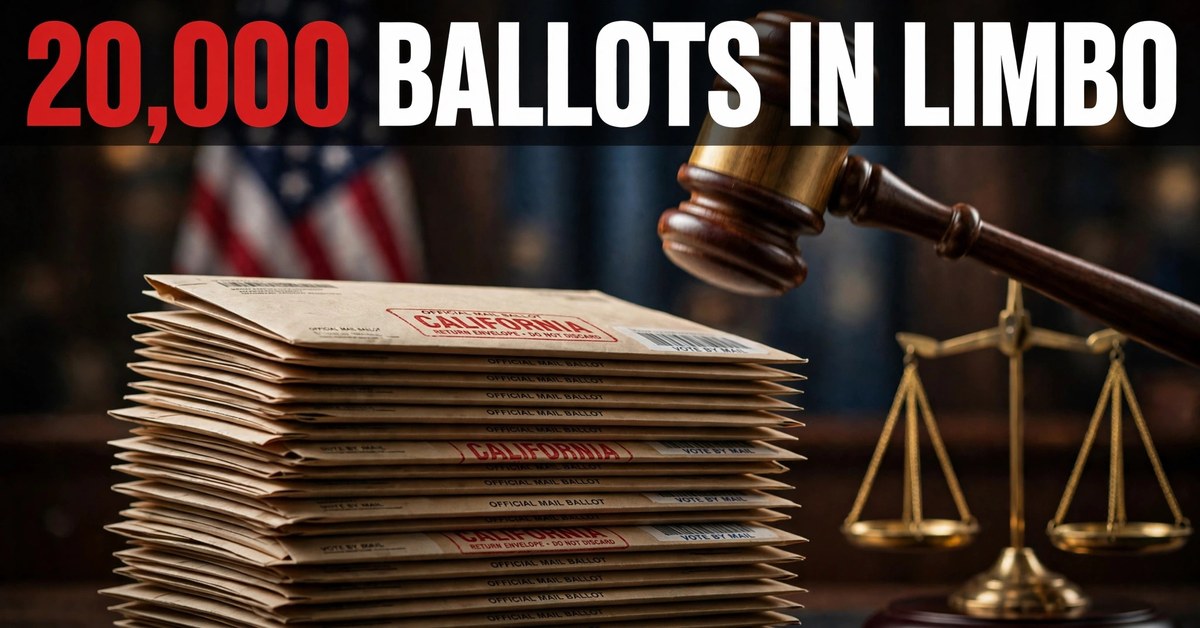
The Justice Department is asking a federal appeals court to step in and freeze the counting of more than 20,000 California mail-in ballots — going over the head of the trial judge, who hasn’t even ruled on the case yet. The DOJ California ballots fight is now before the 9th Circuit.
The DOJ filed a notice of appeal on Thursday, October 22, asking the Ninth Circuit Court of Appeals to intervene after U.S. District Judge David Carter failed to rule on its emergency application for injunctive relief by noon Thursday — the deadline the department itself had set.
The department said the judge’s silence amounted to what it called a “constructive denial” of its emergency application for preliminary injunctive relief, citing the “critical and exigent nature” of the case. In plain terms: the clock ran out, so the DOJ is treating the non-ruling as a no — and taking the fight upstairs.
DOJ California ballots: what the DOJ wants
The department sued California on October 15 to prevent the counting of mail-in ballots from more than 20,000 people the federal government identified as likely noncitizens. The federal government asked that if California could not independently confirm the citizenship of those voters, the state should set aside the ballots received until citizenship could be confirmed.
Then came the emergency push. In an October 21 filing seeking a temporary restraining order, the DOJ said state and county officials contended they lacked the mechanisms and authority to prevent noncitizens from voting in the midterm elections. The department argued that this showed an immediate threat to the integrity of lawful votes.
“As defendants continue processing ballots that cannot later be segregated or verified for eligibility, the dilution of lawful votes accelerates in real time,” the DOJ said in its filing. And then, the line driving the urgency: “This is an emergency. Every minute of processing that occurs without segregating the ballots of suspected non-eligible voters causes untraceable disenfranchisement and dilution of the votes of United States citizens.”
The department wants action by Saturday — today. Ballots already being processed, the DOJ argues, may soon be impossible to separate or verify.
Why it leapfrogged the judge
Federal litigation usually moves one step at a time: district court first, appeals court later. The DOJ’s move to the Ninth Circuit before Judge Carter ruled is the legal equivalent of skipping the line — and it signals just how aggressively the department is treating this case.
The department’s logic is procedural but pointed: it set a noon-Thursday deadline for the judge to act on its emergency application, the deadline passed without a ruling, and the department declared that silence a “constructive denial.” Whether the appeals court accepts that framing is an open question, but the DOJ California ballots maneuver puts immediate pressure on the court to decide quickly.
It’s a high-risk play. Appeals courts don’t love being asked to short-circuit the normal process, but the DOJ is betting that the ticking clock — ballots being counted as we speak — makes this the rare case where they’ll step in.
California pushes back hard
Los Angeles County, where much of this fight is centered, isn’t budging. On October 15, the county said it could not comply with the DOJ’s demand because the department has not provided evidence, sources, or methodology to establish that the individuals identified in its records were actually ineligible to vote.
“We cannot withhold or refuse to count ballots based solely on unverified allegations, nor can we disregard the legal requirements governing our election — and we certainly have no authority to act on records that are outside of our jurisdiction,” the county said in its October 15 statement.
The county went further on October 21, filing a motion asking the judge to dismiss the DOJ’s lawsuit entirely, arguing the department lacked legal standing to bring the case. “The executive, like any other plaintiff, must identify a concrete injury, actual or imminent, fairly traceable to the county’s conduct and likely to be redressed by the requested relief. The complaint identifies none,” the county argued.
In response to the DOJ California ballots standoff, Los Angeles County Registrar-Recorder Dean Logan said his office is focused on conducting a fair and secure election — a signal the county intends to keep counting unless a court orders otherwise.
The “aiders and abettors” warning
The rhetoric escalated before the appeal. Acting U.S. Deputy Attorney General Trent McCotter sent a letter to the Los Angeles County Counsel’s office on October 16, saying the DOJ did not expect county officials to adjudicate anyone’s immigration status — but asking the county to temporarily set aside ballots when there are credible concerns about voters’ eligibility.
Then came the sharp edge: McCotter warned that county officials could risk “becoming aiders and abettors to a federal crime” if they knowingly count ballots from individuals whom federal agencies have identified as noncitizens.
That’s an extraordinary warning to aim at election officials — effectively telling them that doing their normal job could expose them to criminal liability. The county’s answer, in essence: show us the evidence first.
What happens next
In the DOJ California ballots case, everything now hinges on the Ninth Circuit. If the appeals court grants the DOJ’s request, more than 20,000 ballots get set aside pending citizenship verification — a logistical and legal earthquake in the middle of midterm voting. If it declines, the case returns to Judge Carter’s courtroom, where the county’s motion to dismiss is waiting.
Either way, the underlying question — whether the federal government can force a state to segregate ballots based on its own unreleased methodology — is headed for a serious legal test. The DOJ says every minute counts. California says unverified allegations don’t override election law. And 20,000-plus ballots sit in limbo while the courts decide.
Related: Supreme Court Rules New Hampshire Can Block Student IDs for Voting
Sources and Resources
- The Epoch Times reporting on the DOJ’s appeal (via FreedomBunker): freedombunker.com
Frequently Asked Questions
What is the DOJ asking the appeals court to do?
The department wants the Ninth Circuit to intervene so that California sets aside more than 20,000 mail-in ballots from voters the federal government identified as likely noncitizens, until their citizenship can be confirmed. The DOJ California ballots request would freeze counting while verification plays out.
Why did the DOJ go to the appeals court before the judge ruled?
U.S. District Judge David Carter did not rule on the DOJ’s emergency application by the department’s noon-Thursday deadline. The DOJ called that silence a “constructive denial” and took the case to the Ninth Circuit, citing the “critical and exigent nature” of the matter.
What does California say in response?
Los Angeles County says it cannot withhold or refuse to count ballots based on unverified allegations, and that the DOJ has not provided evidence, sources, or methodology proving the voters are ineligible. The county has also filed a motion to dismiss the lawsuit, arguing the DOJ lacks legal standing.
What deadline did the DOJ set?
The department requested action by Saturday, October 24, arguing that every minute of ballot processing without segregation causes “untraceable disenfranchisement and dilution” of lawful citizens’ votes.
What happens to the 20,000 ballots now?
The DOJ California ballots remain in limbo. If the Ninth Circuit grants the DOJ’s request, the ballots get set aside pending verification. If not, the case continues before Judge Carter, where the county’s dismissal motion is pending.
Conclusion
The DOJ California ballots emergency appeal turns a ballot-counting dispute into a full-blown federalism showdown — with 20,000 votes hanging in the balance and a Saturday deadline the department says can’t wait. Whether the Ninth Circuit bails out the department’s leapfrog maneuver or sends it back to Judge Carter, the collision between federal claims of noncitizen voting and California’s demand for evidence is only getting started.