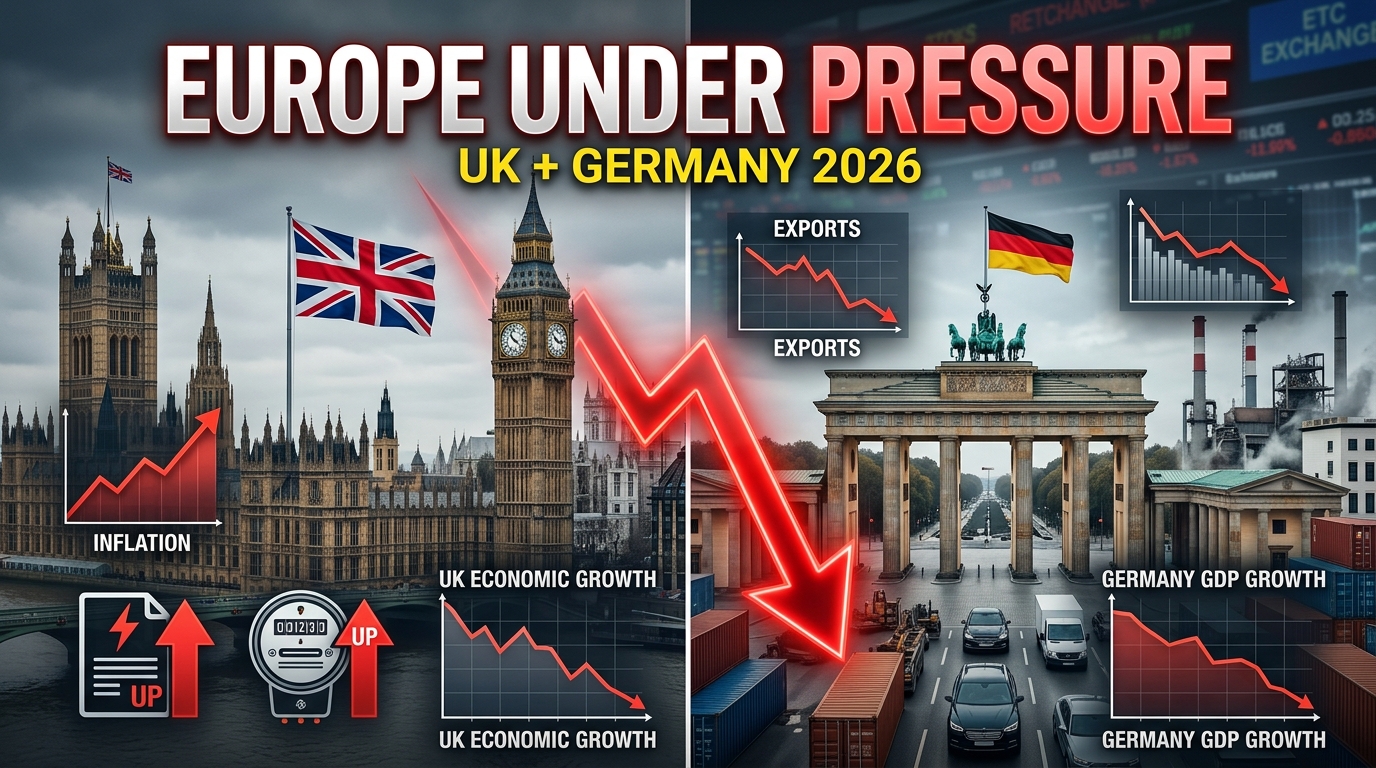
UK and Germany Economic Challenges: Global Economy Under Pressure in 2026
Let’s just be brutally honest about 2026. The smooth economic comeback we all hoped for? It never really showed up. Instead, the global economy is basically stumbling around, trying not to trip over energy crises and trade wars. If you want to know why things feel so unstable, understanding the UK and Germany economic challenges right now is the best place to start. Usually, you’d count on these two massive powerhouses to keep Europe anchored and growing. Not this time. Both countries are dealing with some incredibly stubborn problems at home, and it’s making investors and everyday people more than a little nervous.
Also read:
Chinese AI tool bioweapons ‘Kimi’ Bypasses Safety Guards to Share Bioweapon Info, Report Reveals
The UK: Growing, But It Sure Doesn’t Feel Like It
Take a quick look at the official charts, and the UK doesn’t seem completely doomed. Experts at places like KPMG and the IMF are guessing the economy will grow by about 1.3% this year. But ask a regular person on the street, and you’ll hear a totally different story about the day-to-day reality.
The Return of Stubborn Inflation The real villain here is inflation. Just when people thought prices were finally calming down, energy markets decided to go crazy again. Because of the ongoing mess in the Middle East, wholesale gas prices have climbed incredibly fast over the last few months.
What does that mean for the average person?
Regular winter heating bills are probably going to jump by 20%.
Any extra cash people managed to save over the summer is essentially gone.
Overall inflation is likely heading back up to around 3.5% by the end of the year.
The Central Bank’s Nightmare This puts the Bank of England in an absolute nightmare scenario. They know they need to keep interest rates high to tame the inflation. But if they actually push rates up to 4%, borrowing money becomes so expensive that businesses will just stop spending entirely. They could accidentally crush whatever tiny bit of growth the country still has. It’s a total balancing act, and there’s zero room for mistakes right now. Dealing with these specific UK and Germany economic challenges requires central banks to walk a very thin tightrope.
Germany: The Export King Has a Huge Problem
While the UK tries to balance its budget and tame heating bills, Germany is dealing with a full-blown identity crisis. Think about how Germany made its money for the last forty years. The formula was simple and highly effective: buy really cheap energy, build amazing cars and machines, and sell them everywhere across the globe.
Well, that whole playbook is basically dead in 2026.
A Pathetic Post-Recession Recovery Germany just managed to crawl out of a miserable two-year recession. Their reward? A pretty pathetic growth rate expected to hover somewhere between 0.6% and 1.0% for 2026. That’s awful compared to the rest of the developed world.
The biggest issue is their legendary factories. They just aren’t exporting goods like they used to, for a few massive reasons:
Fierce Competition: Chinese electric cars are flooding the global market and severely undercutting traditional German brands.
Trade Wars: The US is throwing up trade tariffs left and right to protect its own workers, blocking out European goods.
Soaring Factory Costs: Energy prices are hitting Germany incredibly hard too. Inflation is expected to bounce back up near 2.9% simply because running big manufacturing plants costs an absolute fortune right now.
When things get this expensive, German shoppers shut their wallets. Since exports are down, the country really needed local people to spend money at home to keep the economy moving. But with high costs and job uncertainty in the manufacturing sector, that just isn’t happening.
Why Should The Rest of Us Care?
When Europe’s heavyweights start sinking in the mud, the whole world feels it. The ripple effects of these UK and Germany economic challenges are spreading fast. You can see the panic in how investors are moving their money. Nobody wants to put cash into traditional European manufacturing right now. Instead, all the money is running away to places pushing hard into AI, software, and green technology, hoping to avoid the slow growth dragging down London and Berlin.
Neither the UK nor Germany is going to collapse tomorrow. But let’s be real, they are totally stuck in a rut. The UK desperately needs to figure out how to make its smaller cities as productive as London without borrowing billions it doesn’t have. Germany has an even harder job. They have to completely reinvent how they build things without relying on cheap gas or totally free trade. It’s going to be an incredibly bumpy ride for the next few years, and there are no easy fixes left on the table.
Frequently Asked Questions (FAQs)
Why is the UK economy still struggling in 2026? It boils down to expensive borrowing and crazy energy bills. Businesses can’t afford loans to grow, and regular folks are spending all their cash just to heat their homes. This leaves almost nothing left over to boost the wider domestic economy.
Is Germany actually out of its recession? Yes, technically. But don’t celebrate yet. They are only expected to grow by around 0.6% to 1.0% this year because their giant manufacturing sector is getting beaten up by international competition, high energy costs, and bad trade deals.
Why are prices going back up in Europe? Energy shocks are the main culprit. Ongoing geopolitical problems in the Middle East are making oil and gas expensive again. That higher foundational cost trickles down into everything, pushing inflation back up in both the UK and Germany.
How do the UK and Germany economic challenges affect other countries? Because they are such massive importers and exporters, their struggles naturally slow down global trade. Investors get scared and move their money out of Europe, which can weaken the Euro and the Pound and cause supply chain headaches worldwide.
Are Germany’s exports really dropping that much? Absolutely. High energy costs at home and cheap products pouring out of China have made it super hard for German companies to compete globally like they used to.
Official News Links & References
1. KPMG UK Economic Outlook:
2. IMF World Economic Outlook (UK Article IV Consultation):
3. European Commission (Economy and Finance):