Decoding the Seesaw: Understanding U.S. Bond Yields and Stock Market Fluctuations
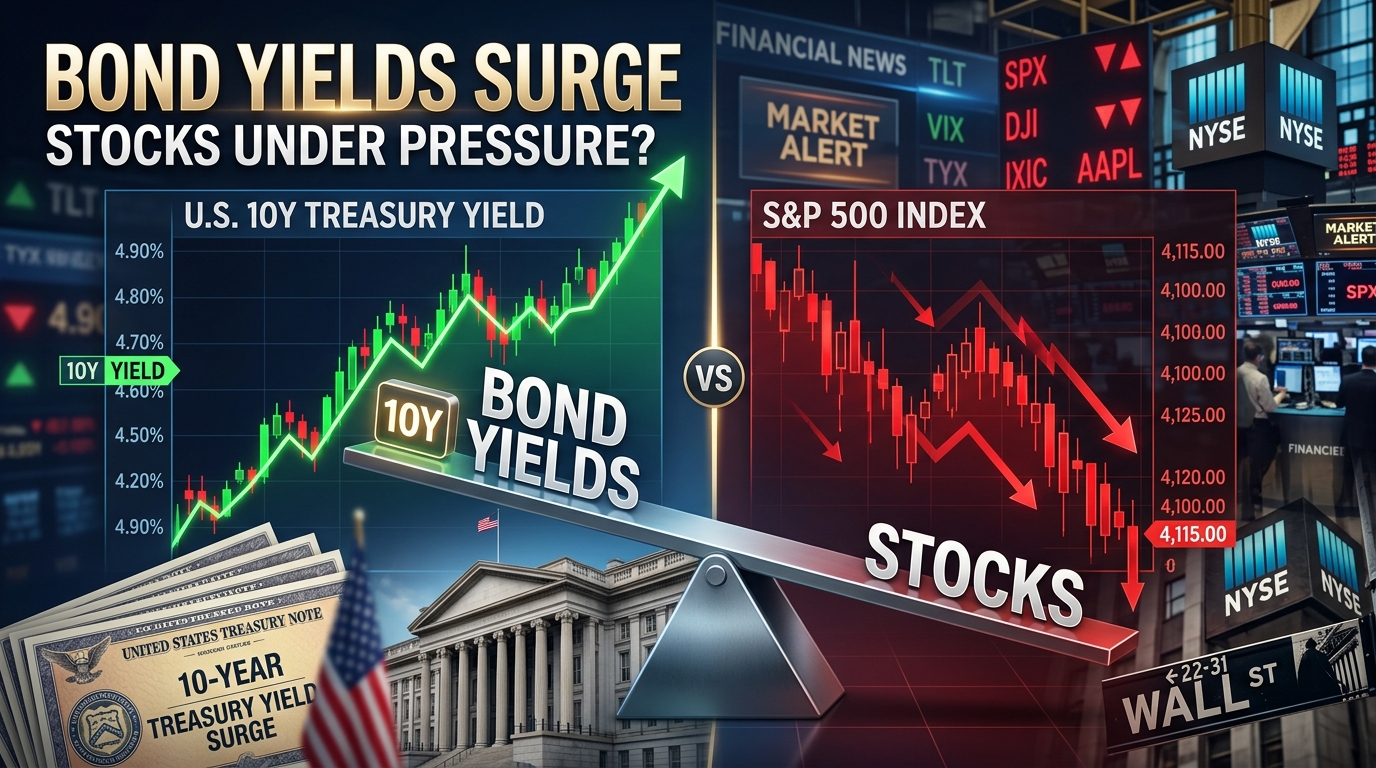
The relationship between the U.S. bond market and the stock market is one of the most critical dynamics in global finance. Often visualized as a delicate economic seesaw, when fixed-income yields surge, equities frequently experience turbulence or downward pressure. Grasping how Treasury yields dictate equity valuations, influence borrowing costs, and alter investor sentiment is essential for building a resilient portfolio.
Also read:
Piers Morgan Earl Spencer book: Calls to Pulp Princess Diana Memoir Over Error
The Mechanics: Why Bond Yields Move Inversely to Stock Valuations
To understand the interaction, we must first look at how bonds operate. Bond prices and bond yields move in opposite directions; when selling pressure mounts or economic expectations shift, yields rise.
When U.S. Treasury yields—particularly the benchmark 10-year note—climb significantly, it triggers several ripple effects across asset classes:
The Risk-Free Rate Benchmark: Treasuries are backed by the U.S. government, making them virtually risk-free. When 10-year yields approach or exceed 4% to 5%, fixed-income instruments suddenly offer competitive returns with zero credit risk.
The Competition for Capital: Investors weigh the trade-off between the potential rewards of equities and the guaranteed return of bonds. Higher yields incentivize capital reallocation out of riskier stocks and into safer government bonds.
Discounting Future Cash Flows: Stock valuations depend heavily on the present value of future earnings. Analysts use the discount rate—anchored heavily by Treasury yields—to value these cash flows. Higher yields mean future profits are discounted more steeply today, compressing equity multiples.
How Fluctuations Impact Different Sectors
Not all stocks react identically to shifts in Treasury yields. Sector sensitivity varies widely based on capitalization, debt structure, and growth profiles:
Growth and Tech Stocks: High-growth technology firms, including artificial intelligence and innovation leaders, are exceptionally sensitive to rising yields. Because a substantial portion of their expected cash flows lies far out in the future, higher discount rates diminish their present-day valuations.
Interest-Rate Sensitive Sectors: Industries like real estate (REITs) and home construction react sharply to long-term borrowing costs. Higher yields translate directly to higher mortgage rates, which can slow housing activity and weigh heavily on construction equities.
Financials: Conversely, banking and financial institutions can sometimes benefit from a rising-rate or high-yield environment, as wider net interest margins can enhance profitability.
Key Drivers Behind Modern Bond Volatility
Recent market data highlights that it is not merely the absolute level of interest rates that rattles equities, but the speed and velocity of the shift. Rapid spikes over short windows leave little time for corporate balance sheets and equity markets to adjust. Other major drivers include:
Inflationary Pressures and Monetary Policy: When core inflation prints run hotter than expected, markets adjust their expectations of Federal Reserve rate cuts, pushing yields upward.
Fiscal Deficits and Treasury Issuance: Heavy federal borrowing requirements necessitate massive issuances of government debt. When the supply of bonds outstrips immediate demand, buyers demand higher yields to absorb the excess paper.
Frequently Asked Questions (FAQs)
Q: Do rising bond yields always trigger a stock market crash? A: No. Historically, if bond yields are rising due to robust economic growth and expanding corporate profits, the stock market can absorb higher rates successfully. Markets struggle most when yields spike rapidly due to unexpected inflation shocks or aggressive monetary tightening.
Q: Why are long-term Treasury yields more important to stocks than short-term rates? A: Roughly 75% of the present value of broad market indices like the S&P 500 reflects cash flows projected 10 years or more into the future. Because equities are inherently long-duration assets, their valuations mirror long-term bond yields much more closely than short-term Federal Reserve policy rates.
Q: How can individual investors hedge against yield-induced stock volatility? A: Investors often diversify across asset classes, incorporating higher-yielding fixed-income instruments to lock in stable income, while balancing growth equities with value stocks that feature strong, immediate cash flows.
Conclusion
U.S. bond yields act as the gravitational pull for global asset valuations. While elevated yields create fierce competition for capital and pressure high-valuation growth sectors, they also present a compelling opportunity for fixed-income investors seeking reliable income after years of near-zero rates. By monitoring the pace of yield changes, inflation data, and fiscal trends, investors can better navigate the dynamic relationship between bonds and stocks.