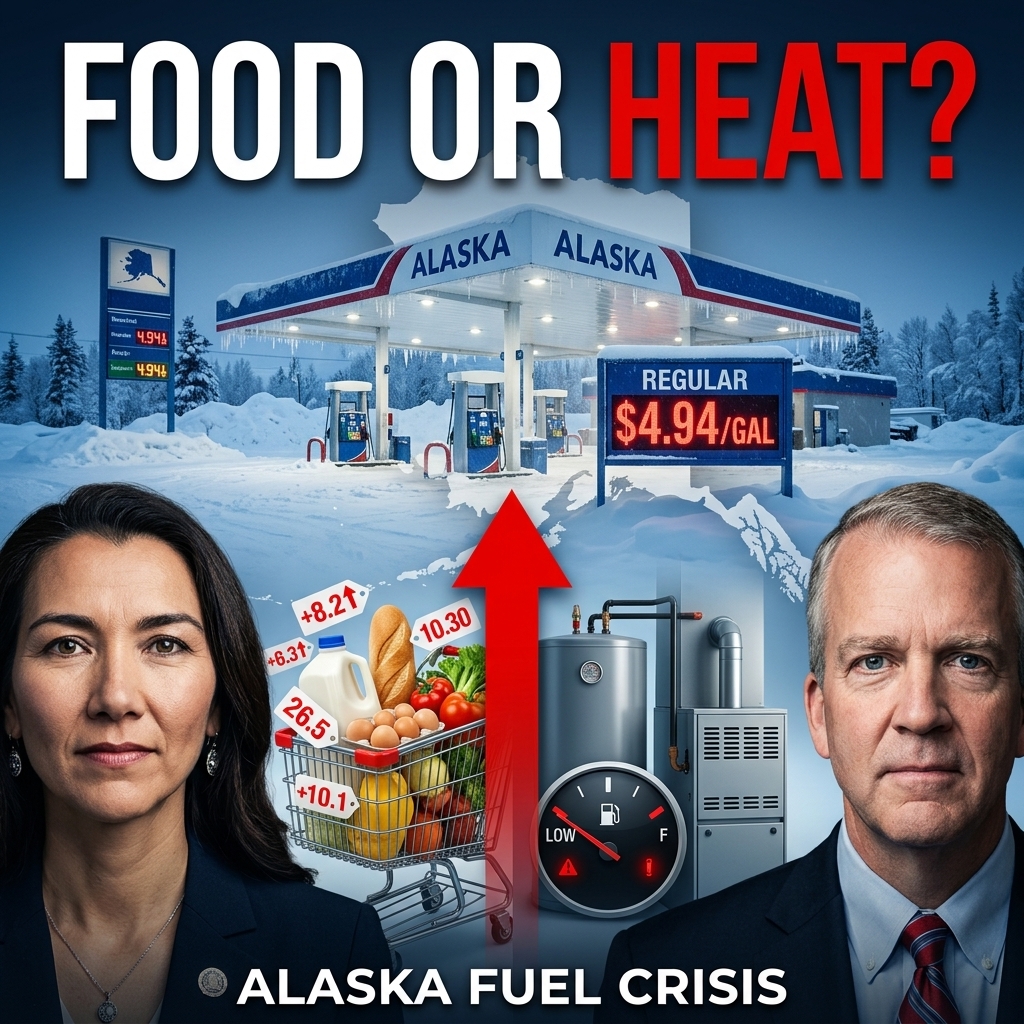
Food or Heat: Alaska Senate Race Fuel Prices Take Center Stage
Winter comes fast in Alaska, and this year, voters face a grim choice at the checkout counter: buy groceries or fill up the heating tank. Energy costs have skyrocketed across the state, making Alaska Senate race fuel prices the fiercest battleground between candidates fighting for political office. From Anchorage gas pumps sitting near $5 a gallon to remote village pumps charging shocking rates over $20, energy inflation is hitting regular families right in the wallet.
With election day closing in, both sides know that whichever candidate offers a believable plan to lower utility bills will likely win over undecided voters across the Last Frontier.
Also Read:
Hashim Thaci War Crimes Verdict Hague: Ex-President Sentenced
What “Food vs. Heat” Actually Means on the Ground
Living in Alaska has always meant dealing with tough winters, but recent price surges have pushed household budgets past the breaking point. In urban centers like Fairbanks and Anchorage, filling a 500-gallon home heating oil tank can easily cost upwards of $2,500 for a single fill-up. Most families need two or three fills just to survive until May, bringing total winter heating bills to more than $5,000.
In off-road bush communities, the situation gets far worse:
Insane Village Fuel Rates: Without road access, remote villages on the Yukon-Kuskokwim Delta rely entirely on seasonal river barges or expensive cargo planes to get fuel. When global prices jump during shipping windows, pump rates in places like Ambler or rural hub communities can shoot past $17 to $26 a gallon.
Twelve-Month Price Traps: Most rural fuel supply companies buy their entire annual stock during a narrow summer barge window. If oil prices spike while the barges are loading, those high prices get locked in for a full year, even if global oil prices crash two months later.
Cascading Freight Surcharges: High fuel doesn’t just mean expensive heat; it jacks up airfare, grocery shipping rates, and basic hardware goods across off-grid Alaska.
High Oil Prices Help the State Budget, But Hurt Families
Alaska lives under a strange economic reality. When global oil prices go up, state government coffers fill up with tax revenues and royalties. That often translates into larger Permanent Fund Dividend (PFD) checks for residents. But for everyday families trying to drive to work or heat their homes, high crude oil prices act like an immediate tax hike.
| Energy & Economic Factor | Estimated Baseline | Current Reality | Real Impact on Alaskan Voters |
| North Slope Crude Oil | $75 per barrel | $84 – $100+ per barrel | Generates state revenue while inflating retail pump costs. |
| City Gas Station Prices | ~$3.50 per gallon | ~$4.94 per gallon | Drains monthly transportation budgets for commuters. |
| Annual PFD Checks | ~$1,000 baseline | ~$1,200 payout | Offers quick cash, but fails to cover seasonal heating spikes. |
| Seasonal Home Heating | ~$2,500 per year | $5,000+ per year | Forces low-income households to cut back on groceries and meds. |
Why Energy Costs Stay So Painfully High in Alaska
People outside the state often ask why an oil-producing giant like Alaska pays some of the highest fuel prices in America. The answer comes down to geography and missing infrastructure:
Lack of Local Refineries: Alaska pumps millions of barrels of raw crude out of the ground, but it lacks big refining facilities to turn that crude into everyday gasoline and heating oil. The state exports raw crude, then turns around and imports refined fuel at high market prices.
Brutal Supply Chains: Moving diesel or unleaded gas to isolated Arctic villages requires tanker ships, river barges, and sometimes small airplanes. Every step adds transport fees onto the retail price per gallon.
Disconnected Utility Grids: Unlike states in the lower 48 that share power across interconnected regional grids, Alaska relies on isolated micro-grids that depend heavily on expensive diesel generators.
How the Candidates Promise to Fix the Energy Crisis
With Alaska Senate race fuel prices front and center, the main contenders are pushing drastically different approaches to bring down costs.
Mary Peltola’s Relief Strategy
Democrat Mary Peltola focuses on immediate consumer relief alongside targeted investments in local infrastructure:
Boosting Fuel Subsidy Programs: Expanding federal dollars for the Low-Income Home Energy Assistance Program (LIHEAP) and state Power Cost Equalization (PCE) funds so low-income families don’t freeze during winter.
Building In-State Refining: Supporting tax incentives and federal backing to process more fuel locally rather than relying on imported refined petroleum.
Modernizing Village Grids: Funding rural micro-grid projects, wind turbines, and geothermal setups to lessen small towns’ dependence on diesel shipments.
Dan Sullivan’s Production Push
Republican Senator Dan Sullivan argues that the fastest way to lower prices is opening up more oil and gas development:
Expanding Federal Oil Leases: Pushing the federal government to approve more drilling in federal lands and offshore Arctic areas to increase overall supply.
Cutting Regulatory Red Tape: Rolling back federal environmental rules that slow down new pipeline construction and energy development projects.
Direct Revenue Sharing: Using state oil revenues to boost PFD payouts directly to residents to cushion the impact of high utility bills.
The Verdict at the Ballot Box
As winter approaches, Alaskans aren’t looking for political soundbites; they want practical solutions that make their monthly bills manageable. Whether through direct fuel subsidies, green grid upgrades, or expanded North Slope drilling, whichever candidate convinces voters they can lower the cost of living will likely hold the winning edge when votes are tallied.
Frequently Asked Questions
Q1: Why is fuel so expensive in Alaska when the state produces so much oil?
Alaska exports most of its raw crude oil because it lacks enough local refinery capacity to turn it into gasoline and heating fuel. Refined fuel must be imported back into the state, adding heavy freight and shipping costs.
Q2: What is the Low-Income Home Energy Assistance Program (LIHEAP)?
LIHEAP is a federal grant program that helps lower-income families pay their seasonal heating and cooling bills. In Alaska, it helps rural households buy high-priced winter heating oil.
Q3: How do summer barge deliveries affect fuel prices in rural Alaska?
Remote off-road villages get their fuel supply delivered by river barge once or twice a year during the summer. If fuel prices are high when those barges load up, local store owners are stuck charging those high prices for the next 12 months.
Disclaimer
This article is provided for general informational and journalistic reporting purposes only. Political analysis, campaign proposals, and economic projections reflect public statements, news reports, and official candidate filings.