
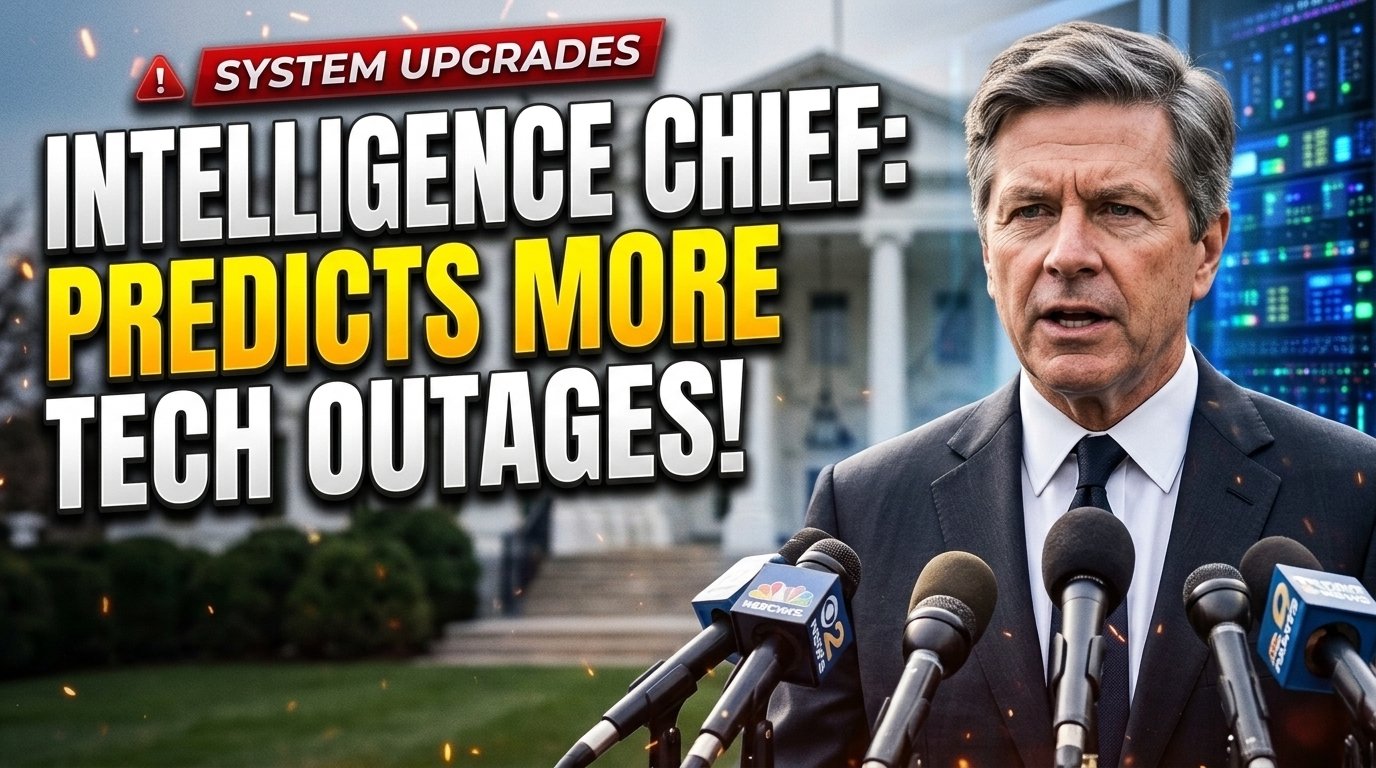
US Intelligence Chief Predicts More Tech Outages as Systems Are Upgraded
Americans and businesses should brace for additional disruptions to everyday digital services in the coming months, as US intelligence chief predicts more tech outages as systems are upgraded across critical public and private infrastructure. Speaking across Sunday morning broadcast news programs on November 22, 2026, Director of National Intelligence (DNI) Jay Clayton warned that “glitches, gaps, interruptions in service” are an unavoidable byproduct of racing to modernize aging networks and patch newly discovered security vulnerabilities.
“Any time you refurbish your house, upgrade any of your systems, there are going to be things that you do not expect,” Clayton said during an appearance on CNN’s State of the Union. “We are taking more systems down and putting them back up than ever before.”
Also Read:
Miley Cyrus Weds Drummer Maxx Morando in California
Recent Wave of Disruptions Across Aviation, Banking, and Government
When US intelligence chief predicts more tech outages as systems are upgraded, his remarks follow a turbulent month in which a rapid succession of high-profile technical failures rattled critical sectors of the U.S. economy:
Nationwide Air Travel Ground Stop: A Federal Aviation Administration (FAA) router upgrade triggered a widespread disruption that temporarily halted flights across the United States.
Microsoft Email and Cloud Outage: A 24-hour global disruption hit Microsoft services, including Outlook email, after what company executives described as a network capacity upgrade and software update “perfect storm”.
Major Banking Delays: A software bug at JPMorgan Chase caused transaction and service delays across several major financial institutions.
National Security Agency (NSA) Network Degradation: The NSA confirmed that its internal communications network experienced a temporary degradation during scheduled maintenance, though officials stated mission-critical capabilities remained operational.
Appearing on ABC’s This Week, Clayton reiterated President Donald Trump’s earlier assessment that these failures were not the work of coordinated or state-sponsored foreign cyberattacks. Instead, Clayton praised firms such as Microsoft and JPMorgan for promptly disclosing the technical causes behind their outages, while declining to comment on separate reported cyber incidents involving the FBI and the Department of Agriculture pending ongoing investigations.
How Artificial Intelligence Is Driving Rapid Infrastructure Upgrades
A major catalyst behind the current wave of system updates is the rapid rise of artificial intelligence—both as a defensive tool and as a threat vector. Because AI models are making it significantly faster to detect latent flaws in decades-old software code, technology companies, banks, and government agencies are rushing to deploy security patches before adversaries can exploit those weaknesses:
“AI Ripple Effects” on Aging Infrastructure: Speaking on CBS’s Face the Nation, Microsoft President and Vice Chair Brad Smith apologized for his company’s recent outage and warned that disruptions could persist for months. “The whole information infrastructure of the world is in effect being upgraded right now,” Smith said, explaining that engineers are patching AI-detected code vulnerabilities on older systems with compressed testing timelines.
Treasury Warning on Financial Sector Patches: Treasury Secretary Scott Bessent echoed Clayton’s warning on CBS, cautioning that software updates introduced by major banks to defend against AI-enabled threats could trigger temporary hiccups. “The patches may cause a glitch,” Bessent noted.
Rising Baseline of Cyber Incidents: Clayton pointed out that bad actors are simultaneously adopting AI tools, citing FBI data showing annual reported cyber incidents climbing from nearly 800,000 in 2020 to roughly 1 million.
Balancing Short-Term Bumps Against Long-Term Cyber Resilience
Despite the immediate inconvenience to travelers, bank customers, and office workers, federal officials emphasized that delaying upgrades is not an option. Clayton noted that eight of the world’s ten largest companies are American technology firms, underscoring U.S. leadership in compute, AI models, and cybersecurity. However, he stressed that maintaining that advantage requires modernizing the digital foundations the nation relies on.
As US intelligence chief predicts more tech outages as systems are upgraded, consumers and enterprises are being urged to maintain basic contingency plans—such as offline backups, alternative payment methods, and flexible travel buffers—while critical infrastructure undergoes this historic overhaul.
Frequently Asked Questions (FAQs)
Who is the U.S. intelligence chief warning about more tech outages? Director of National Intelligence (DNI) Jay Clayton issued the warning during interviews on CNN’s State of the Union and ABC’s This Week on Sunday, November 22, 2026.
Were the recent U.S. flight, banking, and Microsoft outages caused by foreign cyberattacks? No. According to Director of National Intelligence Jay Clayton, U.S. intelligence officials found no evidence linking the recent disruptions to coordinated or state-sponsored cyberattacks. Instead, they resulted from technical upgrades, software bugs, and maintenance on aging digital infrastructure.
Why are so many technology systems being upgraded at the same time? As Microsoft CEO Satya Nadella, Microsoft President Brad Smith, and Treasury Secretary Scott Bessent explained, artificial intelligence is rapidly uncovering software vulnerabilities in older code. Companies, banks, and government agencies are rushing to deploy security patches quickly before hackers can exploit those flaws, which increases the likelihood of temporary glitches.
Which major systems were affected by recent November 2026 tech outages? Recent disruptions included a nationwide halt to U.S. air travel linked to an FAA router upgrade, a 24-hour global Microsoft email and network outage, service delays across major banks tied to a JPMorgan Chase software bug, and a temporary degradation of the National Security Agency’s internal communications network.
How long are these technology disruptions expected to last? Microsoft President Brad Smith warned that because global information infrastructure is undergoing widespread modernization, “AI ripple effects” and periodic service disruptions could continue for the coming months.
Disclaimer
This article is for informational and technology news reporting purposes only. Statements, quotes, and incident summaries are based on public broadcast interviews, corporate disclosures, and verified news reports as of November 2026.