
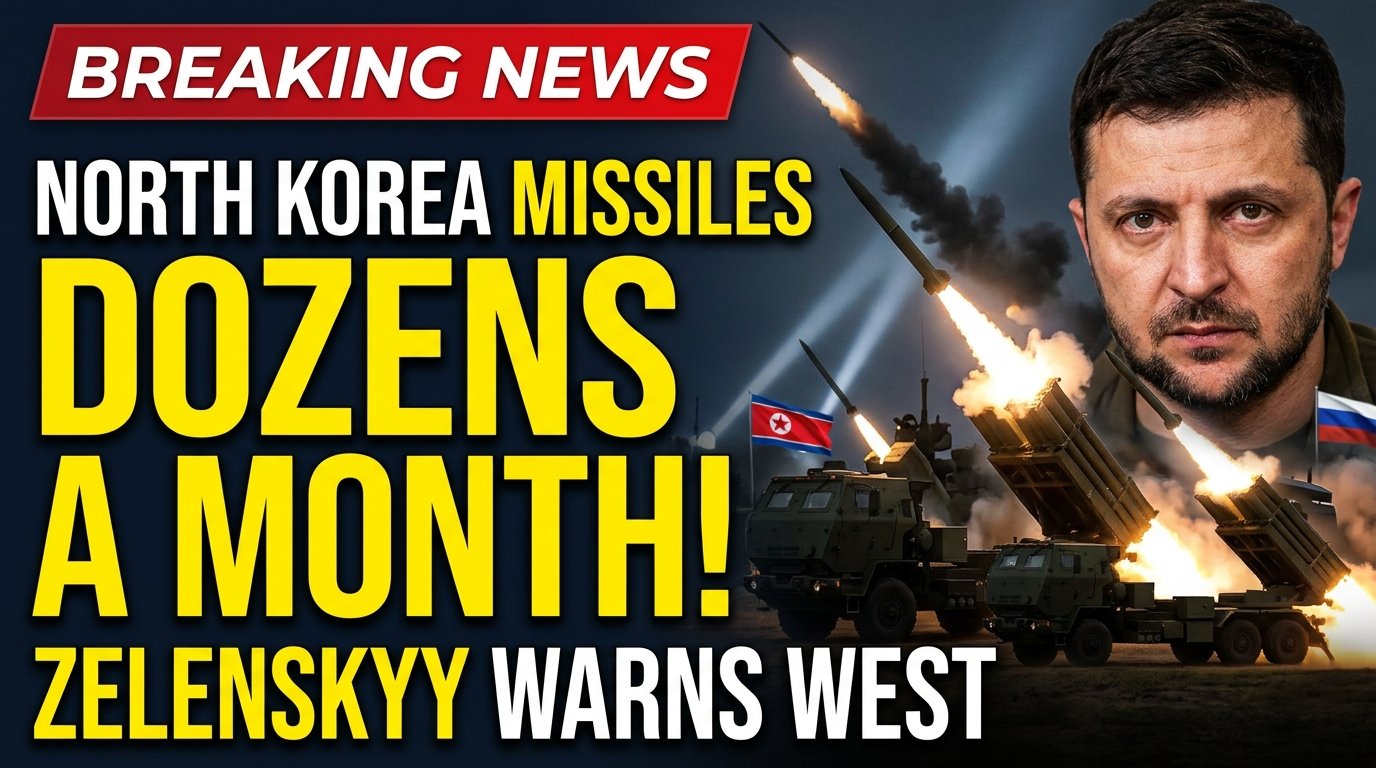
Zelenskyy Says North Korea Supplies Russia Dozens of Missiles a Month
Ukrainian President Volodymyr Zelenskyy has issued a stark intelligence warning to Western allies, revealing that Pyongyang is continuously bolstering Moscow’s long-range strike capabilities. Speaking in his nightly address following a briefing from Ukraine’s Defense Intelligence (HUR), Zelenskyy says North Korea supplies Russia dozens of missiles a month alongside Moscow’s own plans to expand domestic production of ballistic and cruise missiles.
The disclosure represents Ukraine’s most specific public assessment to date regarding the ongoing monthly pace of North Korean ballistic missile transfers. Zelenskyy warned that the steady influx of weapons—combined with real-world battlefield testing against Ukrainian cities—poses an escalating security threat not only to Europe, but also to neighboring nations across East Asia.
Also Read:
Microsoft Blames July Update Bug for Global Microsoft 365 Outage
Intelligence Briefing Reveals Ongoing Monthly Missile Shipments
During his address on Monday, November 16, 2026, Zelenskyy detailed findings presented at a military headquarters meeting by Ukraine’s Main Intelligence Directorate (HUR). According to the intelligence assessment, the scale of ballistic and cruise missile production Russia is planning shows the Kremlin has no intention of pursuing a genuine peace.
“Unfortunately, Russia is receiving more ballistic missiles from North Korea: we’re talking about dozens of missiles per month,” Zelenskyy stated.
Previously, Ukrainian intelligence officials estimated that Russia manufactures roughly 65 of its own Iskander-M ballistic missiles per month, and reported in August 2026 that North Korea had deployed a missile unit capable of mounting six launchers and up to 120 ballistic missiles. Pyongyang’s shipments primarily consist of mobile, short-range ballistic missiles such as the KN-23 (Hwasong-11a)—which closely resembles Russia’s Iskander-M and carries a 500-kilogram warhead up to 450 kilometers—and the KN-24, a tactical missile comparable to the U.S.-made ATACMS.
Earlier in the conflict, North Korea relied on covert maritime routes to ship between 8 million and 11 million artillery shells to Russia before those sea deliveries slowed in early 2026. The steady monthly arrival of dozens of ballistic missiles signals that military cooperation between Moscow and Pyongyang remains deeply active.
Battlefield Testing Sharpens North Korea’s Weapons Threat
Beyond giving Russia additional firepower to target Ukrainian energy infrastructure and urban centers, Zelenskyy emphasized a broader geopolitical danger: Russian forces are effectively serving as a live combat proving ground for North Korean engineers.
By launching North Korean ballistic missiles in active warfare and analyzing telemetry and air-defense interception data, Pyongyang is actively refining the accuracy and reliability of its arsenal. South Korean military intelligence previously noted similar assessments, warning that combat data gathered from Ukraine is helping North Korea upgrade its missile systems. Zelenskyy cautioned that an increasingly battle-tested North Korean missile program creates severe security risks for South Korea, Japan, and the wider Indo-Pacific region.
Zelenskyy Demands Missile Parity and Launch-Site Strike Capabilities
In response to the intelligence report, Zelenskyy called on European leaders to provide Ukraine with equivalent long-range strike capabilities to establish deterrence and parity.
“If Russia has such an ally that supplies ballistic missiles, then Ukraine needs clear parity so that we can respond to the Russian threat on equal terms,” the Ukrainian president said.
Specifically, Zelenskyy appealed to Germany, France, the United Kingdom, and Italy—noting that European allies possess modern missile systems capable of delivering decisive strikes—to accelerate deliveries to Kyiv. He also urged Western partners to revisit discussions on authorizing and equipping Ukraine to destroy Russian ballistic missile launchers directly on Russian territory, arguing that neutralizing launch platforms before missiles are fired is essential to protecting Ukrainian civilians and pushing Moscow toward peace.
The warning comes amid heightened diplomatic activity, with Russian officials indicating that President Vladimir Putin could meet North Korean leader Kim Jong Un on the sidelines of this week’s APEC summit in China. As Zelenskyy says North Korea supplies Russia dozens of missiles a month, Kyiv is pressing Western capitals to ensure Ukraine is not outgunned by an expanding Moscow-Pyongyang military axis.
Frequently Asked Questions (FAQs)
How many missiles is North Korea sending to Russia according to Zelenskyy? Ukrainian President Volodymyr Zelenskyy stated that, according to Ukraine’s Defense Intelligence (HUR), Russia is receiving dozens of ballistic missiles per month from North Korea.
What types of ballistic missiles has North Korea supplied to Russia? North Korea has supplied Russia with mobile short-range ballistic missiles including the KN-23 (Hwasong-11a)—similar to Russia’s Iskander-M—and the KN-24, which is comparable to the U.S. ATACMS system.
Why did Zelenskyy say North Korean missile shipments threaten Asia and Europe? Zelenskyy warned that Russia’s combat use of North Korean missiles in Ukraine allows Pyongyang to test, refine, and improve the accuracy of its weapons, creating heightened security threats for countries neighboring North Korea—such as South Korea and Japan—as well as Europe.
Which European countries did Zelenskyy appeal to for missile support? Zelenskyy specifically called on Germany, France, the United Kingdom, and Italy to increase supplies of long-range missile systems to Ukraine so Kyiv can maintain parity against Russian and North Korean strikes.
What did Zelenskyy say about targeting Russian missile launchers? Zelenskyy urged Western allies to resume discussions on providing Ukraine with the technology and authorization to destroy ballistic missile launchers inside Russia before they can launch attacks.
Disclaimer
This article is for informational and news reporting purposes only. Intelligence assessments, weapons specifications, and diplomatic developments are based on official statements from Ukrainian government officials and verified international news reports as of November 2026.