
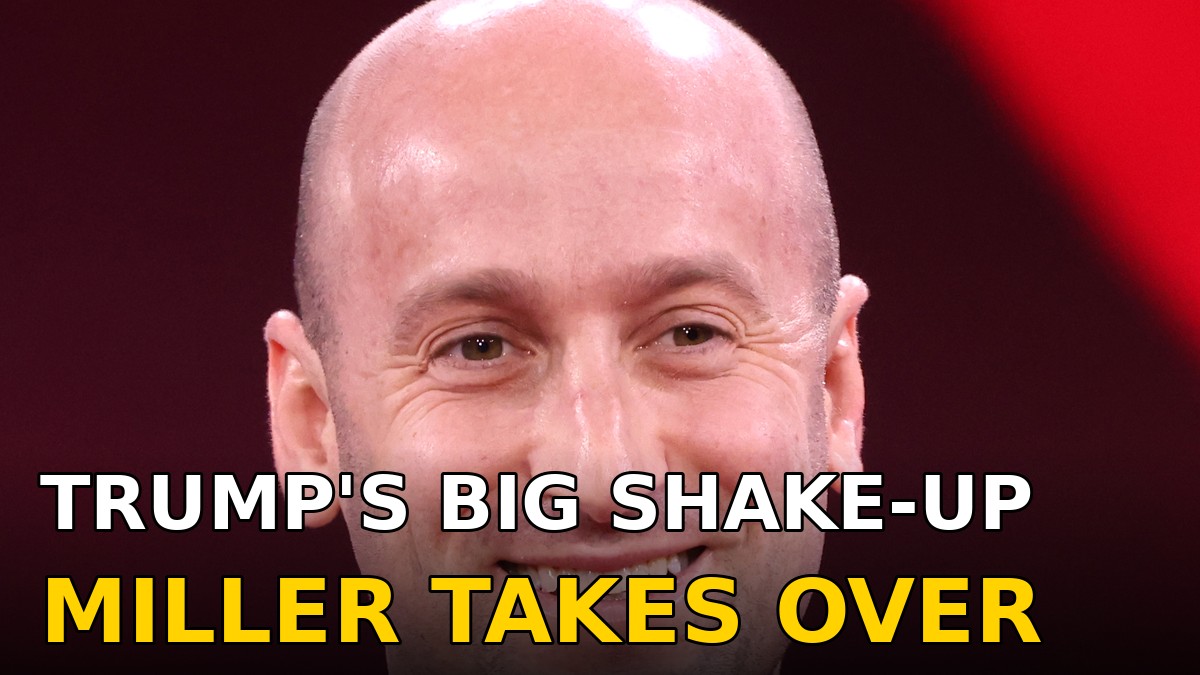
President Donald Trump has named Stephen Miller chief of staff, replacing Susie Wiles just three days after Republicans lost control of Congress in the midterm elections — and he is already signalling that Wiles will not be the last senior figure to go.
Trump announced the change on Friday, November 6, in a post on Truth Social, saying Miller would take over the job on Monday, November 9. Wiles, he wrote, had “done an outstanding job” and would be moving over to the Trump Political Operation. The announcement came only hours after Trump sat down for a “60 Minutes” interview in which he openly teased that a wider shake-up was coming.
Stephen Miller Chief of Staff: What the Appointment Signals
Miller, 41, is no newcomer to the West Wing. He has been at Trump’s side since the 2016 campaign, served as deputy chief of staff for policy and as homeland security adviser in the second term, and built his reputation as the architect of the administration’s hardline immigration agenda, including its mass deportation programme. Trump called him “one of my most trusted advisors” and told reporters on Friday: “Stephen’s been with me from the beginning. He gets it.”
The choice is a statement of intent. Wiles was widely seen as a moderating force, the operator who kept the trains running and kept the president’s impulses in check. Miller is the opposite: a combative loyalist who has argued for a no-holds-barred style of governing and a maximalist use of executive power. With Democrats now in control of Congress, his elevation suggests Trump has no intention of trimming his sails for the final two years of his presidency — he plans to fight.
Why Susie Wiles Is Leaving
Wiles, 69, was the first woman ever to serve as White House chief of staff, and she lasted longer in the job than any of the four chiefs of staff Trump cycled through in his first term. She was his 2024 co-campaign manager and one of his most trusted advisers, known inside the building as the “ice maiden” for her steeliness beneath a friendly manner.
A White House official told AFP that Wiles offered her resignation on Thursday night, two days after the midterm rout. Trump had said only three weeks earlier that there was “zero chance” of removing her. Asked on Friday what had changed, he was blunt: “I wanted to make a change. I think Susie’s done a very good job, great job. But I just wanted to make a change. Stephen’s been great. We gotta make moves. Sometimes in life you have to make moves.”
Her departure also came months after she went public in March 2026 with a breast cancer diagnosis, following months of treatment, and later said she no longer showed evidence of the disease.
The 60 Minutes Warning: ‘Maybe a Few Changes’
The timing of the announcement was striking. The “60 Minutes” interview, taped on Friday morning with correspondent Ross Douthat and due to air in full on Sunday at 7 p.m. ET, was recorded just hours before Wiles was pushed out. In a clip released on Friday night, Douthat asked Trump whether he planned to fire anyone from his team after Republicans lost their majorities in the House and Senate.
“I do,” Trump replied. “A little bit. I love my Cabinet. I think they’re good, but I’ll be doing maybe a few changes. I don’t want to mention who.”
By the afternoon, the first of those changes had been made. The interview also touched on War Secretary Pete Hegseth, who may face an impeachment vote when the House reconvenes next week. Asked whether he still had confidence in Hegseth, Trump said: “I do. Look, we’ve won two wars. We’ve won Venezuela and taken out billions and billions and billions of dollars already.” Asked whether he credited Hegseth with the Venezuela operation, he added: “No, but he was a part of it.” Hegseth himself ruled out stepping down voluntarily earlier in the week, saying in a video message: “Just like the president. We don’t back down.”
What Happens Next for Hegseth and the Cabinet
The question now is who follows Wiles out the door, now that Trump has named Stephen Miller chief of staff. Several names had been floated as possible successors before Miller won out, including Bill Pulte, the federal housing director, Sergio Gor and Jay Clayton. But the more consequential question is which Cabinet members Trump had in mind when he promised “a few changes” — and whether Hegseth, whose leadership and judgment have been questioned by lawmakers from both parties, tops that list.
The shake-up lands in the middle of a brutal week for the Republican Party. Democrats flipped key races across the country in Tuesday’s midterms, regaining control of Congress, and the White House is now bracing for two years of investigations, subpoenas and impeachment votes from a Democratic House. Trump discussed the fallout in the same “60 Minutes” conversation — read our earlier report on how the midterm defeat has shaped his next moves on Iran — and the message from the Miller appointment is that he intends to meet that pressure with confrontation, not compromise.
For Wiles, the move to the Trump Political Operation keeps her inside the president’s orbit, but it ends her run as the most durable chief of staff of the Trump era. For Miller, Monday brings the top job in the White House. Trump named Stephen Miller chief of staff to run a West Wing that is about to be tested like never before.
The full interview airs on “60 Minutes” on Sunday. For the original report, see the New York Post’s coverage of Trump’s Cabinet shake-up warning.