
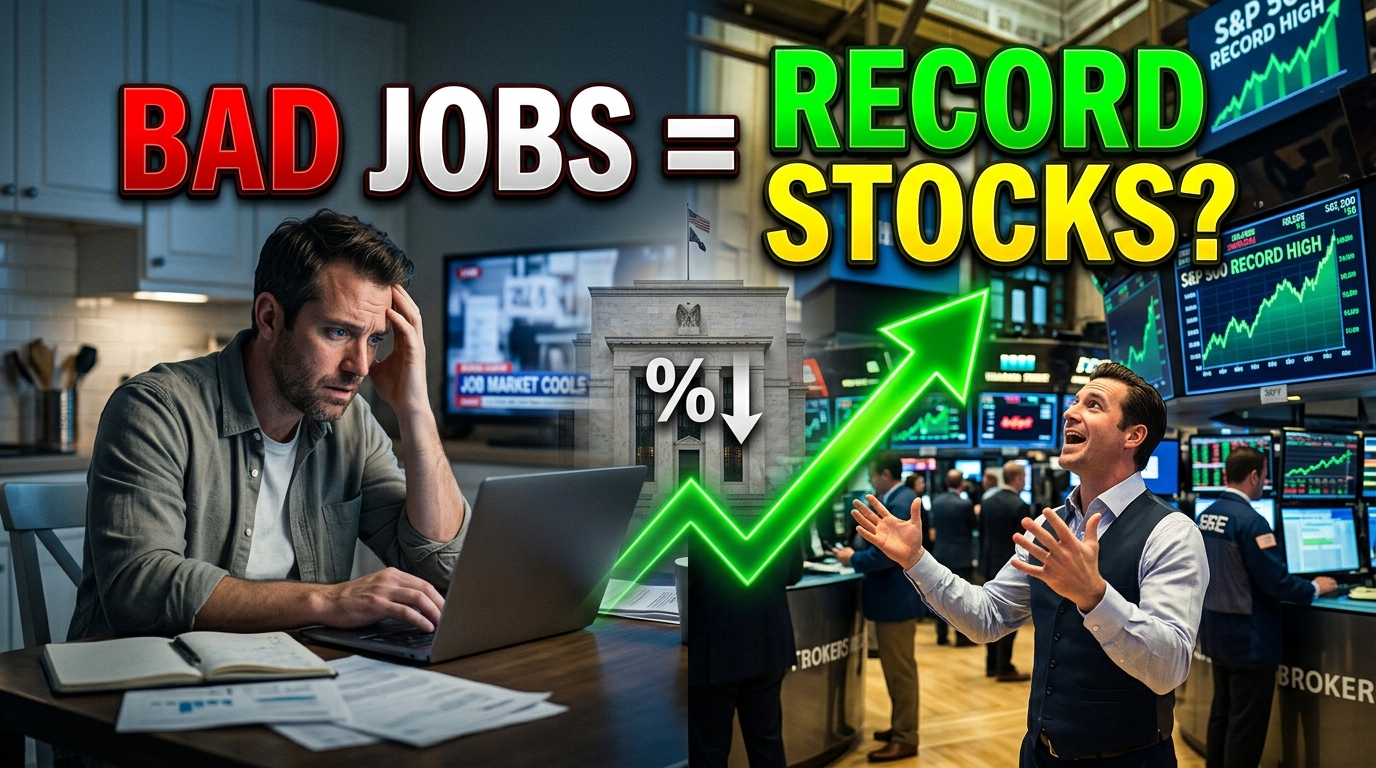
The October jobs report gave Wall Street exactly the jolt it needed on Friday, November 6, 2026. The Nasdaq Composite jumped 1.09 percent to 24,579.42, a sharp turn after Thursday’s brutal 5.5 percent plunge had dragged the index into correction territory.
Traders who had spent Thursday bracing for more pain came back on Friday with a different mood, and the October jobs report was the reason. Payrolls came in far hotter than anyone had pencilled in, and the market’s first reaction was to buy the dip in technology, growth and defence names, even as the Dow Jones Industrial Average slipped 0.46 percent to 51,285.73.
In this article:
- What the October jobs report showed
- A Nasdaq rebound after Thursday’s plunge
- Aerospace and defence soared on a $1.3 billion deal
- The laggards: borrowing costs bit hard
- What comes next: CPI, PPI and earnings
- Sources and Resources
- Frequently Asked Questions
- Conclusion
That split tells the story of the day. It was not a broad, carefree rally. It was a selective rebound, led by the Nasdaq and by aerospace stocks, while blue-chip industrials and rate-sensitive firms struggled with the other side of the same news.
Strong hiring is good for workers and for spending, yet it also keeps the Federal Reserve on course for another rate rise, and that pushed the 10-year Treasury yield toward 4.88 percent. Investors had to weigh two facts at once: the economy is still creating jobs at a fast pace, and money is about to get dearer.
What the October jobs report showed
October nonfarm payrolls surged by 165,000, against a consensus forecast of just 59,000. The gap was wide enough to change the tone of the whole session. A print close to consensus would have left traders guessing about the Fed’s next move.
A print almost three times the forecast left little room for doubt, and the October jobs report put hiring firmly back at the centre of the rates debate. Employers added jobs across the economy, and the strength of the number undercut the fear that Thursday’s sell-off had signalled a sudden crack in demand.
The bond market reacted first and fastest. The 10-year Treasury yield climbed toward 4.88 percent as traders repriced the chance of a December hike after the October jobs report. Markets now price a 79.1 percent probability of a December Fed rate hike, a level that would have looked high only a few weeks ago.
Higher yields usually hurt growth stocks, because future earnings are worth less when discounted at a higher rate, so the Nasdaq’s gain on Friday was all the more striking. Buyers stepped in anyway, betting that Thursday’s 5.5 percent fall had overshot and that the companies at the heart of the index could still grow through dearer borrowing.
A Nasdaq rebound after Thursday’s plunge
Thursday had been ugly. The Nasdaq fell 5.5 percent in a single session and closed in correction territory, down more than 10 percent from its recent peak. Fear spread through AI and technology stocks, which had led the market higher for much of the year and then led it lower when doubts about valuations and spending took hold.
Friday’s bounce did not erase that damage, but the October jobs report stopped the slide and gave buyers a foothold. The S&P 500 rose 0.31 percent to 7,376.86, while the Russell 2000, which tracks smaller companies, gained 0.89 percent to 2,754.11. The VIX, Wall Street’s fear gauge, fell 9.23 percent to 25.58, a sign that panic was easing even if nerves had not gone away.
Gold slipped 0.96 percent to 4,074.00 dollars an ounce, as the rush for safety faded and the dollar drew support from higher yields after the October jobs report. WTI crude eased 0.10 percent to 90.43 dollars a barrel, holding near 90 dollars despite the swings in stocks. For now, the market looks split between two stories: a jobs market that is still hot, and a rates outlook that is getting hotter with it.
Aerospace and defence soared on a $1.3 billion deal
The clearest winners on Friday sat in aerospace and defence. Guided Missiles and Space Vehicles jumped 14.78 percent, Aircraft rose 9.31 percent, and Aircraft Parts gained 9.16 percent. The trigger was a $1.3 billion rocket engine deal between Firefly Aerospace and AST SpaceMobile, a contract big enough to lift the whole sector and to remind investors that defence and space spending still has real orders behind it.
Shares linked to the deal and to the wider supply chain moved sharply, and the rally spread to other aerospace names as traders looked for the next beneficiary. The move also fitted the mood of the day. After a week in which investors had punished anything with a stretched valuation, they rewarded a story built on a signed contract and a clear customer. Aerospace firms have order books that stretch years ahead, and in a session driven by the October jobs report, that kind of visibility counted for a lot.
AI and tech stayed volatile
AI and tech stocks stayed volatile as investors digested the Democrats’ midterm “Blue Wave” and fresh local restrictions on data-centre expansions. The politics matter because data centres need power, land and permits, and any curb on new sites can slow the build-out that AI firms have promised.
Add a higher cost of borrowing to that mix, and the case for paying top prices for future AI earnings gets harder to make. Friday’s Nasdaq gain showed that buyers are still willing to own these names at the right price, but the swings of the past two days show how fast that price can change.
The laggards: borrowing costs bit hard
Not every corner of the market enjoyed the jobs news. Help Supply Services fell 5.83 percent and Management Consulting Services dropped 4.90 percent, the two weakest groups of the day. Both sit close to the real economy: when firms hire through agencies or bring in outside advisers, they are spending on growth, and when borrowing costs rise, that spending is often the first to be cut.
Rising yields hit economically sensitive firms hardest, and Friday was no exception after the October jobs report. The Dow’s 0.46 percent fall captured that drag. Its mix of industrials, banks and consumer names is more exposed to higher rates and to slower spending than the Nasdaq’s technology-heavy line-up, so a hot jobs print that lifts hike odds can hurt the Dow even as it lifts the Nasdaq.
The split between the two indexes on Friday was a reminder that one number can mean different things for different parts of the market.
What comes next: CPI, PPI and earnings
Next week brings a run of data that will test Friday’s mood. On November 9, China releases CPI figures, and Take-Two and Skydance report earnings. November 10 brings the main event for US traders: the October CPI report, which will show whether price pressures are cooling fast enough to give the Fed any room to pause.
On November 12, the UK reports third-quarter GDP, the US releases jobless claims, and Cisco and Applied Materials report earnings. The week closes on November 13 with the US October PPI report.
Each of those releases feeds into the same question: will the Fed hike in December, and if it does, how much further will it go? The October jobs report has tilted the odds toward a hike, with markets now pricing a 79.1 percent chance, but CPI and PPI could still shift that view.
A soft inflation print would ease the pressure, while another hot one would lock in the December move and raise talk of more to follow. Traders will watch the inflation data as closely as they watched payrolls. For more market coverage, see our Finance section.
Sources and Resources
Market data and reporting for this article come from Stock Market Watch, Market Digest, Friday, November 6, 2026: Stock Market Watch – Market Digest, Friday, November 6, 2026. Figures for the Dow Jones, S&P 500, Nasdaq, Russell 2000, VIX, gold and WTI crude, along with the October payrolls data, sector moves and the week-ahead calendar, are drawn from that digest.
Frequently Asked Questions
What did the October jobs report show?
The October jobs report showed nonfarm payrolls rising by 165,000, far above the 59,000 consensus forecast. It was a much stronger hiring print than the market had expected, and it pushed the 10-year Treasury yield toward 4.88 percent.
Why did the Nasdaq rise while the Dow fell?
The Nasdaq rose 1.09 percent to 24,579.42 as buyers stepped in after Thursday’s 5.5 percent plunge, while the Dow slipped 0.46 percent to 51,285.73. Tech stocks bounced from an oversold level, but Dow names were more exposed to higher borrowing costs after the hot jobs data lifted hike odds.
Which sectors led the market on Friday?
Aerospace and defence led the way. Guided Missiles and Space Vehicles jumped 14.78 percent, Aircraft rose 9.31 percent, and Aircraft Parts gained 9.16 percent, helped by the $1.3 billion rocket engine deal between Firefly Aerospace and AST SpaceMobile.
What are the odds of a December Fed rate hike now?
Markets price a 79.1 percent probability of a December Fed rate hike after the October jobs report. That is a high chance, but next week’s CPI and PPI data could still move it either way.
What should investors watch next week?
Watch China CPI and Take-Two and Skydance earnings on November 9, US October CPI on November 10, UK third-quarter GDP, US jobless claims and Cisco and Applied Materials earnings on November 12, and US October PPI on November 13.
Conclusion
The October jobs report turned a grim week into a split verdict. The Nasdaq’s 1.09 percent gain showed that buyers will still step in after a sharp fall, and the aerospace rally showed that real orders can still move a sector in a single day.
Yet the Dow’s slip, the fall in the weakest service groups and the climb in yields toward 4.88 percent showed the cost of that hot hiring print. With a December hike now priced at 79.1 percent and CPI and PPI due next week, the market has bought itself a breather, not a clear answer. The next set of inflation numbers will decide whether Friday was the start of a steadier run or just a pause in a volatile stretch.