
Hackers Hijack Emergency Apps in Ukraine and Russia with Fake Nuclear Alerts: Digital Chaos Amid Wartime Tensions
Introduction: Simultaneous Cyber Breaches Shake Public Safety Apps
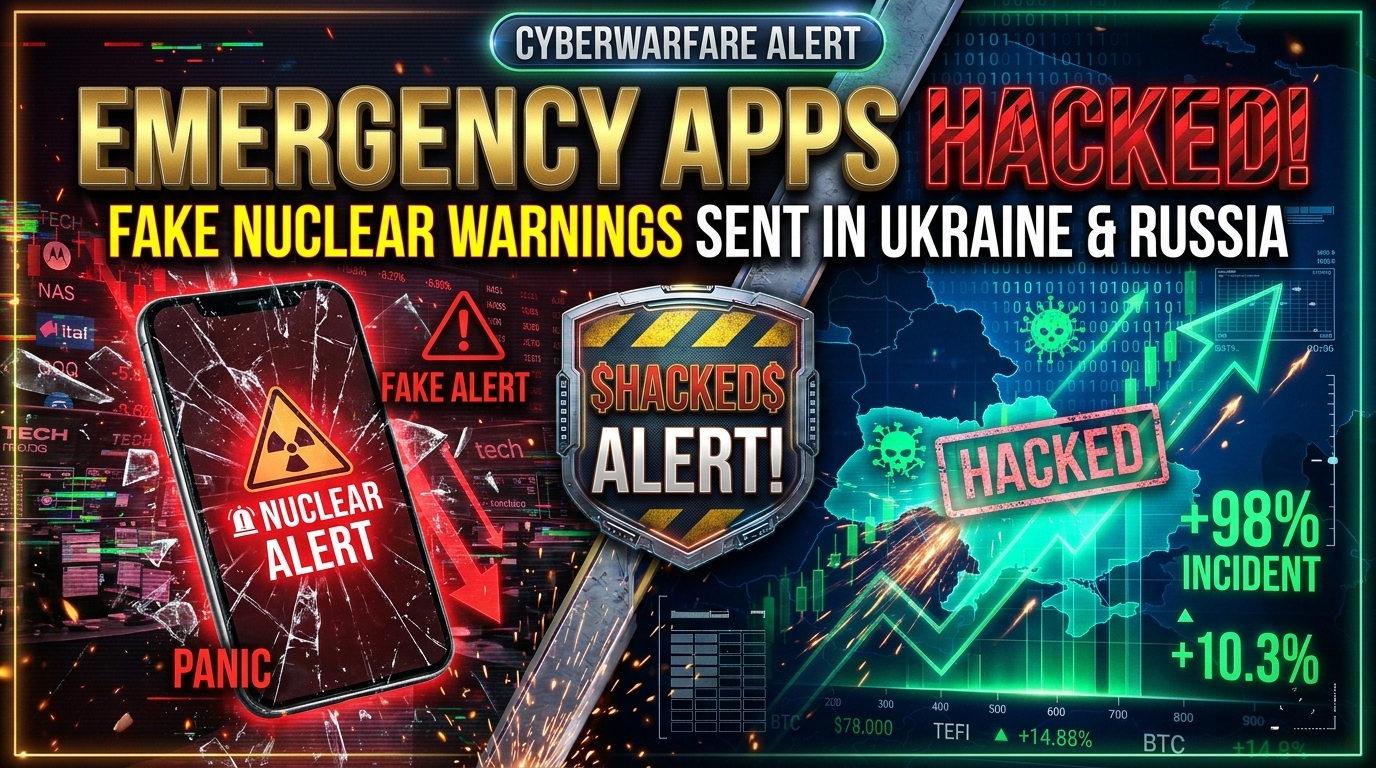
In an unprecedented coordinated digital intrusion across enemy lines, hackers hijack emergency apps in Ukraine and Russia with fake nuclear alerts, broadcasting false warnings of imminent atomic strikes, chemical hazards, and heavy street fighting. The security breaches, which hit national warning platforms late into the evening, exploited civilian infrastructure applications just as localized ceasefires expired.
Citizens in Kyiv and across dozens of Russian regions woke up or received late-night push notifications warning of dangerous radiation levels and incoming ballistic missile strikes. While military officials and civil defense departments swiftly moved to discredit the messages as malicious hoaxes, the incident underscored the vulnerability of civilian early-warning systems to psychological warfare and sophisticated cyber operations.
Also Read:
Indicted ICE Officer Surrenders in Houston and Is Released on 30,000-Dollar Bond
Anatomy of the Attack: False Nuclear and Chemical Alarms
The cyberattacks unfolded simultaneously across both nations’ digital spaces, though executed through independent breaches of official mobile applications.
The Alerts in Ukraine: Users of Ukraine’s primary air alert application received alarming notifications warning of high radiation thresholds in Kyiv, chemical contamination risks, and fictitious ground combat. Observant citizens quickly noted irregularities, including spelling and grammar errors in English-language notifications alongside mixed Russian and Ukrainian scripts.
The Breach in Russia: Simultaneously, Russia’s Ministry of Emergency Situations confirmed that its official mobile application had been compromised. Unauthorized push notifications warning of catastrophic nuclear threats were beamed out to users across dozens of regions.
Psychological Impact: Although many veterans of the prolonged conflict recognized the notifications as false or ignored them due to grammatical anomalies, the sudden phantom alerts caused severe temporary panic, anxiety, and confusion among families taking shelter.
[Simultaneous Midnight Breach] ---> [Unauthorized Push Notifications Sent] ---> [False Nuclear & Chemical Panic] ---> [Quick Official Denials & App Suspensions]
Official Responses and Infrastructure Security
Government agencies and defense spokespersons in both Kyiv and Moscow rushed to stabilize public panic, confirming that the digital intrusions were isolated to mobile applications and did not compromise core military command or national defense networks.
1. Ukrainian Air Force and Civil Defense Actions
The Ukrainian Air Force command issued immediate clarifications across Telegram and secondary channels, assuring the public that no radiation threat existed. App developers temporarily suspended the service to purge unauthorized access, urging citizens to avoid clicking embedded links within suspicious notifications.
2. Russian Emergency Ministry Assessment
In Moscow, the Ministry of Emergency Situations stated that the vulnerability exploited by the hackers had been identified, with technical teams initiating patch protocols. Kremlin spokesperson Dmitry Peskov addressed the broader trend, noting that state digital infrastructure faces a continuous onslaught of AI-driven cyber threats requiring an immediate tightening of national cybersecurity baselines.
| Affected Nation / System | Nature of False Warning Sent | Official Response & Remediation |
| Ukraine (Air Alert App) | Radiation spikes, chemical threats, Oreshnik missile strikes | App temporarily suspended; Air Force confirmed zero military impact |
| Russia (Emergency Ministry App) | Imminent nuclear missile launches across 33 regions | Vulnerability patched; public redirected to sirens and SMS channels |
The Broader Threat of Information Warfare
Cybersecurity analysts view the dual-app hijacking as a textbook escalation in psychological information warfare. By subverting trusted channels designed to preserve human life, bad actors weaponize public trust against civilian populations. Security experts have long warned that civilian-facing early-warning utilities represent soft targets compared to heavily encrypted military defense grids.
As both nations tighten app security protocols and review third-party software supply chains, the incident serves as a stark reminder that modern warfare is fought not only on physical frontlines but inside the pocket devices of millions of civilians.
Frequently Asked Questions (FAQs)
Q1: What happened when hackers hijacked emergency apps in Ukraine and Russia?
A: Unknown hackers breached official public safety mobile apps in both countries, sending unauthorized, false notifications warning citizens of impending nuclear strikes, chemical hazards, and radiation.
Q2: Were the nuclear threat alerts real?
A: No. Both Ukrainian and Russian authorities swiftly confirmed that the alerts were entirely false and the result of malicious cyber intrusions into civilian smartphone applications.
Q3: Did the hack affect actual military defense or missile detection systems?
A: No. Military officials in Ukraine confirmed that the attack was restricted to civilian warning apps and did not compromise core security or defense operations.
Q4: How are governments responding to prevent future app hacks?
A: App developers have temporarily suspended vulnerable channels, patched exploited code, and urged citizens to rely on redundant safety measures like municipal sirens, SMS, and official broadcast channels.
Disclaimer
Disclaimer: This news report synthesizes international cybersecurity updates, official government statements, and press agency dispatches as of November 2026. Technical investigations into the origin and attribution of the cyberattacks remain ongoing.