
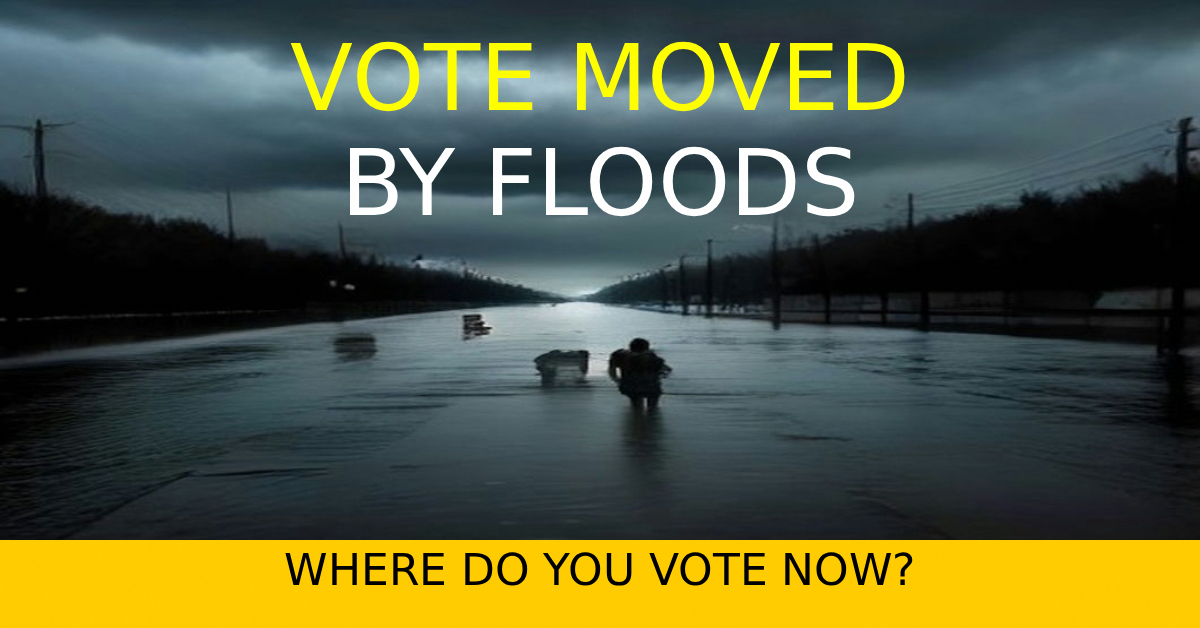
Election Day polling places across four states did not stay where voters expected them on Tuesday, 3 November 2026. Flooding moved sites in Florida, Colorado and Utah, while a tornado damaged a polling place in Oklahoma, and officials had to tell voters, sometimes at short notice, to go somewhere else. The vote went ahead, but for thousands of people the simple act of turning up at a familiar school hall or community centre turned into a detour.
That is the story in a nutshell: weather hit Election Day polling places on the worst possible day, and election workers, county clerks and state officials had to improvise. They moved ballots, signs, staff and secure transport, kept records straight, and tried to make sure no one who turned up was turned away because a road was under water or a roof had come off.
Election Day polling places: Florida moves 21 sites
In Florida, flooding moved Election Day polling places in eight counties, covering 21 polling places and 30 precincts. Voters in those areas were directed to temporary sites, and election workers had to make sure the change was clear at the original locations as well as online. For a voter who had walked to a familiar school hall, a last-minute move can be confusing, and officials said the point was to keep the vote open, not to close it down.
The Florida moves were the largest single set of changes reported on the day. Eight counties is a wide spread, and 21 sites is a lot of last-minute logistics: signs, staff, ballot papers and secure transport all had to shift with the voters. The fact that the vote went ahead at temporary sites, rather than being postponed, mattered to people who could not easily return another day.
Utah and Colorado switch to electronic ballots
In Utah, Lt. Gov. Deidre Henderson issued an emergency declaration that let voters in three flood-affected counties receive electronic ballots, so Election Day polling places were not the only route to a vote. Her words, as reported, were: “Utahns deserve a safe and accessible way to vote, even when the weather does not cooperate.” That sentence captures the trade-off officials faced: keep polling places open where it was safe, and give voters another route where it was not.
Colorado took a similar step. La Plata and Archuleta counties used electronic ballots under an emergency declaration from Secretary of State Jena Griswold, and the state also used electronic ballots in Mesa County. Electronic ballots are a controlled route for voters who cannot reach Election Day polling places, with checks on who receives and returns a ballot. In a flood, that route can be the difference between voting and not voting.
Oklahoma tornado damages a polling place
In Oklahoma, a tornado on Sunday damaged the Keyes Community Center in Cimarron County, peeling off its roof and a section of wall, according to county emergency manager Randy White. Voters who would have used that centre were moved to a new location for Election Day, so Election Day polling places in the county changed at short notice. The damage happened before Tuesday, which gave officials a short window to arrange the move, but it still meant a community lost its usual polling place two days before the vote.
What happened elsewhere on Election Day
The same reporting that covered the floods moves also noted problems elsewhere. In Westchester County, New York, ballot scanners failed and voting continued with paper ballots placed in secure bags. In Chester County, Pennsylvania, a court kept three precincts open an extra 30 minutes after problems at those sites. Those were not weather moves, but they were the same kind of last-minute adaptation: keep voting open, record the vote securely, and sort the count out afterwards. The Justice Department also sent about 1,000 election monitors to counties across the country to observe and report possible Voting Rights Act violations.
Sources and Resources
For readers following this story about Election Day polling places, the original reporting is here: Floods and a tornado force polling places to move on Election Day – Today News Brief. Related coverage on this site: America votes in 2026 midterms as more than 54 million early ballots are cast. Local election offices in Florida, Colorado, Utah and Oklahoma are the best source for the final list of moved sites in each county, and voters should check their county clerk or supervisor of elections site before travelling.
Frequently Asked Questions
Did Election Day polling places really move, or was voting cancelled?
Voting was not cancelled in the places covered here. Election Day polling places moved to temporary sites, or voters were given electronic ballots, so the vote could go ahead despite floods and a tornado.
Which states were hit hardest?
Florida had the largest set of moves, with 21 polling places in eight counties. Utah and Colorado used electronic ballots in flood-affected counties, and Oklahoma moved voters after a tornado damaged a community centre.
What should I do if my polling place moves?
Check your county election office site or call it before you set out, and look for signs at the original site. Temporary sites are staffed like regular sites, and your ballot counts the same way.
Are electronic ballots safe?
Electronic ballots in this case were issued under emergency declarations, with controls on who receives and returns them. They are a backup route for voters who cannot reach Election Day polling places, not a general online voting system.
Can I still vote if I turn up at the wrong site?
Staff at a temporary site can direct you, and in many states you can cast a provisional ballot if there is doubt about where you should vote. Ask at the site rather than giving up and going home.
Conclusion
Election Day polling places are supposed to be boring: same hall, same queue, same sticker. On 3 November, weather made them anything but boring in four states, and officials had to move fast to keep the vote open. Florida shifted 21 sites, Utah and Colorado turned to electronic ballots, and Oklahoma moved voters after a tornado tore the roof off a community centre. None of that was ideal, but the vote went ahead, and that, in the end, is what mattered most to the voters who turned up, detoured and voted anyway.