
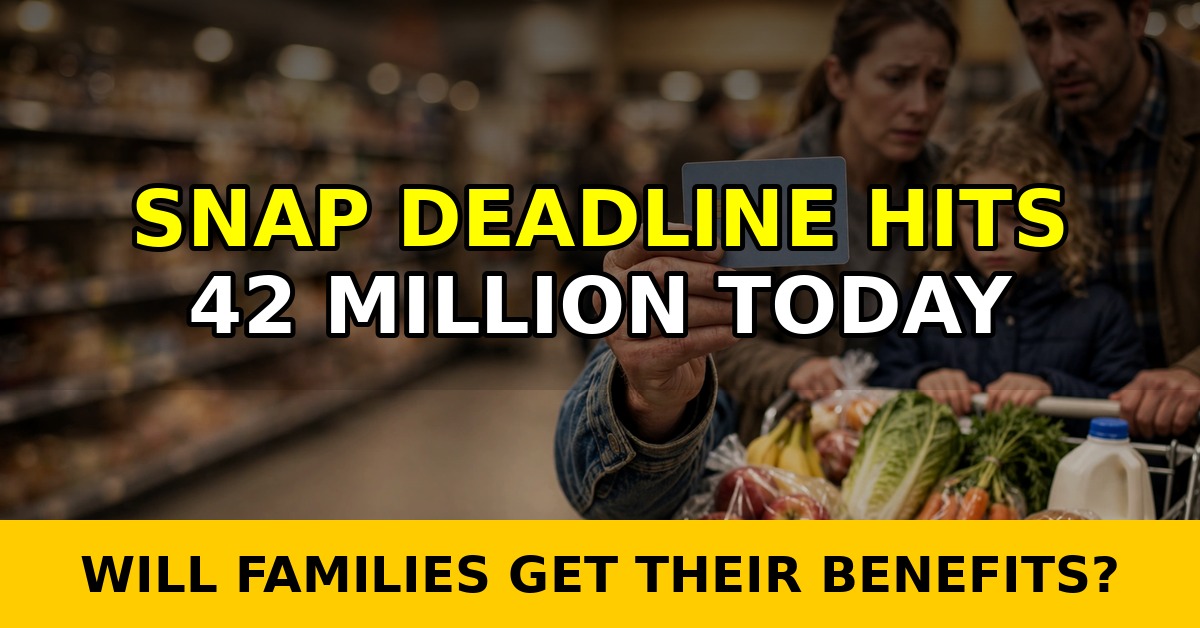
The SNAP deadline today is the day the food aid fight stops being about promises and starts being about a plan. The U.S. Department of Agriculture owes a court a plan for how it will deliver full November benefits to 42 million people, after two federal judges ordered the government to pay those benefits in full, despite the government shutdown that left November payments in limbo.

For families who depend on the Supplemental Nutrition Assistance Program, the SNAP deadline today is not an abstract legal date. It is the day they find out whether a card that was empty on 1 November will be loaded, and whether the groceries they have been rationing, borrowing, or going without will finally be paid for. Food banks, already stretched, say they cannot cover a gap of this size for long.
What the SNAP deadline today means in court
The SNAP deadline today follows two rulings that said, in different words, the same thing: the money exists, and the government must use it. One judge in New Hampshire, Landya McCafferty, and a second judge in Rhode Island both ordered full November benefits, rejecting the Trump administration’s plan to pay only a partial amount, or to wait for Congress to end the shutdown.
The administration had argued that it could not legally spend the full amount without an appropriation, and that a partial payment was the best it could do. The courts disagreed, pointing to contingency funds and other pots of money that, together, could cover the month. The SNAP deadline today is the government’s deadline to tell the court how it will comply, not whether it will.
That distinction matters. A plan that is vague, slow, or partial could bring the government back before the same judges within days. A plan that loads cards quickly, in full, and for all states, would end the immediate crisis, even if the wider shutdown fight continues in Congress.
How the SNAP deadline today reached 42 million people
SNAP helps about 42 million Americans, including children, older adults, disabled people, and workers in low-paid jobs. Benefits are loaded onto electronic cards at the start of each month, and families use them at grocery stores, markets, and, in some places, online retailers. When 1 November arrived during a shutdown, with no new appropriation for the programme, many of those cards stayed empty.
The administration said it had about $5 billion in contingency funds and about $2 billion in other funds, but argued that was not enough, or not legally available, for full payments. The judges, and the states that sued, said the opposite: the money was there, and the law required the government to use it for the people it was meant to help. The SNAP deadline today is the test of that ruling in practice.
States, meanwhile, have been in an impossible position. Some said they could not load cards without federal guidance and federal money. Others said they would load what they could, and hope for reimbursement. Grocery stores reported shoppers putting items back at the till, and food banks reported lines that started before opening time.
What families are facing as the SNAP deadline today arrives
House Democratic Leader Hakeem Jeffries, as reported in the source coverage, did not mince words about the shutdown’s effect on food aid, saying: “This is the president who said he’d protect SNAP, and now he’s holding it hostage.” Whether voters agree with that framing or blame Congress as a whole, the human cost is not in dispute: a missed month of food aid cannot be made up by a single shop later, because rent, bills, and school meals do not wait.
Food banks say donations have risen, but not by enough. A typical food bank can supply a few days of groceries to a family in crisis, not a month of meals for 42 million people. Churches, schools, and community groups have stepped in with pop-up pantries, but they, too, are running low, and volunteers are tired after weeks of shutdown-related demand.
The SNAP deadline today also matters for the wider economy. SNAP spending goes straight to grocery stores, many of them small and independent, and to the farmers and suppliers behind them. A month without that spending hits rural stores and city corner shops alike, and it hits them at a time when many are already dealing with higher costs.
What to watch after the SNAP deadline today
First, watch the plan itself: does it promise full benefits, for all states, and by when? Second, watch the cards: do families actually see money appear, and does it match what they received in October? Third, watch the courts: if the plan falls short, will the judges order a faster timetable, or hold the government in contempt?
Fourth, watch Congress. The shutdown is the root cause, and a deal to reopen the government would end the legal fight over November benefits, even if it does not solve the next funding deadline. Until then, the SNAP deadline today is a reminder that a budget fight in Washington is, for millions of people, a fight over dinner.
As our related coverage notes, Federal judge imposes emergency order halting Justice Department pressure on election officials, courts have played an unusually central role in the final days before the midterms, stepping in where Congress has not.
Sources and Resources
Read the source report that informed this article: Two Judges Said the Money Exists. This Morning, the Card Is Still Empty. (Bazaar Daily News). Further context comes from court reporting on the New Hampshire and Rhode Island rulings and on the USDA’s SNAP contingency funding.
Frequently Asked Questions
What is the SNAP deadline today?
It is the date by which the USDA must give a court a plan for paying full November SNAP benefits to 42 million people, after two judges ordered those payments.
Why were November SNAP benefits delayed?
Because the government shutdown left the programme without a new appropriation, and the administration said it could not pay in full, a claim the courts rejected.
How many people use SNAP?
About 42 million Americans, including children, older adults, disabled people, and low-paid workers.
Will everyone get their full benefit at once?
That is what the judges ordered, but the timing will depend on the plan the USDA files today and on how quickly states can load cards.
What can families do if their card is still empty?
Contact their state SNAP agency, check their card balance, and seek help from local food banks and community pantries while the court process continues.
Conclusion
The SNAP deadline today is a deadline with a human face. It is not about a line in a budget, but about whether 42 million people can buy food this month. If the USDA’s plan is full, fast, and clear, today could be the day the crisis ends. If it is not, the courts, and the families waiting on them, will be back in the same place tomorrow, asking the same question: where is the money, and when will it arrive?