
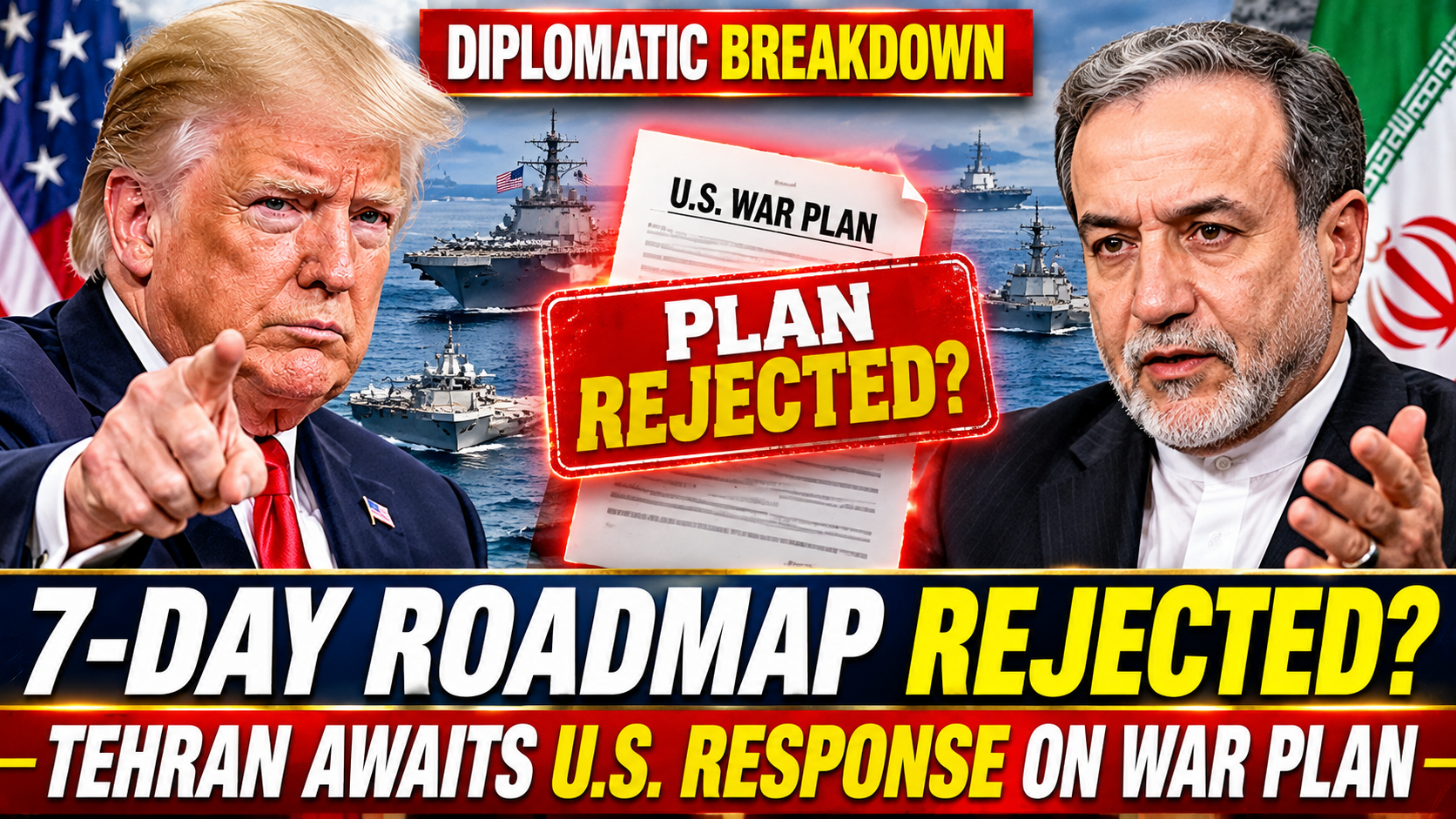
Iran Awaits US Response on Seven-Day Roadmap to End War as Trump Reportedly Rejects Plan
Introduction: High-Stakes Diplomacy Reaches a Critical Impasse
The high-stakes diplomatic effort to defuse military confrontation in the Middle East hit a major hurdle as Iran awaits US response on seven-day roadmap to end war as Trump reportedly rejects plan. Foreign Minister Abbas Araghchi outlined Tehran’s structured framework to regional intermediaries, pitching a phased de-escalation aimed at restoring maritime security in the Strait of Hormuz and resuming broader security and nuclear talks.
However, White House leaks and initial reports indicate that U.S. President Donald Trump pushed back against key conditions of the proposal, describing it as insufficient to meet Washington’s primary security demands. The apparent rejection leaves the Persian Gulf region suspended between fragile diplomatic channels and the persistent threat of escalating direct military conflict, sending shockwaves through global energy markets and international shipping corridors.
Also Read:
Judge Orders Trump Administration to Stop Threatening to Prosecute Election Officials
Key Elements of Tehran’s Seven-Day Roadmap
According to diplomatic sources familiar with Qatari-mediated negotiations, the Iranian foreign ministry’s draft outlined a step-by-step procedure designed to pause active hostilities and ease severe economic choke points:
Day 1–2: Mutual Maritime Ceasefire: Immediate cessation of military engagement in the Strait of Hormuz to allow international oil tankers and cargo vessels unhindered transit.
Day 3–4: Sanctions Relief and Economic Guarantees: Initial suspension of specific U.S. financial restrictions and maritime blockades targeting Iranian petroleum exports.
Day 5–6: Verification and Oversight: International atomic energy monitors and neutral regional observers verify compliance regarding nuclear enrichment thresholds and naval positioning.
Day 7: Launch of Direct Comprehensive Talks: Official transition from regional proxy mediation to direct, high-level diplomatic summits addressing long-term regional security frameworks.
[Iran Presents 7-Day Draft] ---> [Qatari Mediators Deliver Terms] ---> [White House Review & Initial Rejection] ---> [Persian Gulf Military Stand-Off]
Washington’s Posture: Why the Plan Faces Pushback
Reports from Washington signal that President Trump and senior national security advisors deemed the seven-day framework overly advantageous to Tehran without offering binding, long-term guarantees.
1. Demand for Permanent Nuclear Guarantees
Administration officials insist that any acceptable peace blueprint must mandate the verifiable dismantlement of key enrichment facilities and provide permanent guarantees against nuclear weapons development, rather than a temporary pause.
2. Maritime Transit and Regional Proxies
U.S. defense officials raised concerns that a seven-day window allows Iranian naval forces to rearm, clear tactical obstacles, and reposition ballistic missile batteries without permanently ending threat vectors against international commercial shipping lanes.
| Strategic Objective | Iranian Proposal Terms | U.S. Administration Stance | Mediation Status |
| Strait of Hormuz | Reopen transit within 48 hours under temporary ceasefire | Demands permanent, unconditioned naval freedom of navigation | Disputed; pending revised terms |
| Nuclear Program | Pause high-level enrichment during negotiations | Demands verifiable dismantlement of core enrichment sites | Unresolved |
| Economic Sanctions | Immediate relief on oil exports and asset freezes | Sanctions maintained as primary leverage point | Under review |
Impact on Global Energy Markets and Shipping Security
The impasse between Washington and Tehran has reignited extreme volatility across global crude markets. Brent crude prices continue to fluctuate as commodity traders price in the potential for prolonged operational disruptions through the Strait of Hormuz. Commercial shipping lines have kept elevated risk surcharges in place, while naval coalition forces maintain high alert statuses across the Persian Gulf to prevent further vessel disruptions.
Frequently Asked Questions (FAQs)
Q1: What is the main objective of Iran’s seven-day roadmap?
A: The plan proposed by Foreign Minister Abbas Araghchi aims to establish a phased ceasefire, reopen the Strait of Hormuz for commercial shipping, and pave the way for formal negotiations.
Q2: Why did President Trump reportedly reject the seven-day plan?
A: Administration sources indicate the U.S. rejected the proposal because it offered temporary relief to Tehran without requiring permanent nuclear guarantees or irreversible security commitments.
Q3: Who is mediating the peace proposal between the U.S. and Iran?
A: Qatari and regional diplomats have served as primary intermediaries, transmitting draft proposals between officials in Tehran and Washington.
Q4: How has this diplomatic standoff affected global energy supplies?
A: Uncertainty surrounding the Strait of Hormuz has kept oil risk premiums high, leading to volatile crude prices and elevated marine insurance costs for global shipping.
Disclaimer
Disclaimer: This news report synthesizes diplomatic statements, regional media coverage, and international news reports as of late 2026. Official government positions and diplomatic outcomes remain subject to ongoing real-time developments.