
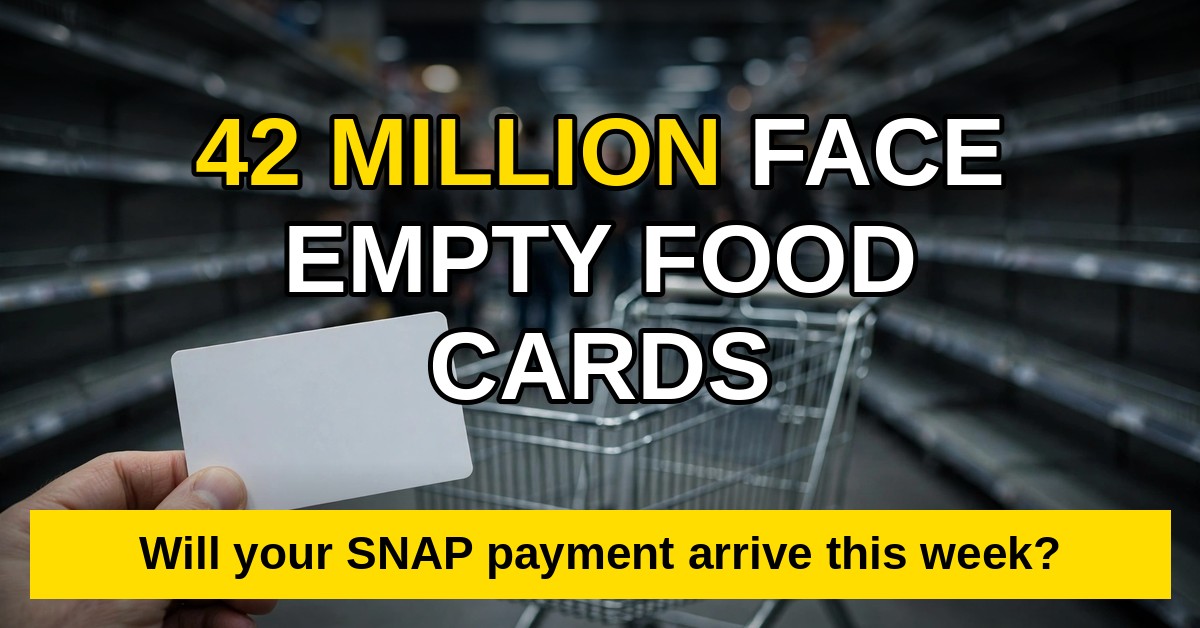
Forty-two million people woke up on Halloween morning not knowing whether they can buy groceries next week. That is not a metaphor for anxiety. It is the literal state of the Supplemental Nutrition Assistance Program — SNAP — the food assistance that about one in eight Americans relies on, after a month of shutdown brinkmanship ended, on Friday, in two federal courtrooms. The SNAP payment plans judges ordered now give the US Department of Agriculture until Monday, November 3, to explain how at least partial benefits will reach families.
Here is what happened, in order. The USDA, which runs SNAP, announced that November benefits would not be paid because of the federal government shutdown. The agency’s website put it in language worth remembering: “the well has run dry,” and “there will be no benefits issued November 01.” States sued — a coalition of attorneys general and governors argued the department was sitting on a congressionally approved contingency fund built for exactly this kind of lapse, and was choosing not to use it. On Friday, October 31, two federal judges agreed with the states. In Boston, Judge Indira Talwani ruled that the administration’s refusal to use the contingency fund was “contrary to law,” and gave the USDA until Monday, November 3, to present a plan to issue at least partial payments. In Rhode Island, a second judge issued a temporary restraining order: full payments by November 3, or a workable plan for partial benefits by November 5, according to the National Low Income Housing Coalition’s summary of the rulings.
SNAP payment plans judges: So why is the card still empty?
Because a court order is not a grocery run. The contingency fund holds roughly $4.6 billion, by the figures cited in the litigation, while a full month of SNAP costs between $8.5 and $9 billion. The math only reaches partial benefits — the administration’s own earlier plan covered about 65 percent of the maximum benefit, a plan the Boston court rejected as a final answer on Thursday before Friday’s orders landed. Even once the money moves, loading benefits onto the debit-style cards families use can take up to two weeks in some states, through a chain of federal, state, and vendor steps that does not care how urgent your refrigerator is. The average benefit is about $190 per person per month. There is no version of “partial and late” that a family experiences as anything but a cut. Meanwhile the shutdown itself grinds on — the Senate has failed twelve times to pass a stopgap spending bill, by the weekly tallies — and states are scrambling to boost food banks with their own money while they wait to learn what Washington will actually do by Monday’s deadline.
The fund Congress built for exactly this moment
Notice the architecture of this, because it is the story underneath the story. Congress built a contingency fund so that a funding fight could never reach a family’s table. An agency decided the fund was for other emergencies. It took two judges, in two states, on the last possible day, to say the quiet part out loud: the money for food was there, and feeding people was the emergency. That argument is what the states put to the courts, and it is what both judges accepted in different forms. The Boston ruling called the refusal to use the fund contrary to law. The Rhode Island order went further in practical terms, setting a hard date for full payment or a partial-benefit plan. Together they leave the administration with little room to argue that nothing can be done — only questions about how much, and how fast. The political timing sharpens everything. Monday, November 3, is the same week voters go to the polls for the midterm elections. The administration owes the Boston court a plan by then. Full payment, partial payment, or another appeal: each one is a decision, and each one will be read by 42 million people not as procedure, but as dinner.
SNAP payment plans judges: What families should do this weekend
If you receive SNAP, your November benefit was never legally required to vanish, whatever the website said. Check your state’s benefits portal and your card balance through the weekend, and expect partial or delayed amounts rather than nothing. If a food bank near you is extending hours this week, that is your neighbors doing, quickly and without a court order, what the system needed two judges to start. States are also moving on their own. Several have announced emergency food-bank funding and extended hours, and governors in the suing coalition have promised to press the USDA for a plan that loads cards as fast as their vendors allow. The gap between a court order and a loaded card is where charities, churches and community groups are filling in right now.
What to watch now is Monday. The Boston court expects a plan for at least partial payments. The Rhode Island order expects full payments by November 3 or a partial plan by November 5. If the administration appeals, the fight moves up the courts while families wait. If it complies, the question becomes speed: which states can load partial benefits in days, and which will take the full two weeks vendors warn about. Either way, the Halloween morning that 42 million people woke up to — cards empty, courts moving, Washington arguing about a fund built for this exact crisis — has become the defining image of a shutdown that stopped being abstract a long time ago.
SNAP payment plans judges FAQs
What did the two judges order?
In the SNAP payment plans judges case, Boston Judge Indira Talwani ordered the USDA to present a plan by November 3 for at least partial SNAP payments, and a Rhode Island judge ordered full payments by November 3 or a partial-benefit plan by November 5.
Why did SNAP benefits stop?
The USDA said November benefits would not be paid because of the federal government shutdown, claiming its funding had run out — even though a contingency fund existed.
How big is the contingency fund?
It holds roughly $4.6 billion, while a full month of SNAP costs $8.5 to $9 billion, so it covers partial benefits, not a full month.
When will money actually reach cards?
Loading benefits can take up to two weeks in some states once the money moves, so families should expect partial or delayed amounts rather than instant full payments.
What should SNAP recipients do now?
Check your state’s benefits portal and card balance through the weekend, and contact local food banks, many of which have extended hours this week.
Sources and Resources
Source story: https://www.bazaardailynews.com/2026/10/31/two-judges-said-the-money-exists-this-morning-the-card-is-still-empty/
More SNAP payment plans judges coverage: World Reach Daily