
iPhone 18 Launch Strategy: Why Apple is Delaying the Base Model to 2027
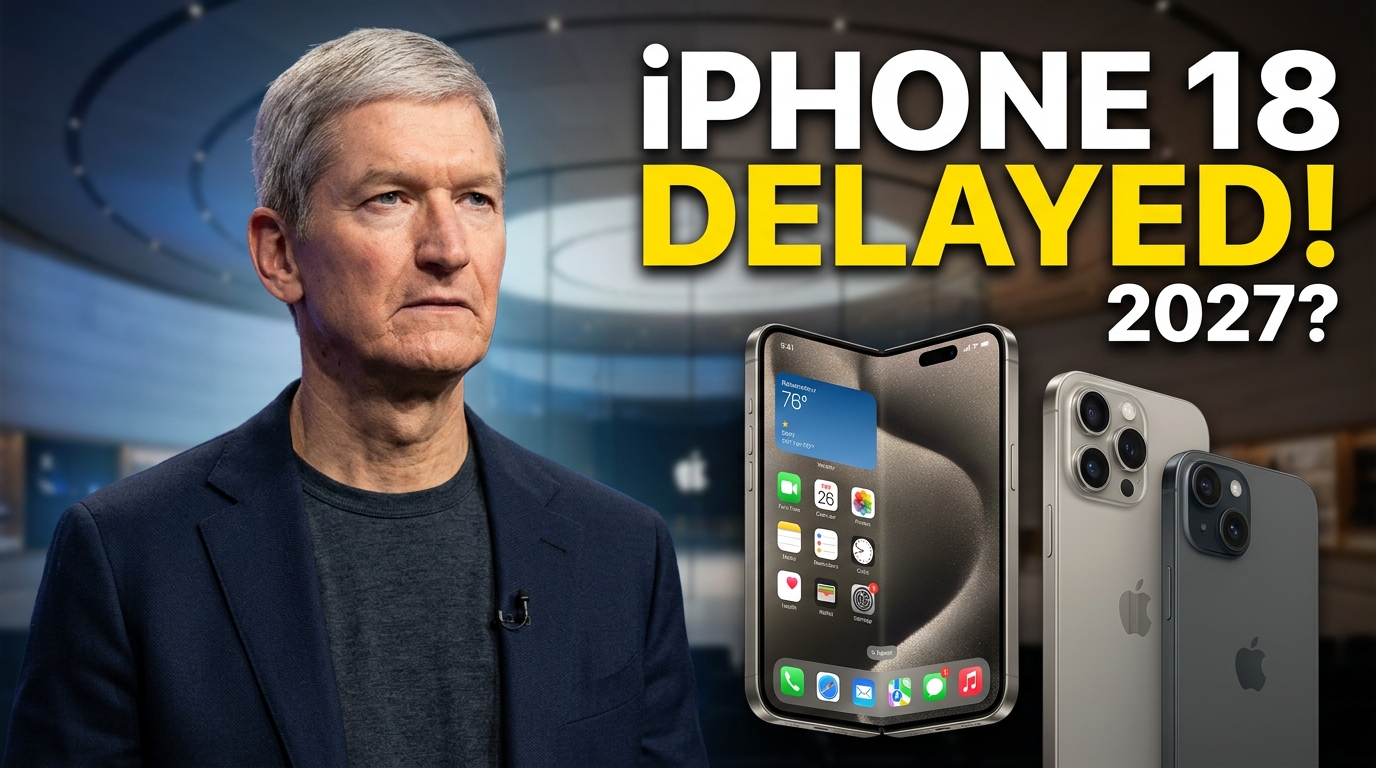
Apple is about to tear up its own playbook. For more than a decade, September has meant one thing: a full iPhone refresh, standard and Pro models landing together in one tidy wave. That era appears to be over. Squeezed by manufacturing constraints and pushing hard into ultra-premium hardware, Apple’s iPhone 18 launch strategy splits the lineup into two waves.
Also read:
Tyler Robinson Pleads Not Guilty in Charlie Kirk Murder Trial
Supply chain reports and industry analysts keep telling the same story: the standard iPhone 18 — and the new iPhone 18e arriving with it — won’t show up until the spring of 2027. Instead, this September’s event, reportedly dubbed “Surprise and Shine,” will be a high-end-only affair. On the bill: the iPhone 18 Pro, the iPhone 18 Pro Max, and the historic debut of Apple’s first foldable iPhone.
Here’s what the unprecedented iPhone 18 launch strategy looks like, what’s really driving the delay, and what each wave will bring.
The Strategy Behind the Staggered Release
Why is Apple changing the iPhone 18 launch strategy after a decade? It comes down to two things: a stubborn supply chain bottleneck around next-generation silicon, and a cold-eyed financial calculation about premium sales.
The 2nm Chip Shortage
Everything about the iPhone 18 generation hinges on the leap to 2-nanometer chips from TSMC. Moving from 3nm to 2nm buys far better power efficiency and raw processing speed — exactly what the heavy demands of on-device Apple Intelligence need in iOS 27. The catch is that early yield rates are low. Only a modest share of 2nm chips come off the line defect-free, which is par for the course with a brand-new manufacturing process.
Pushing the standard iPhone 18 into 2027 lets Apple funnel its limited early stock of 2nm A20 Pro chips to the higher-margin Pro models and the foldable, while TSMC’s manufacturing yields stabilize before mass production of the standard A20 begins — a supply-driven twist in the iPhone 18 launch strategy.
Maximizing the Premium Spotlight
But the iPhone 18 launch strategy isn’t only about chip supply. It’s a sharp marketing maneuver too. Give the Pro tier and the foldable the entire holiday quarter, and the cheaper alternative simply isn’t there when shoppers are at their most willing to spend. Anyone eager to upgrade in September will find only premium flagships waiting. Analysts project that plenty of those buyers will cough up $200 or more extra for an iPhone 18 Pro rather than sit tight for six months.
Fall 2026: The Era of the Pro and the Foldable
Come September, expect Apple to lavish attention on its priciest devices.
iPhone 18 Pro and Pro Max
The Pro models are getting serious internal upgrades to justify their solo autumn slot in the iPhone 18 launch strategy.
The A20 Pro Chip & AI Power: Built on the 2nm process, the A20 Pro chipset is expected to redefine mobile processing. With a reported 12GB of RAM — up from previous generations — these devices should chew through sophisticated, locally hosted Apple Intelligence tasks without leaning heavily on cloud computing.
Camera Innovations: The 48-megapixel systems keep evolving, but the real headline is a variable-aperture main camera. It’s a genuinely professional-grade feature: the lens physically adjusts how much light comes in, delivering real depth-of-field control and drastically better low-light performance.
Design Tweaks: Expect the familiar 6.3-inch and 6.9-inch Super Retina XDR displays, though Apple is reportedly slimming down the Dynamic Island cutout for a more immersive screen-to-body ratio. The external Camera Control button is said to be getting a rework too, with better tactile feedback.
The First Foldable iPhone (iPhone Fold / Ultra)
The crowning jewel of the September 2026 event will almost certainly be Apple’s long-rumored entry into the foldable market — and the boldest element of the iPhone 18 launch strategy. Positioned against the Samsung Galaxy Z Fold and Google Pixel Fold, Apple’s device is expected to adopt a “book-style” inward-folding design.
Display Dimensions: Leaks point to a wide, user-friendly 5.5-inch external cover screen and a sprawling 7.8-inch inner display when unfolded.
Form Factor: Apple is prioritizing a sleek profile. Rumors suggest the device could be remarkably thin — measuring around 9mm when closed and an astonishing 4.5mm when fully unfolded.
Pricing: As a first-generation halo product boasting the same A20 series power as the Pro models, the foldable iPhone is expected to command a price tag exceeding $2,000.
Spring 2027: The Standard iPhone 18 Arrives
Those willing to sit out the autumn frenzy get their moment in early 2027 — likely between March and April — with the second wave of the iPhone 18 launch strategy focused purely on consumer accessibility. Expect the standard iPhone 18, a cheaper entry-level iPhone 18e, and potentially the ultra-thin second-generation iPhone Air.
Don’t mistake a spring launch for a second-rate phone. It’s shaping up to be seriously capable.
Next-Gen Silicon: The base model won’t be left behind in the 2nm transition. It’s expected to house the standard A20 chip, projected to offer up to a 30% increase in power efficiency compared to older models — a massive win for everyday battery life.
RAM Debates: Memory is murkier. While some analysts believe the standard 18 will finally bump up to 12GB of RAM to better support iOS 27’s AI features, others like Ming-Chi Kuo predict it may conservatively sit at 9GB to cut costs.
Camera and Connectivity Trickle-Down: The standard iPhone 18 will likely inherit big upgrades from the older Pro lines, including a 48MP ultra-wide lens, a 24MP front-facing selfie camera, and Apple’s new proprietary C2 modem featuring Wi-Fi 7 capabilities.
What Should Buyers Do?
The iPhone 18 launch strategy forces a real choice.
If you demand the absolute best: Prepare to upgrade in September 2026. The iPhone 18 Pro and Pro Max will deliver unmatched camera performance and AI speed.
If you are an early adopter: The foldable iPhone will finally give Apple loyalists a taste of the expanding-screen technology Android users have enjoyed for years, provided you can stomach the premium price point.
If you are budget-conscious: Hold onto your current device until Spring 2027. The standard iPhone 18 will offer the foundational 2nm processing power and excellent camera upgrades without the $1,000+ Pro premium.
Conclusion
Apple’s iPhone 18 launch strategy — staggering the iPhone 18 rollout — is one of the most drastic strategic pivots in the company’s hardware history. Letting the iPhone 18 Pro, Pro Max, and the highly anticipated foldable model monopolize the holiday season solves two problems at once: it works around the 2nm supply chain crunch while squeezing maximum revenue from the premium tier.
The delay of the standard iPhone 18 to spring 2027 will frustrate budget-conscious buyers who wanted a fall upgrade — but their patience should be rewarded with a highly capable, AI-ready device. And the two-wave strategy keeps Apple dominating the tech news cycle for almost a full year. That’s not an accident.
iPhone 18 Launch Strategy FAQs
1. Why is the standard iPhone 18 delayed?
Mostly the chips. Because early manufacturing yields for 2nm silicon are low, Apple is allocating its initial batch to the higher-priced iPhone 18 Pro and foldable models — and pushing the standard iPhone 18 to early 2027 to let production catch up — the core supply reason behind the iPhone 18 launch strategy.
2. When will the iPhone 18 Pro and Foldable launch?
The iPhone 18 Pro, iPhone 18 Pro Max, and Apple’s first foldable iPhone are expected to be announced at a dedicated event on September 9, 2026, with retail availability slated for late September.
3. What new features will the iPhone 18 Pro have?
The Pro models are heavily rumored to feature the A20 Pro chip (2nm), 12GB of RAM for enhanced on-device Apple Intelligence, a smaller Dynamic Island, and a variable-aperture main camera that should transform low-light photography.
4. How much will the Apple Foldable cost?
While official pricing hasn’t been announced, industry experts predict the first-generation foldable iPhone (often referred to as iPhone Fold or Ultra) will start at over $2,000 due to its advanced folding display mechanics and flagship internal specifications.
5. Will the delayed iPhone 18 be worth the wait?
Yes. Despite arriving roughly six months late under the new iPhone 18 launch strategy, the standard iPhone 18 is expected to feature a 2nm A20 processor, a 48-megapixel ultra-wide camera, a 24-megapixel selfie camera, and a new C2 modem with Wi-Fi 7 capabilities — making it a highly competitive phone for its price tier.
Official News Links & Trusted Sources
For further reading on the iPhone supply chain and the latest iPhone 18 launch strategy rumors, here are the original reports from trusted technology outlets:
1 thought on “iPhone 18 Launch Strategy: Why Apple is Delaying the Base Model to 2027”