
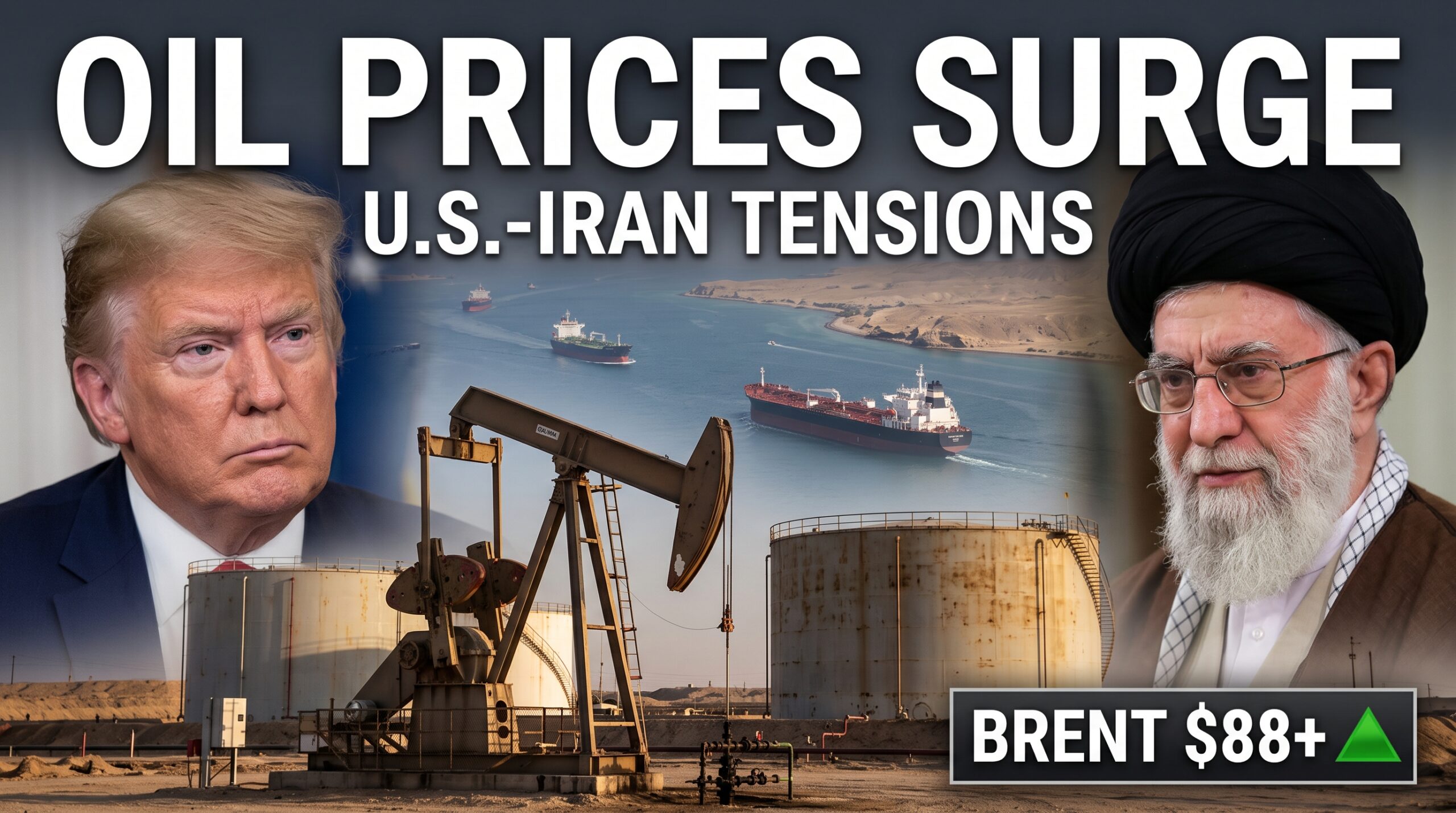
Oil prices jumped sharply on Wednesday after Yemen’s Houthis said they had struck Saudi Arabia’s biggest oil refinery with a missile, a claim that instantly revived fears about the safety of Middle East energy supplies. The Saudi refinery attack oil prices reaction was immediate.
Brent crude, the global benchmark, rose $1.48, or 1.3 percent, to $115.36 a barrel in early trading. US West Texas Intermediate crude climbed $1.22, or 1.22 percent, to $101.12. The move was fast, and it told a familiar story: whenever a major Gulf facility comes under threat, traders do not wait for confirmation. They buy first and ask questions later.
The facility at the centre of the claim is Ras Tanura, Saudi Arabia’s largest refinery, which processes around 550,000 barrels of crude a day. Saudi Arabia is the world’s biggest crude exporter, so any threat to its refining and export infrastructure carries weight far beyond the kingdom’s borders. The Houthis, who are aligned with Iran, said on Tuesday that they had hit the refinery with a missile, stepping up a campaign of strikes against the world’s second-largest crude producer.
Saudi authorities had not immediately confirmed the strike. That gap between claim and confirmation matters, and it is worth stating plainly. Markets, however, rarely wait for official statements when the facility involved is this important. The mere possibility of disruption at Ras Tanura was enough to reverse the previous day’s slide.
Saudi refinery attack oil prices: Why the market reacted so quickly
Just a day earlier, prices had fallen by nearly $2. Talks in the Middle East had eased worries about supply, and traders had begun to unwind some of the risk premium built into crude prices over recent weeks. Wednesday’s rebound wiped out much of that relief in a single session.
That whiplash says something important about where the oil market stands right now. Prices are already high — Brent had pushed above $114 and even $116 in recent sessions — and the market is running on thin nerves. Every headline about Gulf infrastructure lands on a market that has very little patience for fresh supply shocks.
It also helps to understand what Ras Tanura actually does. A refinery of 550,000 barrels a day is not a marginal plant. It turns crude into the fuels the world runs on, and it sits at the heart of Saudi Arabia’s export machine. Damage there, or even a temporary shutdown, would ripple through refined-product markets as well as crude. Traders know that, which is why the reaction was immediate even without Saudi confirmation.
A conflict that keeps reaching the oil market
The claim comes in the context of a wider confrontation involving Iran and its proxies, a conflict that has repeatedly spilled over into energy markets. Shipping lanes, export terminals and refineries have all become part of the strategic picture, and oil prices have become a kind of real-time gauge of how worried the world is about escalation.
This is not the first time Houthi strikes have rattled traders, and it is unlikely to be the last. The group has shown both the intent and, on past occasions, the capability to reach targets deep inside Saudi Arabia. That track record is precisely why a claim about Ras Tanura cannot simply be ignored, even before independent verification emerges.
For earlier context on Houthi strikes against Saudi oil infrastructure, see Houthis Strike Aramco Headquarters as Middle East Conflict Threatens Global Oil.
At the same time, caution is warranted. Claims in wartime are often exaggerated, and the absence of immediate Saudi confirmation leaves open questions about what, if anything, actually hit the facility and whether operations were affected. The honest position right now is this: the Houthis say they struck Ras Tanura, the market has reacted as if supply is at risk, and confirmation is still awaited.
What else is moving oil prices
The refinery claim is not the only factor traders are weighing. Data expected this week was set to show a small rise in US crude inventories, with stockpiles up by about 15,000 barrels in the week ended October 23, according to a poll of eight analysts by Reuters. Normally, a build in inventories would put downward pressure on prices. On Wednesday, it barely registered against the supply-fear story. See Reuters’ report on Yemen’s Houthis saying they hit the Ras Tanura refinery.
Looking ahead, the OPEC+ group of oil-producing countries is expected to keep its December output targets steady when it meets on Sunday, according to three people familiar with the matter who spoke to Reuters. That would be in line with market expectations.
Production in most of the seven core OPEC+ members — Saudi Arabia, Russia, Iraq, Kuwait, Algeria, Kazakhstan and Oman — is already below their output targets, which limits how much extra supply the group could quickly bring to market if tensions worsen.
Russia adds another wrinkle. Crude exports from its Baltic and Black Sea ports could fall next month as domestic refiners increase diesel output following a deal with Washington earlier this month, traders said. Less Russian crude on the water would tighten an already nervous market further.
Put together, the picture is one of a market with limited spare cushion. Inventories are not surging, OPEC+ output is already running below target in several key members, and Russian exports may dip. Into that tight setup, a missile claim against the world’s biggest exporter’s largest refinery is exactly the kind of shock that sends prices higher.
What to watch next
The next 48 hours will be revealing. First, whether Saudi authorities or Saudi Aramco confirm or deny any impact at Ras Tanura, and whether operations there continue normally. Second, whether the Houthis follow up with further claims or strikes, which would suggest a sustained campaign rather than a one-off announcement. Third, how the market behaves once the initial shock fades — a quick fade would suggest traders judged the risk as contained, while sustained gains would signal deeper worry.
Consumers will feel the knock-on effects if prices stay high. Crude at $115 a barrel eventually shows up at the pump, in heating bills and in transport costs, and that feeds into inflation at a time when many households are already stretched. Policymakers, too, will be watching: high oil prices complicate the fight against inflation and raise the stakes of any further escalation in the region.
For now, the market has made its judgment. A claim about a missile, aimed at a refinery that processes more than half a million barrels a day, was enough to send Brent back above $115 and remind everyone just how exposed the global economy remains to conflict in the Gulf.
Saudi refinery attack oil prices summary
In summary, this Saudi refinery attack oil prices story began with oil prices jumping sharply on Wednesday after Yemen’s Houthis said they had struck Ras Tanura, Saudi Arabia’s largest refinery, with a missile. Brent crude rose $1.48 to $115.36 a barrel, Saudi authorities had not immediately confirmed the strike, and the next 48 hours were set to reveal whether confirmation came and whether the market faded or stayed higher.
SOURCE CREDIT: Reporting based on Reuters, October 28, 2026.