
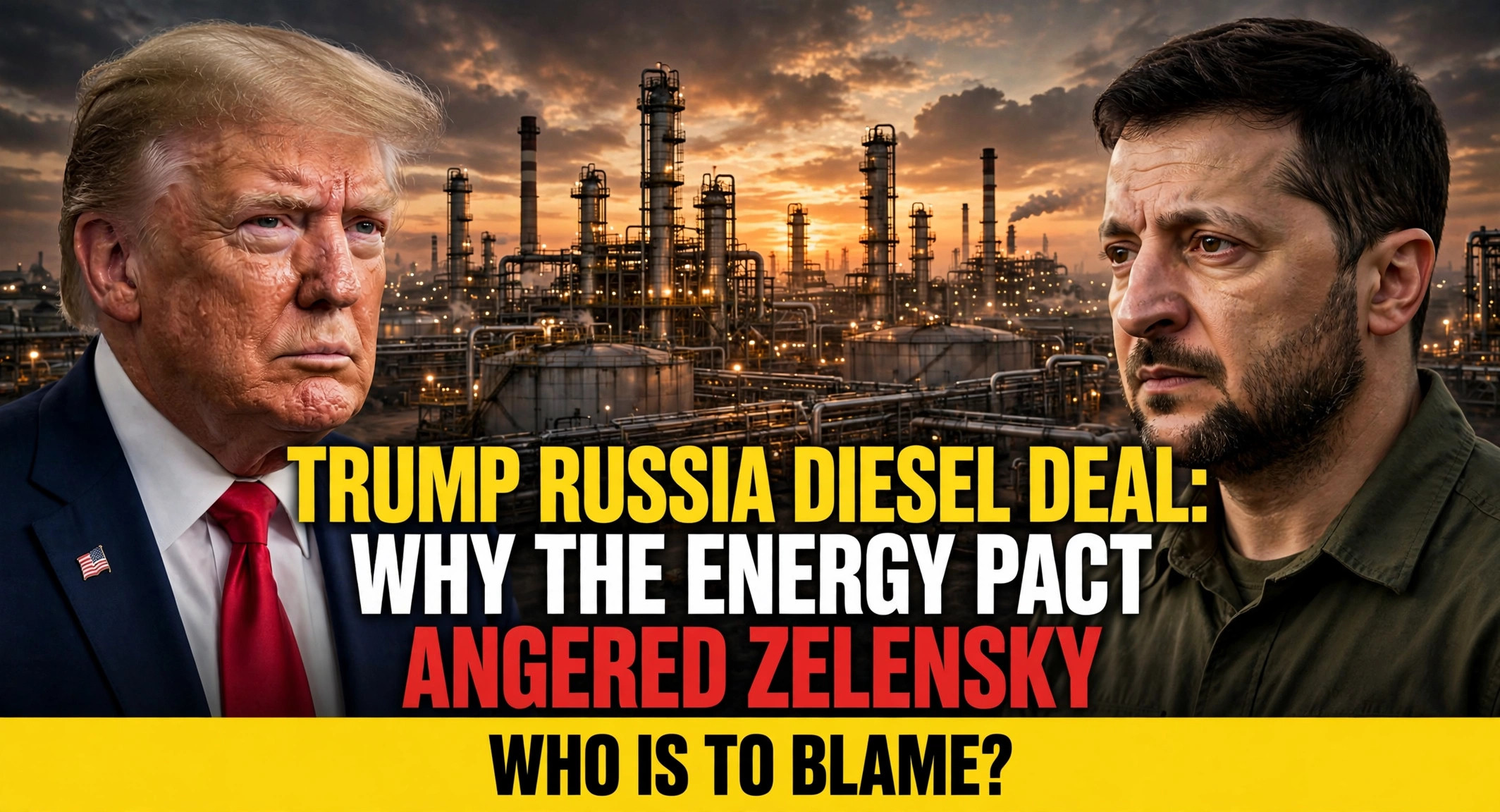
Trump, Zelensky, and the Russia Diesel Deal: Inside the Clash Over Energy and Sanctions
The geopolitical tightrope just got a lot harder to walk. This week, the bubbling tension between Washington, Kyiv, and Moscow spilled over into the public eye. At the center of the storm? A controversial new energy arrangement spearheaded by US President Donald Trump and Russian President Vladimir Putin.
Also read:
Isaias Aftermath: 4 Dead, Hundreds of Thousands Without Power in the South
President Volodymyr Zelensky hasn’t held back his frustration. The Ukrainian leader slammed the move, viewing it as a dangerous concession that throws a financial lifeline to the Kremlin. Trump, on the other hand, is firmly defending his decision. He points to the skyrocketing fuel costs squeezing American businesses and families, arguing that domestic economic survival has to take precedence.
This isn’t just a squabble over oil. It’s a massive collision between America’s immediate economic hurdles and the long-term goal of isolating Russia. Let’s break down exactly what this deal entails, why it has everyone from Capitol Hill to Kyiv on edge, and what it actually means for the price you pay at the pump.
Breaking Down the Trump-Putin Diesel Agreement
It all kicked off on October 9, 2026. President Trump went public with an unexpected pivot in US energy policy, announcing an agreement to loosen the spigots on Russian diesel.
The logistics of the deal are rolled out in phases. We are looking at an initial wave of roughly 300,000 metric tons of diesel hitting the market immediately. Once November rolls around, a second batch of 500,000 tons is supposed to follow. And if the framework holds, the administration is targeting another 1 million tons down the road.
Why make this move now? The White House is feeling the heat from a bruising domestic economy. Trucking fleets, commercial agriculture, and construction companies are practically suffocating under the weight of inflated diesel prices. When it costs a fortune to fuel an 18-wheeler, the price of everything on the grocery store shelves goes up. Trump’s camp argues that injecting this Russian fuel into the global supply chain will relieve those bottlenecks and give American consumers some breathing room.
But doing this requires a heavy lift politically. To make the deal work, Washington has to ease up on the strict economic sanctions that have choked Russian petroleum exports for years. That is a massive shift in strategy, and it hasn’t gone unnoticed.
Zelensky Pushes Back: “Unfair and Dishonest”
Kyiv’s reaction was swift and unforgiving. For Ukrainian officials, energy sanctions aren’t just numbers on a spreadsheet; they are a critical weapon in draining Russia’s war chest.
In a pointed interview with Axios, Zelensky didn’t mince words. He called the decision to ease restrictions “unfair and dishonest.” His argument is straightforward: every dollar Russia makes from exporting petroleum is a dollar that can be funneled right back into military strikes against Ukraine. He essentially views this diesel agreement as a gift wrapped up for Putin.
The timing makes the pill even harder to swallow. Winter is closing in. Ukrainian crews are working around the clock to patch up power grids and heating facilities that are under constant threat from Russian airstrikes. From Zelensky’s perspective, allowing Russia to cash in on energy exports without demanding a single military concession in return is entirely backwards.
Trump didn’t just sit back and take the criticism. He fired right back at Zelensky, criticizing the Ukrainian president’s broader handling of the conflict. The US president suggested that opportunities to settle the war had been missed and doubled down on his stance that he cannot let American industry collapse just to maintain an inflexible sanctions regime.
The Real Question: Will Diesel Prices Actually Drop?
Politics aside, everyone wants to know if this deal will actually make fuel cheaper. Talk to energy analysts, and you’ll get a lot of skeptical looks.
Let’s look at the raw math. That initial splash of 300,000 metric tons sounds like a massive amount of fuel. But put it in perspective: the US transportation sector burns through more than that in a single day.
Dropping one day’s worth of fuel into the market isn’t going to magically slash prices at your local gas station. Diesel pricing is a deeply complicated beast. It relies on global crude oil costs, how fast refineries can process the crude, ocean freight rates, and international shipping bottlenecks.
Plus, there’s the money side of things for Russia. Estimates suggest that the first shipment might generate around $400 million in gross export sales. However, after you factor in Russia’s heavy domestic taxes, the costs of getting the fuel on ships, and the discounted rates they have to offer, the actual windfall for the Kremlin might be smaller than headlines suggest. Still, for lawmakers watching the situation, any extra cash flowing to Moscow is too much.
Bipartisan Backlash on Capitol Hill
You know an issue is serious when it gets both sides of the aisle to agree. In Washington, the backlash hasn’t been limited to Trump’s political rivals. A bipartisan coalition of US senators quickly drafted a letter to the White House, urging the president to hit the brakes.
Lawmakers are raising major red flags. They want to know if the executive branch actually has the legal authority to bypass established sanctions without bringing Congress into the loop. Beyond the legalities, there is a deep anxiety that backing down on Russian energy restrictions makes the US look weak and undermines years of unified international pressure. They argue that if America bends the rules the moment fuel prices get uncomfortable, the entire global sanctions framework could fall apart.
The Phantom Energy Ceasefire
Tangled up in all this diesel drama is the talk of an “energy ceasefire.” Trump made waves by announcing that both nations had conceptually agreed to stop bombing each other’s power plants and refineries.
If true, this would be a massive relief for civilians facing a freezing winter. But the reality on the ground tells a very different story.
When Zelensky spoke at the Warsaw Security Forum on October 12, he set the record straight. Yes, Ukraine absolutely supports the idea of a mutual halt to energy attacks. Kyiv is more than willing to stop launching drones at Russian oil refineries—if Moscow stops sending missiles into Ukrainian utility plants.
The catch? Zelensky confirmed that Kyiv has received zero formal commitments from Russia. There is no binding agreement, no enforcement mechanism, and no verifiable terms. In fact, reports from the frontlines indicate that Russian strikes on regional energy infrastructure haven’t stopped at all. High-level diplomatic claims simply aren’t matching the reality of the war zone.
What Happens Next?
This situation is incredibly fluid, and the fallout is far from over. Here is what everyone is keeping a close eye on over the next few weeks:
First, we have to see if the fuel actually moves. Will that initial 300,000 tons clear the massive hurdles of shipping, banking, and international regulations to actually reach buyers? Second, keep an eye on the fuel indexes. If prices don’t drop, the Trump administration is going to face intense scrutiny for taking a massive diplomatic risk for zero economic reward. Finally, Capitol Hill isn’t going to let this go quietly. Expect potential legislative hearings as lawmakers dig into how these sanctions waivers were approved.
The Bottom Line
The standoff over the Russia diesel deal is a classic clash of priorities. The Trump administration is pulling levers to try and protect American consumers from punishing inflation, treating energy as a practical commodity rather than a purely political one. Meanwhile, Zelensky and a chorus of US lawmakers are desperately warning that softening the economic squeeze on Russia will only prolong the bloodshed in Eastern Europe. Whether this bold pivot fixes the economy or fractures a crucial alliance remains the defining question of the year.
Frequently Asked Questions (FAQs)
Why did President Trump strike a diesel deal with Russia? The administration’s primary goal is to inject more diesel into the global market to bring down soaring fuel prices. High diesel costs are crippling US trucking, agriculture, and retail supply chains, and Trump argues this move is necessary to provide economic relief for Americans.
Why is Volodymyr Zelensky so angry about the agreement? Zelensky believes that easing economic sanctions allows Russia to generate crucial export revenue. He argues that money will ultimately be used to fund Russia’s military operations against Ukraine, making the deal “unfair and dishonest.”
How much diesel is actually involved? The framework starts with an initial shipment of over 300,000 metric tons. A second phase of 500,000 tons is scheduled for November, with a longer-term goal of up to 1 million additional tons.
Will this immediately make gas and diesel cheaper in the US? It’s highly unlikely to cause a sudden drop. The initial 300,000 tons equate to less than one day of US transportation consumption. Prices are dictated by complex global factors like crude oil costs and refining capacity, meaning this influx is just a drop in the bucket.
Is there actually a ceasefire protecting energy infrastructure right now? No. While Trump announced a conceptual agreement to stop attacks on power grids and refineries, Zelensky confirmed that Ukraine has not received any formal, binding confirmation from Russia. Frontline reports show that strikes on energy facilities are still occurring.
Trusted News Sources & Coverage
Reuters: Coverage on Trump-Putin Diesel Agreement and Market Data
Associated Press: Reports on Trump’s Response to Zelensky and Energy Ceasefire Proposals
Axios: Interview with Volodymyr Zelensky on US Policy Changes