
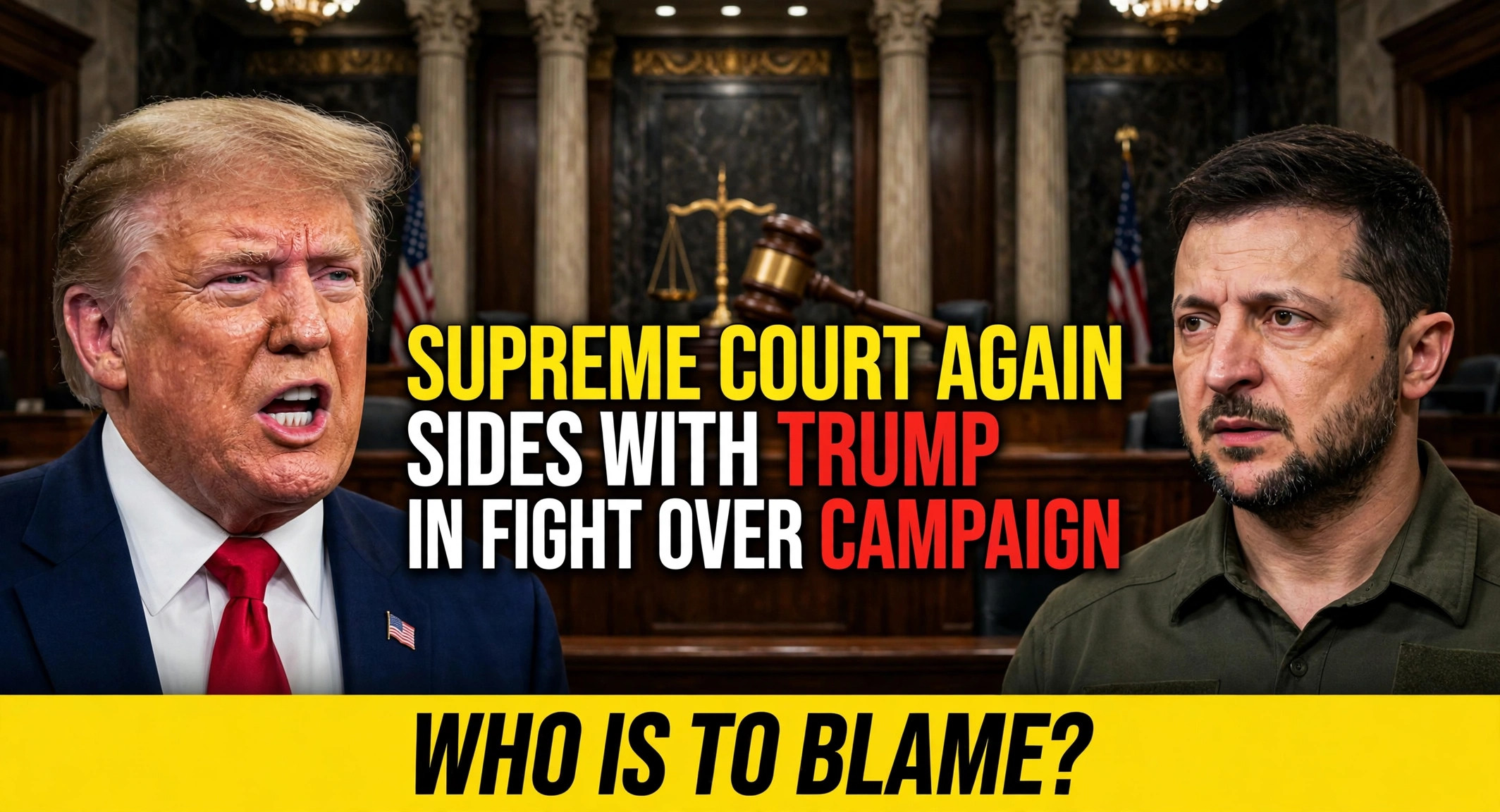
With less than a month until the November 3 midterms, the Supreme Court handed the Trump administration its second victory in a quiet but high-stakes fight over how much political ads cost on television and radio. On October 8, the justices blocked a lower court’s attempt to force the Federal Communications Commission to rule on a Democratic challenge to a new ad-rate policy — pausing a deadline that would have landed on Friday, October 9.
The temporary decision, in the latest chapter of the Supreme Court FCC Ads dispute, keeps the GOP’s preferred rules in place while the clock runs down toward Election Day.
What the Supreme Court FCC Ads Ruling Decided
Let’s be precise about what happened Thursday, because the ruling is narrower than the headlines suggest. The Richmond-based 4th U.S. Circuit Court of Appeals had accused the FCC of “gamesmanship” — intentionally dragging out its review of a Democratic complaint so no court could rule on it before the midterms. On October 7, the appeals court gave the FCC two days to issue a decision.
The Trump administration rushed to the Supreme Court, and Chief Justice John Roberts granted an administrative stay — a short pause that stops the deadline while the justices weigh the administration’s formal request. The justices ordered the Democratic challengers to respond by October 10. It’s not a final ruling on who wins the underlying fight. It’s a timeout, and the timeout benefits the side that likes the status quo. How long the Supreme Court FCC Ads pause lasts is now up to the justices.
Which is to say: Republicans. The FCC’s March policy extends the cheap ad rates once reserved for candidates to party committees working in coordination with them — and Republican party committees have raised considerably more money than their Democratic counterparts. Every week the policy stays in effect is a week the GOP can stretch its dollars further on the airwaves. That financial edge is what the Supreme Court FCC Ads litigation is really about.
The Ad-Rate Fight, in Plain English
Here’s the deal at the heart of this case. Federal law has long required broadcasters to sell airtime to “legally qualified candidates” at the lowest unit charge — the cheapest rate the station offers any advertiser — during the 45 days before a primary and the 60 days before a general election. Candidates get the friends-and-family price; everyone else pays retail. The Supreme Court FCC Ads case turns on how broadly that rule applies.
In March, the FCC’s Media Bureau issued a public notice interpreting that rule more broadly: the discount also covers authorized committees — including ones doing joint fundraising with candidates — and ads that qualify as coordinated party expenditures. Democrats saw an end-run around the statute. Four of them, all running competitive races, sued: Senate candidates Sherrod Brown of Ohio, Jon Ossoff of Georgia, and Roy Cooper of North Carolina, plus Michigan House candidate Kristen McDonald Rivet. Their argument was that handing the discount to party machines dilutes the benefit Congress wrote specifically for candidates.
The FCC’s 2-1 Republican majority, chaired by Trump ally Brendan Carr, stood by the notice. The National Republican Congressional Committee and the National Republican Senatorial Committee intervened to back the FCC — an unusual but telling alignment. Democratic candidates, by contrast, have outraised Republicans in their own campaign accounts in several key races, but their party committees are swimming in shallower water than the GOP’s. That fundraising gap is why the Supreme Court FCC Ads fight, for all its dry statutory language, is really about who can buy more airtime.
A Rocky Road Through the Lower Courts
The Supreme Court’s October 8 decision is the second time the justices have stepped in. Back in August, the 4th Circuit ruled 2-1 to set aside the FCC’s public notice entirely. Writing for the majority, Circuit Judge Robert Bruce King held that the law and campaign finance statutes are clear: neither political parties nor joint fundraising committees with non-candidate members are entitled to the discount. The court said the FCC was trying to “create from whole cloth a new rule entirely outside the purview of judicial review.”
Then the FCC asked for reconsideration and began what the appeals court saw as a slow-walk. The 4th Circuit, plainly exasperated, gave the commission until Friday to act — an order that would later become the centerpiece of the Supreme Court FCC Ads intervention. That’s the order the Supreme Court has now paused.
In September, the justices had also ruled for Republicans, holding that the appeals court couldn’t block the policy before the FCC finished its own internal review. So the pattern is consistent: the high court keeps the GOP-friendly rules alive while the process grinds on — and the midterms get closer with every day that passes. September’s decision was the first Supreme Court FCC Ads victory for Republicans; October 8 was the second.
The Justice Department, in its emergency appeal, argued the FCC is still collecting public comments on the policy, adding that “it is also entirely reasonable to refrain from issuing a decision on campaign-finance rules in the middle of the election season.” Democrats read that as precisely the point: the delay is the strategy.
Why the Timing Matters With Midterms Weeks Away
Elections are decided by attention, and attention in 2026 still costs money. Television and radio ad buys in battleground states are among the most expensive items on any campaign budget, and the 60-day lowest-unit-charge window before the general election is when the spending peaks. Cheaper rates for party committees mean the GOP’s fundraising advantage stretches further — more gross rating points, more saturation, more ads in the final stretch.
That doesn’t guarantee outcomes. House analysts at the Cook Political Report just shifted 18 House races toward Democrats, and internal Republican polling has reportedly alarmed party officials about Trump’s standing in districts he carried before.
But in a close race, a discount on millions of dollars of ad buys is a real edge. Democrats, for their part, now have until Saturday, October 10, to answer the administration’s filing. After that, the justices decide whether to keep the pause in place or let the 4th Circuit’s deadline snap back. The Supreme Court FCC Ads outcome could shape ad spending in the cycle’s final weeks.
Sources and Resources
– USA Today — Supreme Court again sides with Trump in dispute over campaign ads (Oct. 8, 2026) – DevDiscourse — US Supreme Court won’t speed up Democratic challenge to FCC political ad policy, for now (Oct. 9, 2026) – FCC — The Public and Broadcasting: Lowest Unit Charge rules (fcc.gov) – Radio Ink — Court Rejects FCC’s Expanded Political Lowest Unit Rate Rule (Aug. 26, 2026) – More politics news from WORLD REACH DAILY
Frequently Asked Questions
What exactly is the “lowest unit charge”?
It’s the cheapest advertising rate a broadcast station gives its most favored commercial advertisers. Federal law says stations must offer that same rate to legally qualified candidates during the 45 days before a primary and the 60 days before a general election. It can be dramatically lower than what other political advertisers pay. It is the rate at the heart of the Supreme Court FCC Ads dispute.
Why does the Supreme Court FCC Ads fight matter for the midterms?
The FCC’s policy extends those cheap rates to party committees running ads in coordination with candidates. Republican party committees have raised far more than Democratic ones, so the rule stretches GOP ad dollars further during the critical final weeks before November 3.
Who challenged the FCC’s policy?
Four Democratic candidates in competitive races: Senate candidates Sherrod Brown, Jon Ossoff, and Roy Cooper, plus House candidate Kristen McDonald Rivet. They argue the law reserves the discount for candidates, not party machines — and that the FCC’s notice dilutes their statutory benefit. Their challenge is what set the Supreme Court FCC Ads docket in motion.
Did the Supreme Court rule on who wins?
No. The October 8 decision is a temporary administrative stay that pauses a lower-court deadline. The justices asked Democrats to respond to the administration’s appeal by October 10, then they’ll decide whether to keep the pause or restore the deadline. The merits fight isn’t over. A final Supreme Court FCC Ads ruling on the merits is still to come.
What happens next?
The FCC is still supposed to complete its internal review of the Democrats’ complaint. If the Supreme Court keeps the stay in place, the commission can continue deliberating past the midterms — which would mean the GOP-friendly ad rates apply through Election Day regardless of the final outcome. Either way, the Supreme Court FCC Ads saga is not over.
Conclusion
It’s the kind of story that rarely leads the evening news, but the Supreme Court FCC Ads case shows how much of modern campaigning happens in the fine print. The justices’ second intervention in this dispute won’t end the legal fight, but it has already settled the practical question for the midterms’ final stretch. With the 4th Circuit’s deadline frozen and the justices in no hurry, Republican party committees keep their discounted airtime through the home stretch of the campaign. For Democrats, the battle now runs on two fronts: convincing the justices to restore the deadline, and finding other ways to match the GOP’s advertising firepower before November 3.