
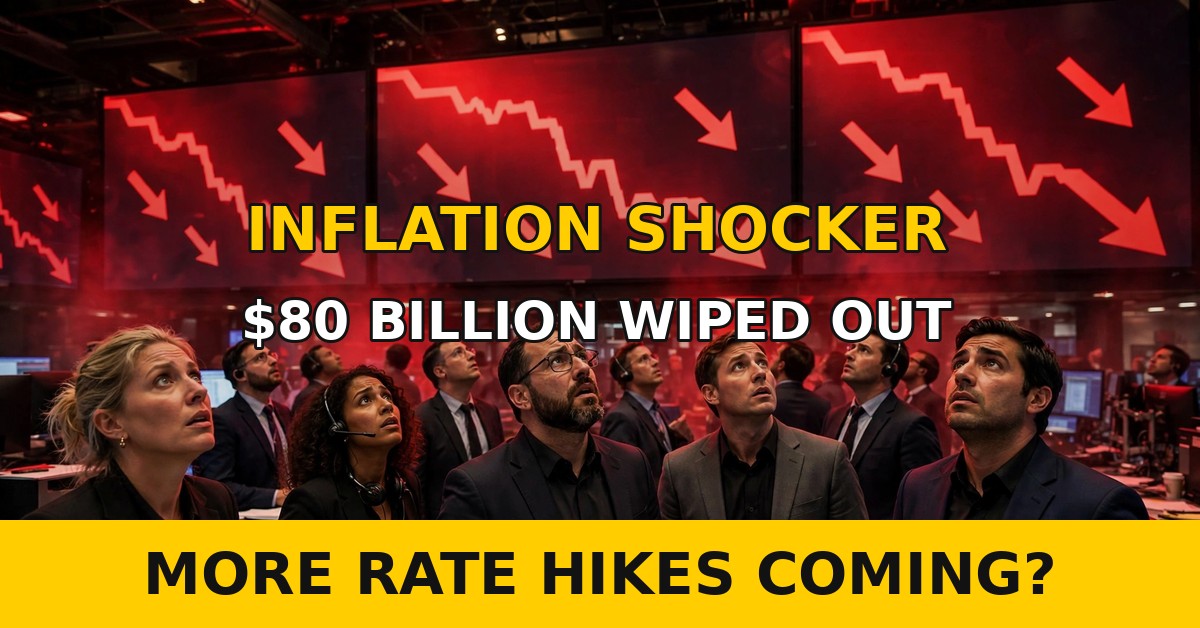
Wednesday’s hot CPI inflation report landed like a slap. September prices rose 3.7% from a year earlier — hotter than August’s 3.4%, hotter than the 3.6% economists were expecting — and Wall Street didn’t take it well. The Nasdaq sank 1.88%, the S&P 500 gave up 1.11%, and a handful of high-flying AI stocks got absolutely crushed, erasing roughly $80 billion of market value in a single session. Just like that, the comfortable “the Fed is done” trade fell apart. Traders are now pricing in a real chance — about 32% — that the central bank raises rates again this month.
What the hot CPI inflation report actually showed
The hot CPI inflation report put headline inflation at 3.7% year over year for September. That’s the fastest pace in recent months, and it came in above both last month’s reading and the consensus forecast. Core inflation — the measure that strips out food and energy — held at 2.6%, while monthly core prices rose 0.3%. Do that three-tenths pace for a few months and inflation simply isn’t heading back to the Fed’s 2% target.
Energy did a lot of the damage. Crude oil has been grinding higher for weeks, with WTI sitting around $95.40 a barrel, and that showed up at the pump and in the broader price data. That’s also why the hot CPI inflation report stung so much: higher oil doesn’t just hit gas stations. It bleeds into shipping, groceries, and manufacturing costs until businesses pass it on. The Fed’s own Beige Book, released the same day, confirmed exactly that — higher oil prices “permeated all district reports,” with firms passing elevated diesel costs straight through the supply chain.
Wall Street’s verdict: Nasdaq sinks, AI stocks get hammered
Hours after the hot CPI inflation report hit the wires, the selling started. The Nasdaq fell 1.88%, its worst kind of day — tech-heavy and ugly. The S&P 500 dropped 1.11%, and even the Dow slipped 0.09% by the closing bell on Wednesday, October 14.
The real wreckage was in AI infrastructure stocks, the market’s biggest momentum trade this year. CoreWeave plunged 16%. Nebius dropped 11%. Oracle fell 9% and Dell lost 11%. Together, those four erased roughly $80 billion of market value in one session.
Why did AI stocks take the worst of it? Simple math. These companies trade on enormous growth expectations, and their valuations only work when money is cheap. A hotter-than-expected report means higher rates for longer — and every extra tenth of a point on the 10-year yield makes future earnings worth less today. When yields spiked after the CPI release, the AI trade was the first thing traders dumped.
Bond markets and the dollar: the other half of the story
Stocks weren’t the only market that moved after the hot CPI inflation report. The 10-year Treasury yield spiked to 5.33% right after the hot CPI inflation report came out — the kind of level that makes mortgage lenders and corporate borrowers wince — before easing back to around 5.09%. The 30-year yield hovered near 5.43%.
The dollar surged too. The dollar index hit an 18-month high as traders piled into the greenback, then eased to 102.03. A stronger dollar is the market’s way of saying one thing: U.S. rates are staying high, and everyone else is going to have to live with it. Gold held its ground around $4,165 an ounce — inflation fear is good for gold — while bitcoin slid to about $80,800, getting no love as a hedge this time.
The Fed faces the heat: Beige Book gloom and a split board
The hot CPI inflation report arrived the same day as the Fed’s October Beige Book, and the survey of business conditions was grim reading. The labor market is stuck in what the report called a “low-hire, low-fire” state — companies aren’t cutting, but they’re not adding either. Price pressures, meanwhile, are intensifying rather than fading.
Inside the Fed itself, officials aren’t reading from the same script. Michelle Bowman, the Fed’s vice chair for supervision, tried to calm nerves: “I don’t see any urgency for further action,” she said, signaling the central bank can afford to wait. But New York Fed President John Williams went the other way, signaling one more hike this year — and none in 2027. Two senior officials, two different reads on the same economy.
Markets sided with Williams. Traders raised the odds of an October rate hike to roughly 32% after the hot CPI inflation report, a sharp jump from where those bets sat just a week earlier. The era of assuming cuts was over; now Wall Street is arguing about the next hike.
What comes next: PPI and retail sales
The data calendar doesn’t let up. Producer price inflation (PPI) and retail sales numbers land Thursday, October 15, and both matter a lot right now. If wholesale prices are rising too, it means the pipeline of inflation pressure isn’t draining — and that would make the October hike bets look smarter. Strong retail sales would add another reason for the Fed to stay tough: an economy that keeps spending doesn’t need lower rates. Either way, the hot CPI inflation report has already reset expectations for the rest of the year.
Sources and Resources
- World Reach Daily — Finance news and analysis
- 5 Things to Know Before the Stock Market Opens on Thursday, October 15, 2026
- Morning Preview: October 15, 2026
- Financial Markets Daily Report: 15 October 2026
- U.S. Federal Reserve
FAQs
Why did stocks crash on just one inflation report?
Because the hot CPI inflation report killed the market’s favorite story — that rate hikes were over. For months, stocks had been priced for a Fed that’s done tightening. When September prices came in at 3.7%, above every forecast, that story broke. Bond yields spiked, borrowing costs repriced higher, and the most rate-sensitive stocks — especially AI names — got repriced first.
Which AI stocks got hit the hardest?
CoreWeave was the biggest casualty, plunging 16% in a single day. Nebius and Dell each dropped 11%, and Oracle fell 9%. Together they wiped out about $80 billion in market value. These stocks trade at steep valuations built on years of future growth, so when rates jump, their valuations get hammered — investors suddenly demand a bigger discount for the same future earnings.
Does 3.7% inflation mean my mortgage rate is going up?
Probably, or at least it won’t be coming down soon. Mortgage rates track the 10-year Treasury yield, which spiked to 5.33% after the report. When inflation runs hot, lenders charge more to lend money because the dollars they get back will be worth less. Anyone hoping rates would drift lower this fall is now looking at higher borrowing costs for homes, cars, and credit cards.
Is the Fed actually going to raise rates in October?
Maybe — and that’s a big change from a week ago. The hot CPI inflation report pushed the market’s odds of an October hike to about 32%, meaning it’s now a real possibility rather than a long shot. But Fed officials are split: Michelle Bowman says there’s no urgency to act, while John Williams is signaling one more hike this year. Watch Thursday’s PPI data — if that’s hot too, those hike bets will climb higher.
What are PPI and retail sales, and why do they matter Thursday?
PPI — the producer price index — measures what businesses pay for goods at the wholesale level, so it’s an early warning of future consumer inflation. Retail sales show how much Americans are spending at stores. Hot wholesale prices plus strong spending would tell the Fed that inflation pressure is still building and the economy doesn’t need relief — both of which point toward keeping rates high, or even hiking.
Conclusion
The hot CPI inflation report changed the conversation in a single morning. At 3.7%, September inflation didn’t just miss forecasts — it reversed the narrative that price pressure was fading and the Fed was done. Wall Street responded the only way it knows how: the Nasdaq tumbled, AI stocks shed $80 billion, bond yields spiked, and hike bets surged. The Fed’s own officials are openly divided, and with PPI and retail sales due Thursday, the next move belongs to the data. One thing is clear, though — cheap money isn’t coming back anytime soon.